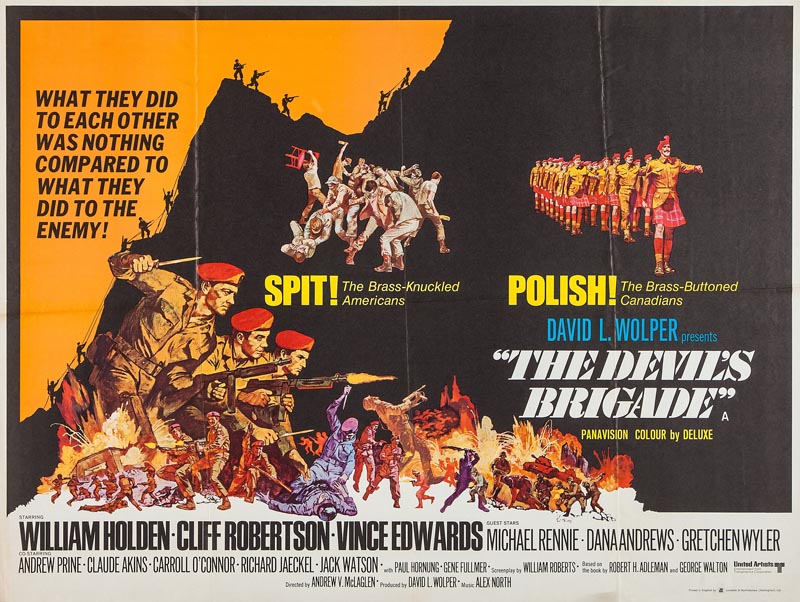
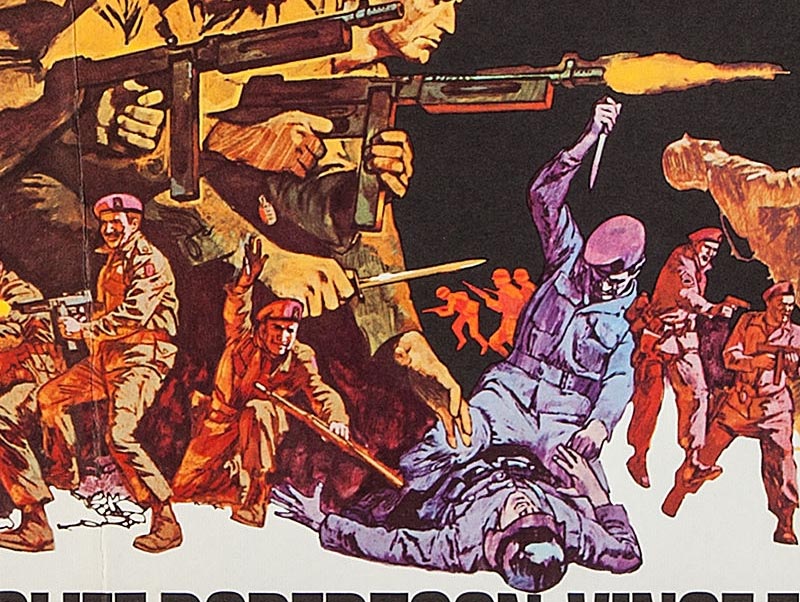
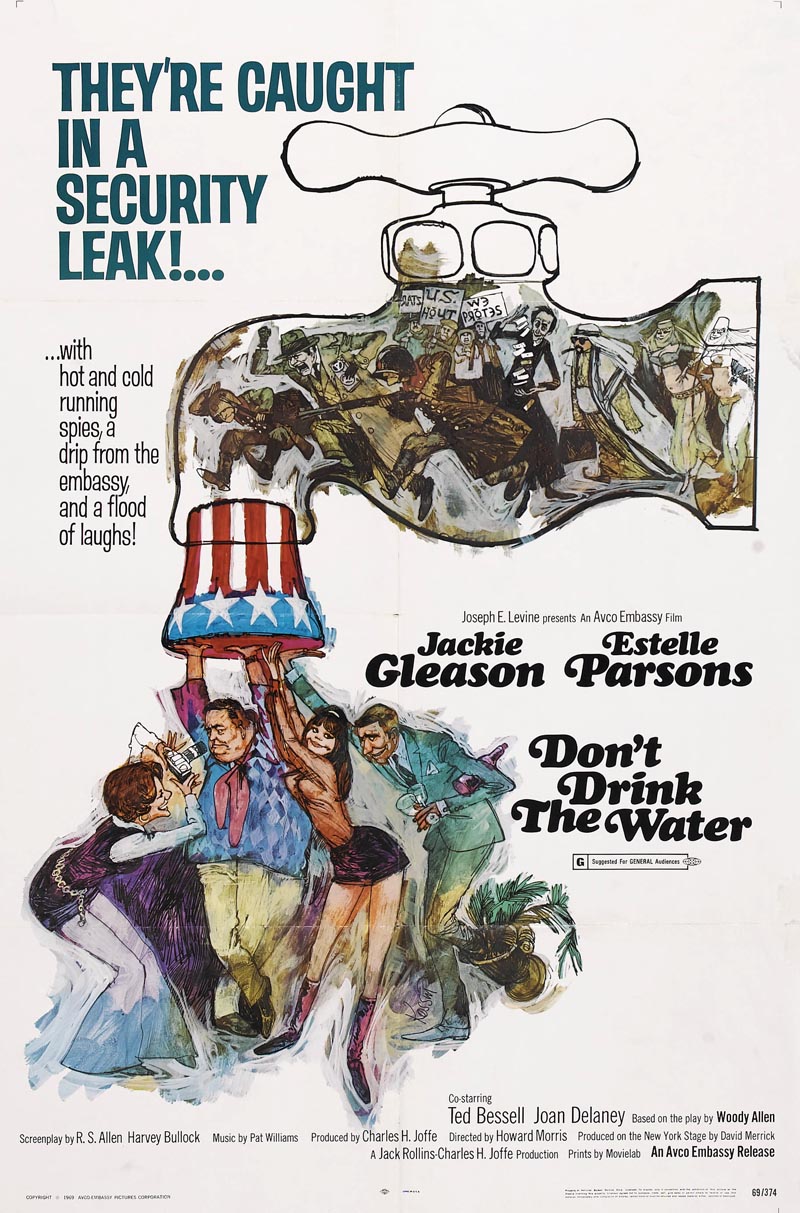
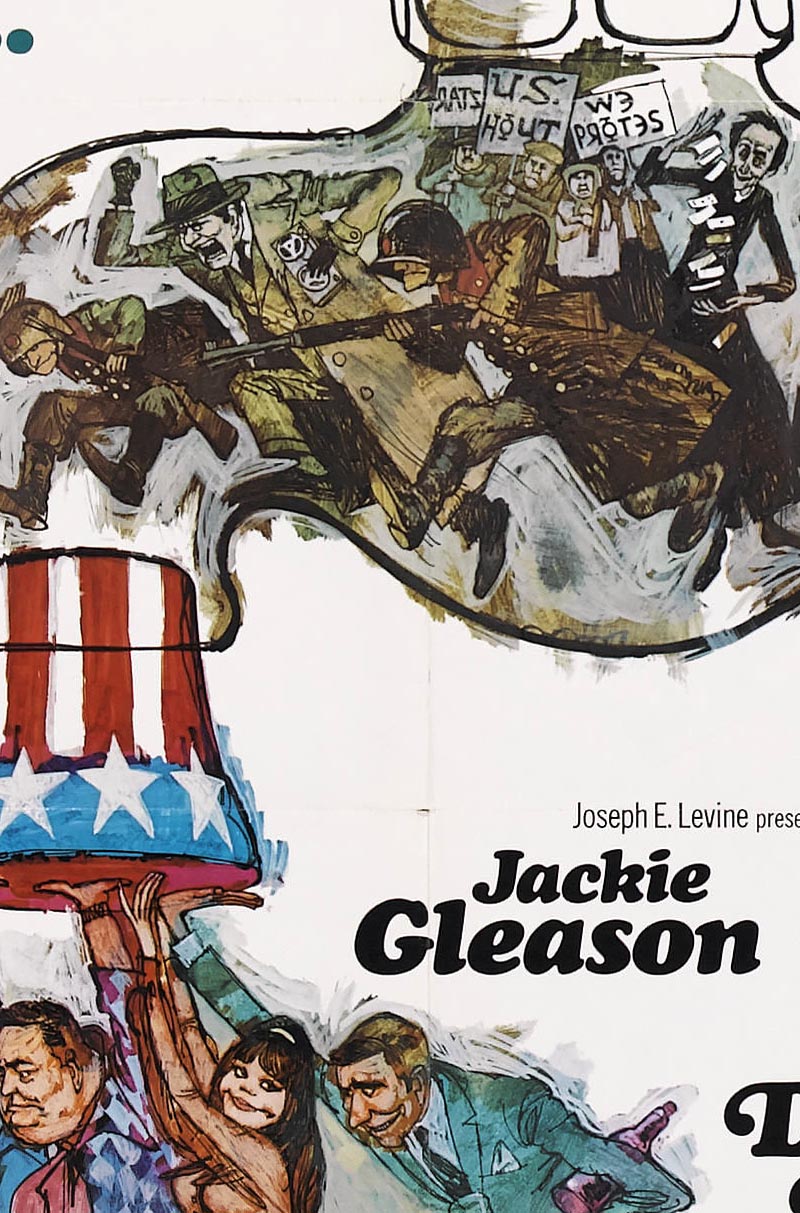
Showing posts with label Sandy Kossin. Show all posts

Saturday, February 23, 2013

Sandy Kossin: "... I found out some time ago that I'm not infallible."

Concluding Herbert Rogoff's 1969 interview from American Artist magazine...

HR: Commercial artists have to develop tricks for the purpose of saving time, and also for meeting the problems of reproduction. What are some of yours?

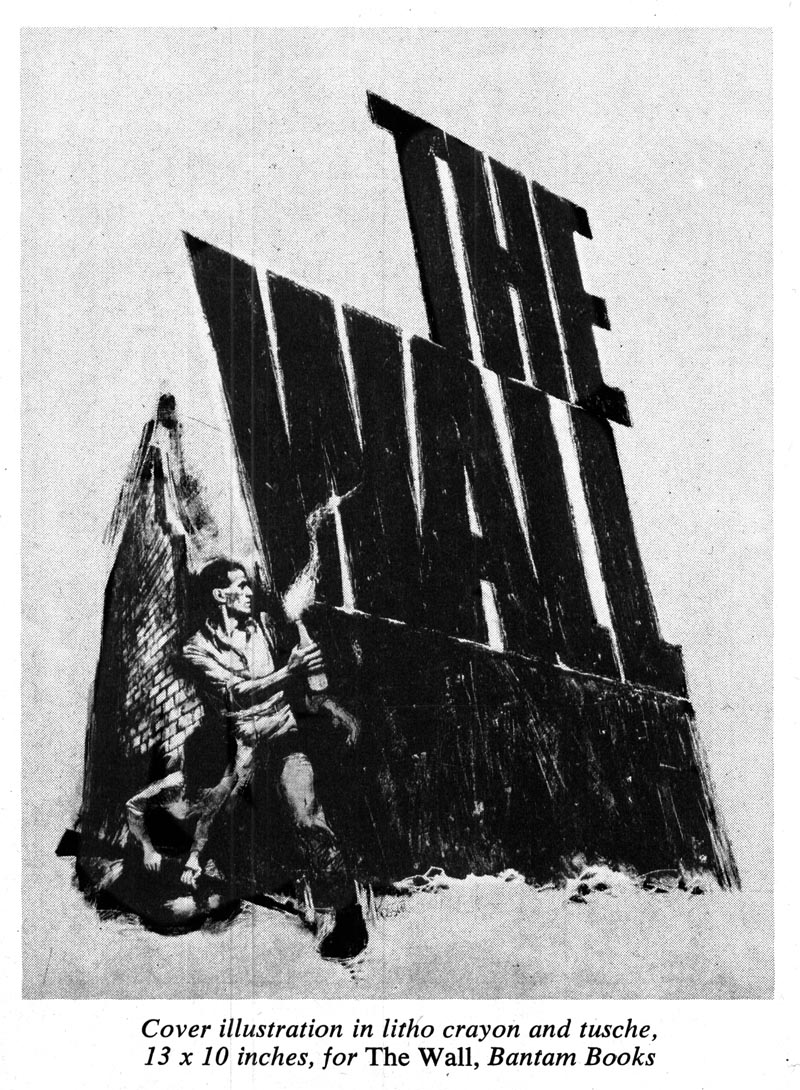
SK: Well, my biggest problem had always been trying to save my drawing or painting after I found I didn't like the way it was going. In washing it out, I lost not only today's painting, but yesterday's and last week's as well.

bantam s2600

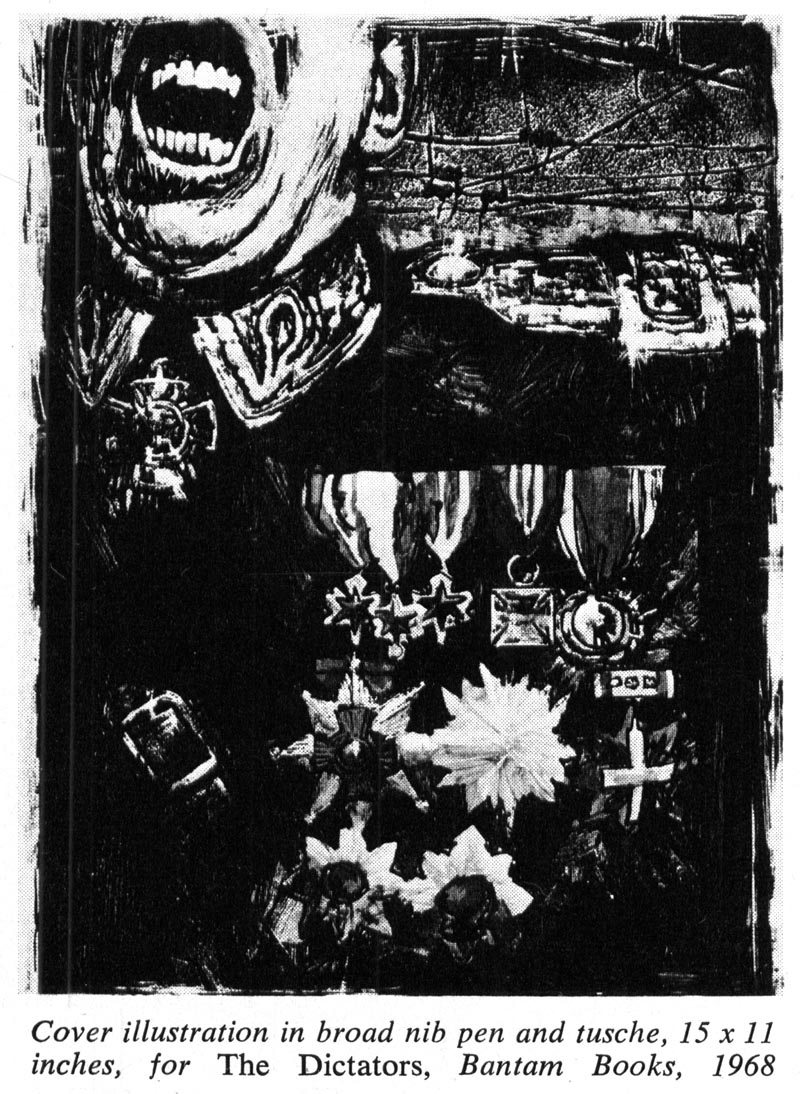
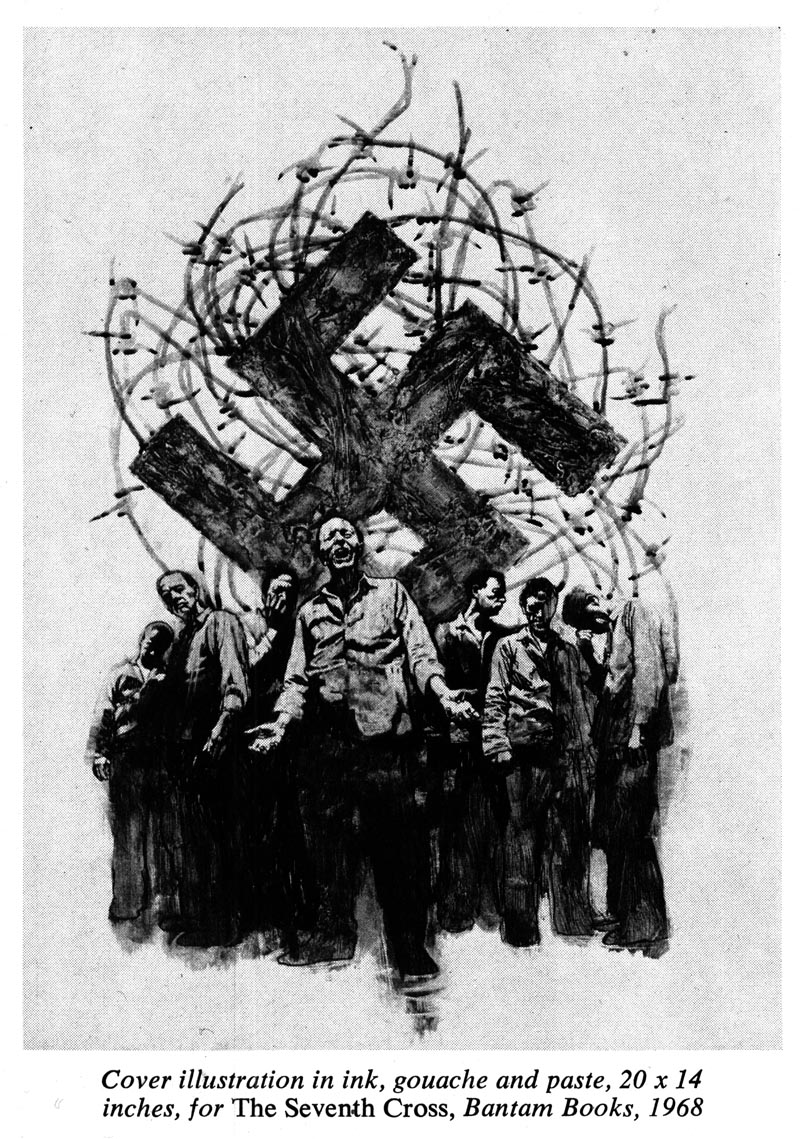
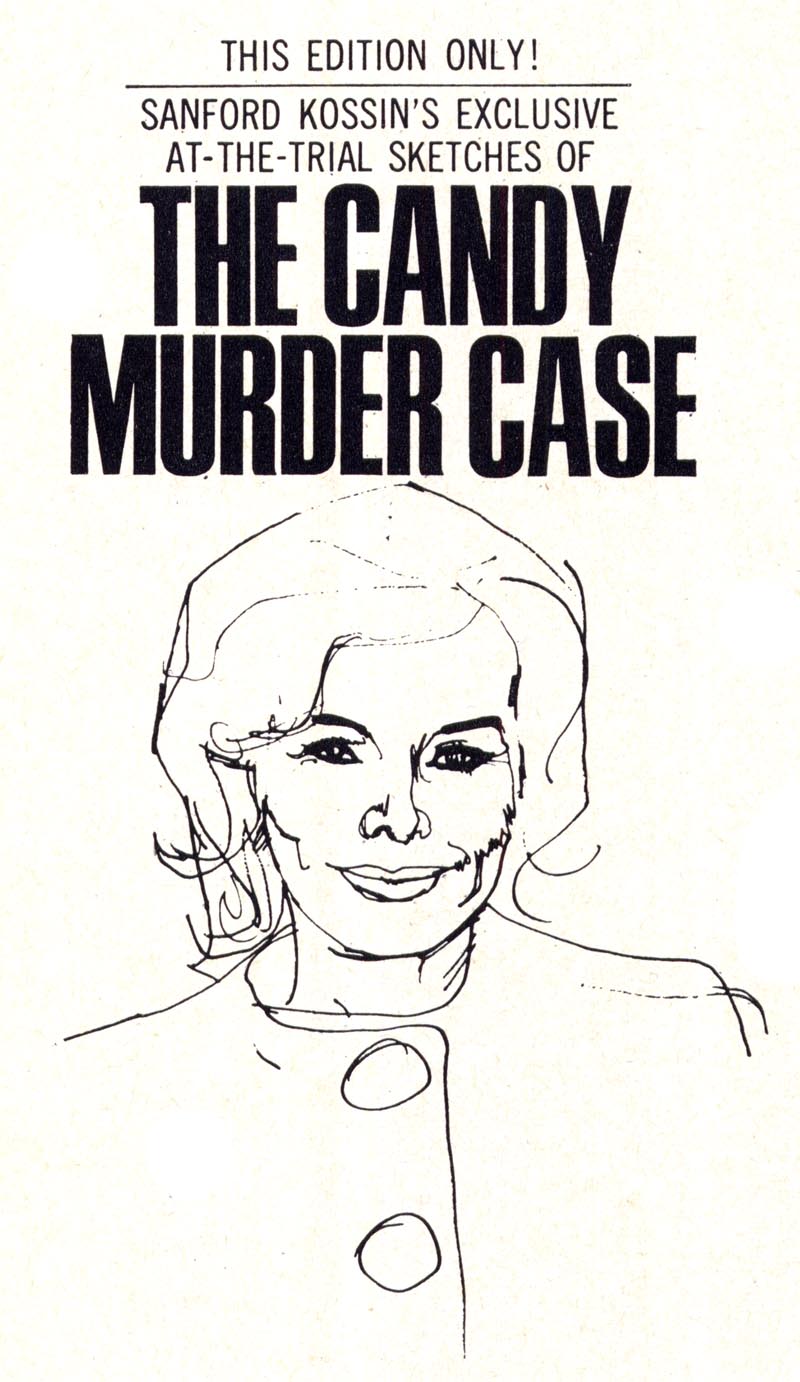
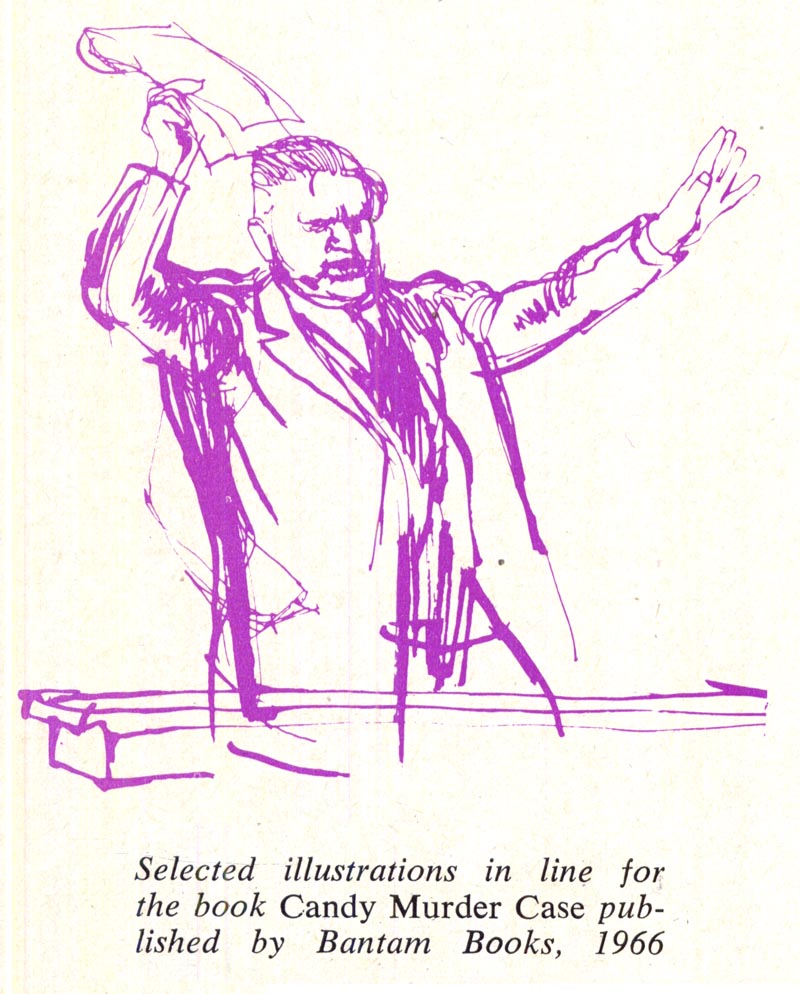
SK: I've overcome this by using a crystal clear spray to isolate my drawing. I start my picture by projecting my sketch onto my illustration board and then using pen and ink to draw it in. After my drawing is finished I spray it.

bantam f2339

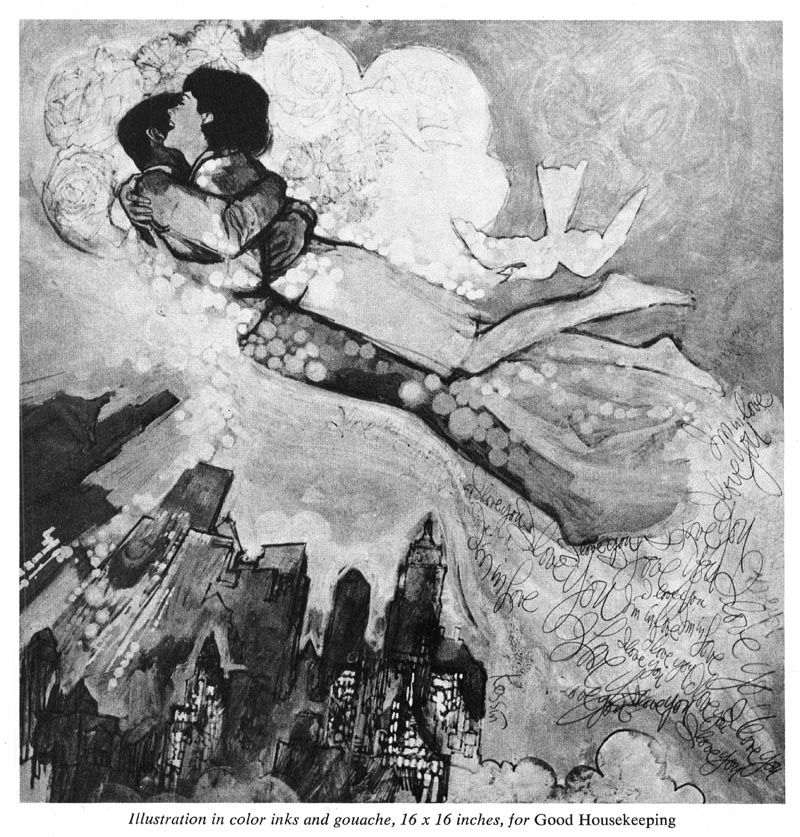
SK: I'm not restricted to India ink, mind you, I can also use water-based materials such as the felt tipped watercolors. In this way I can do drawings in colour without any real problem.

bantam a1690

SK: Once having sprayed the surface, the next problem is trying to paint over that glazed surface. To start this I use a polymer matte medium, diluted with half water, which I brush over the area.

This is a very thin coat because I don't want to build it up to the extent that I find it beginning to peel away. Once the matte medium is on, I have a surface on which to paint in gouache.

Kossin

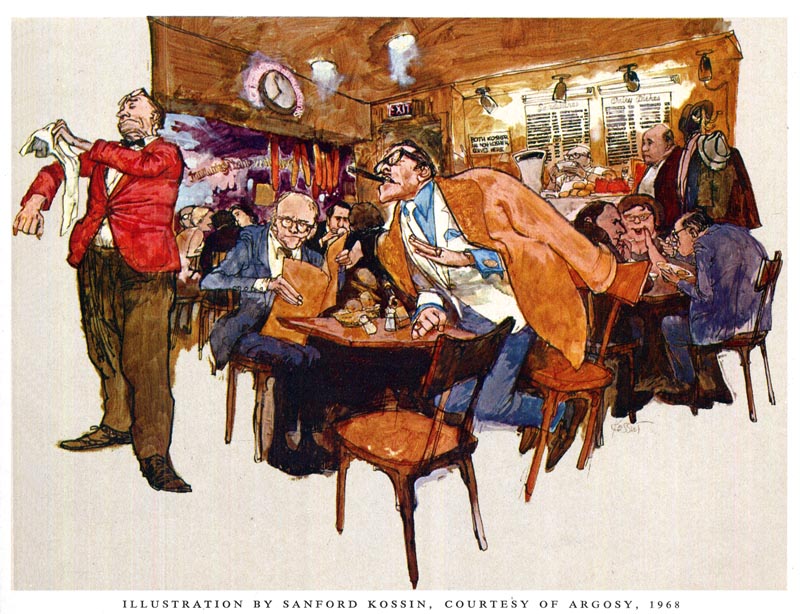
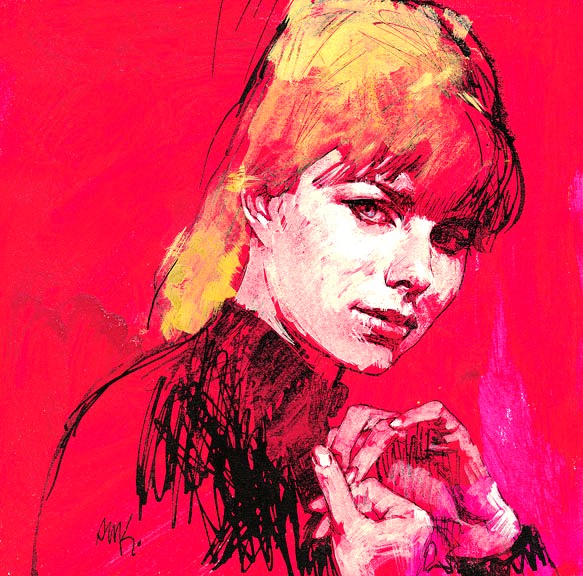
SK: Then if I'm not satisfied - if the gouache painting comes out wrong - my escape hatch is a sponge and water to wash it off the isolated drawing. This is why I don't use the polymere colors - I'd never be able to wash them off. Although my painting is no longer in existence, my drawing, isolated under coats of plastic, is completely intact - I haven't lost it at all.
Sandy Kossin

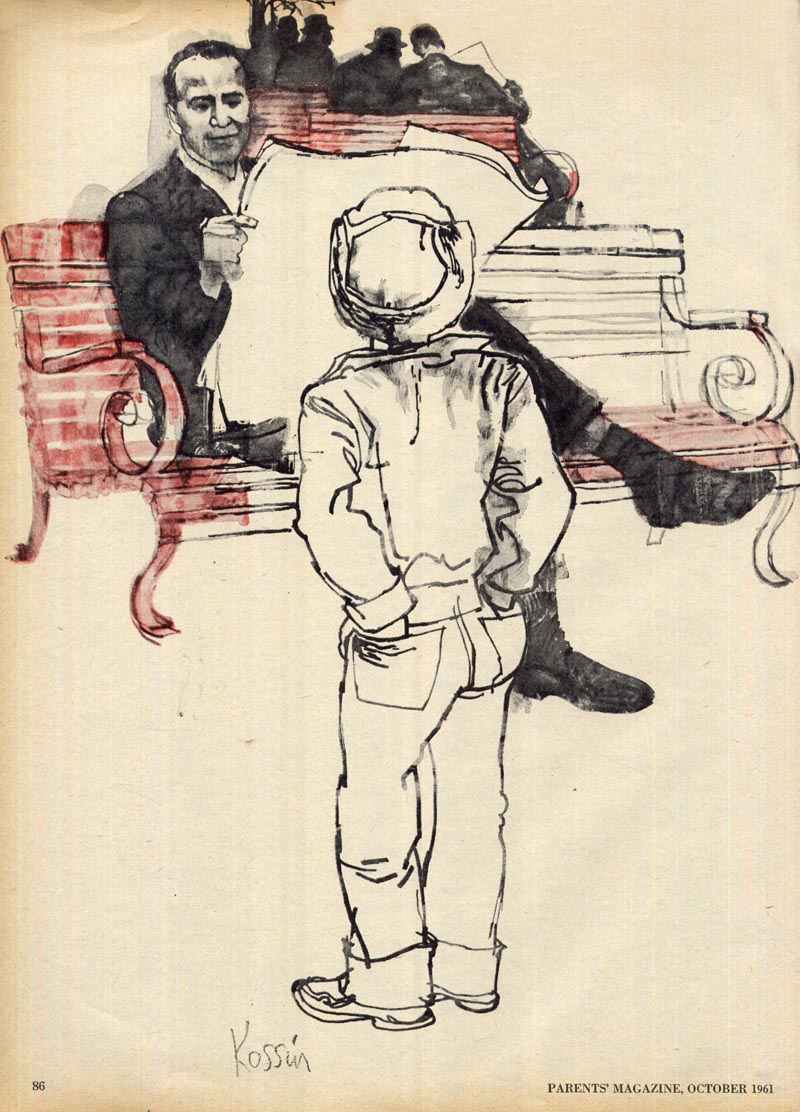
SK: Once I'm satisfied with my painting, I spray over this stage. Again, I've got to go through the process of using the matte medium, but it permits me to come back to this second stage if I'm in trouble.
Kossin21

SK: Not only is this a safety measure for me, but I can see the doors open as far as technique is concerned.

berkley X1640

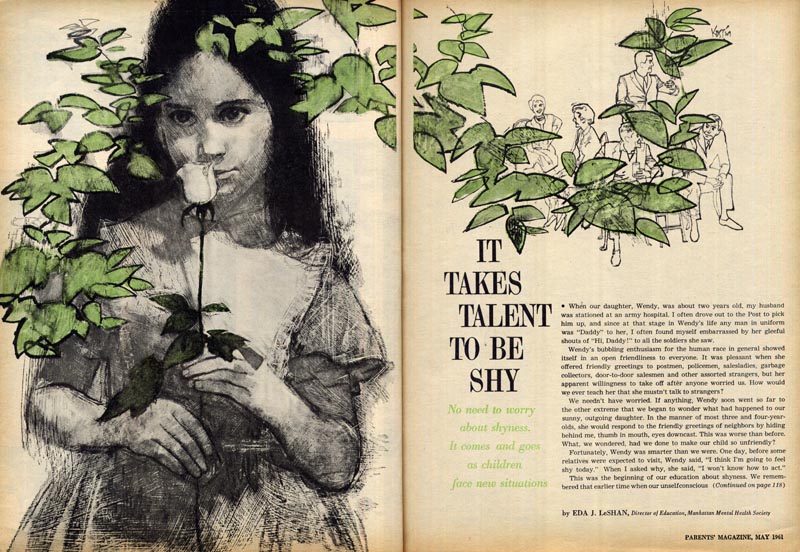
SK: It's very important for me to have complete control...
Kossin20

... because I found out some time ago that I'm not infallible.

Kossin20.detail01

* Thanks to Flickr members Boy de Haas and Ondiraiduveau, who both provided some of today's scans.

Thursday, February 21, 2013

Sandy Kossin on Movie Poster Design: "My job [is] to fill the space in a clever fashion"

Continuing Herbert Rogoff's 1969 interview with Sanford Kossin from American Artist magazine...

HR: In the Beckett illustration you created some time ago, what materials were you supplied with, and what were your instructions?

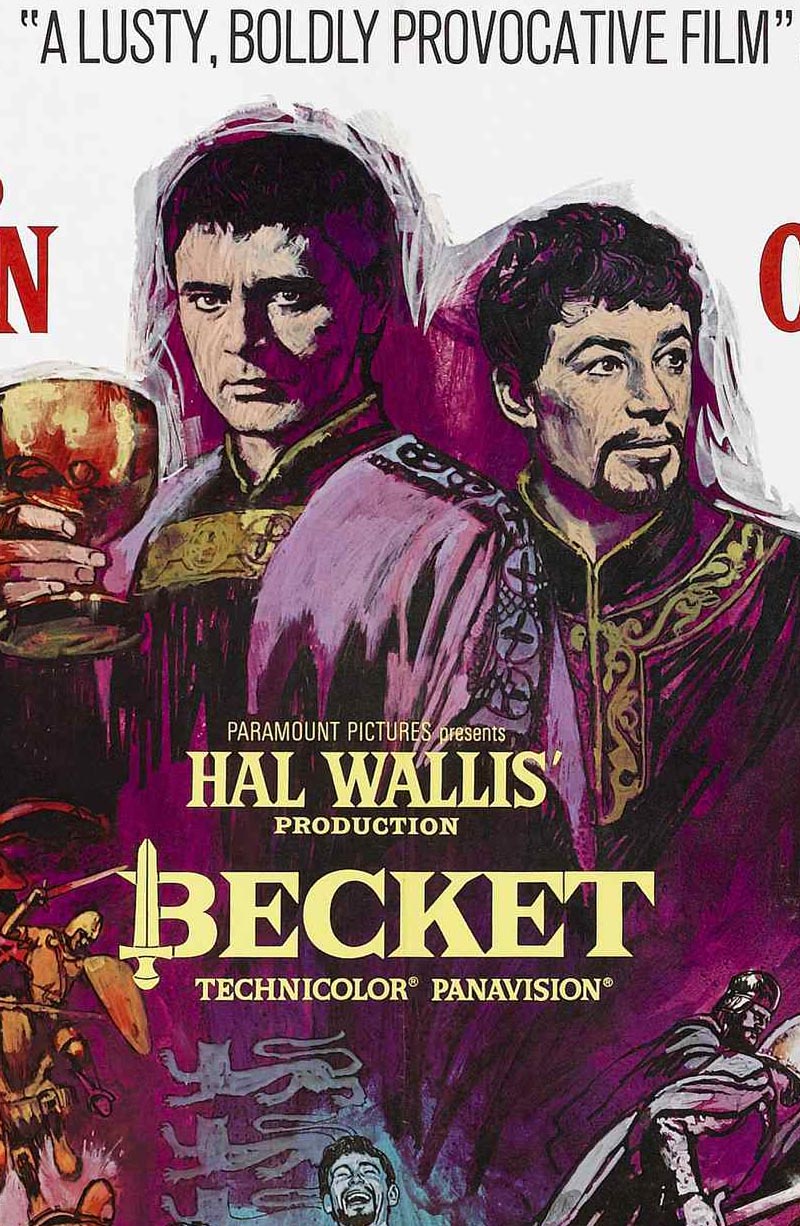
SK: Well, this happened to be a very happy circumstance. Paramount Pictures is very lenient, and they're open to new ideas. Consequently, all I was given by the art director was a rough, black-and-white sketch that had been approved. It consisted of the two main figures and an indication of the montage.

Kossin49

SK: But in doing a movie poster like this you run into other problems, like billing, where one head must not be larger than the other. Their contracts, I guess, stipulate that both heads must be of equal size, and one must not be higher than the other. Now, if one is definitely the star, he will get his billing. In this case we had Richard Burton and Peter O'Toole, and I believe that Burton in that illustration may be the same size, but I think he's just a bit higher on the page. It probably meant he got top billing.

Kossin49.detail03

HR: Then movie posters, in a sense, dictate your composition?

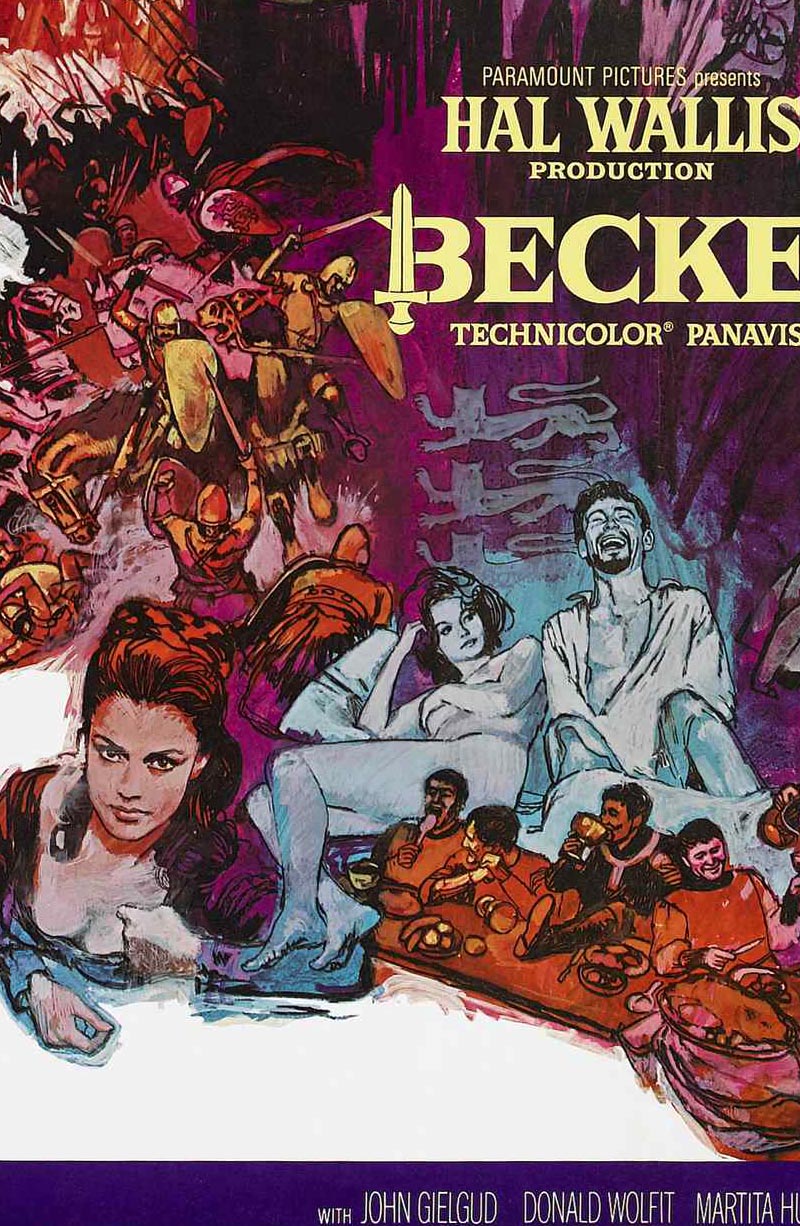
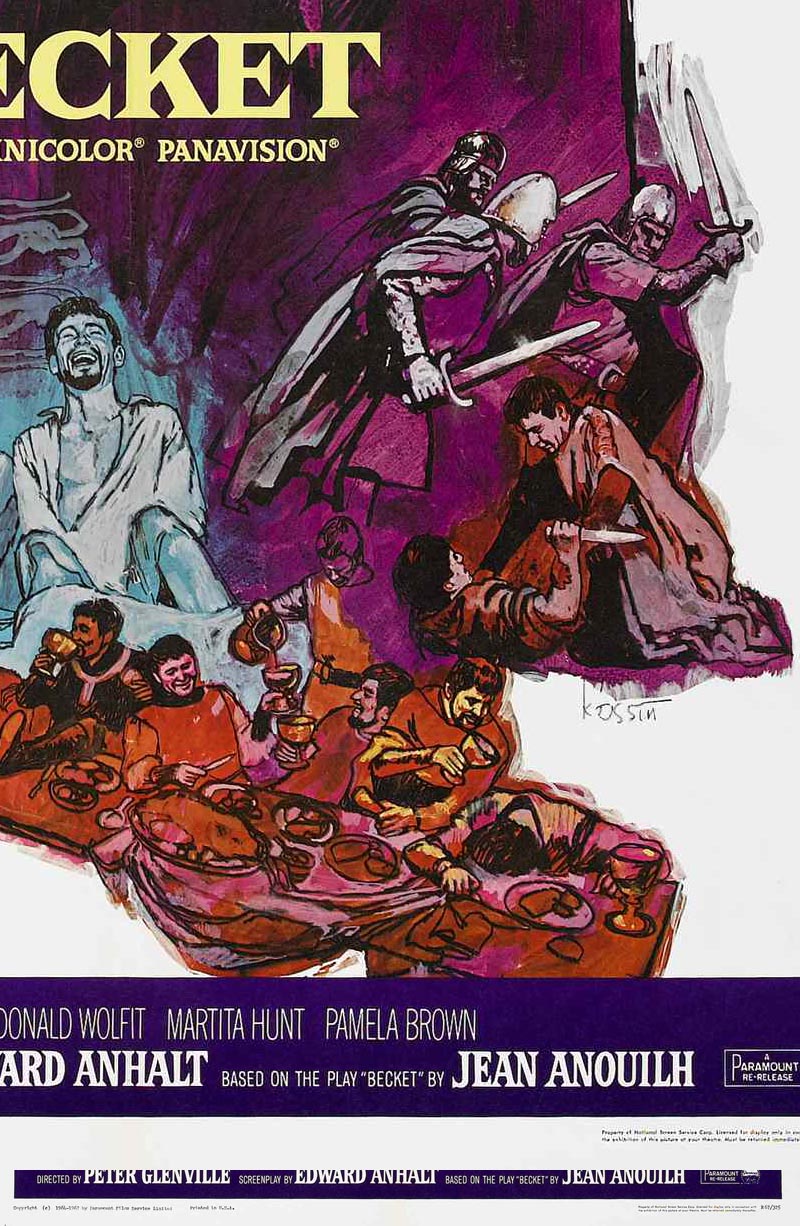
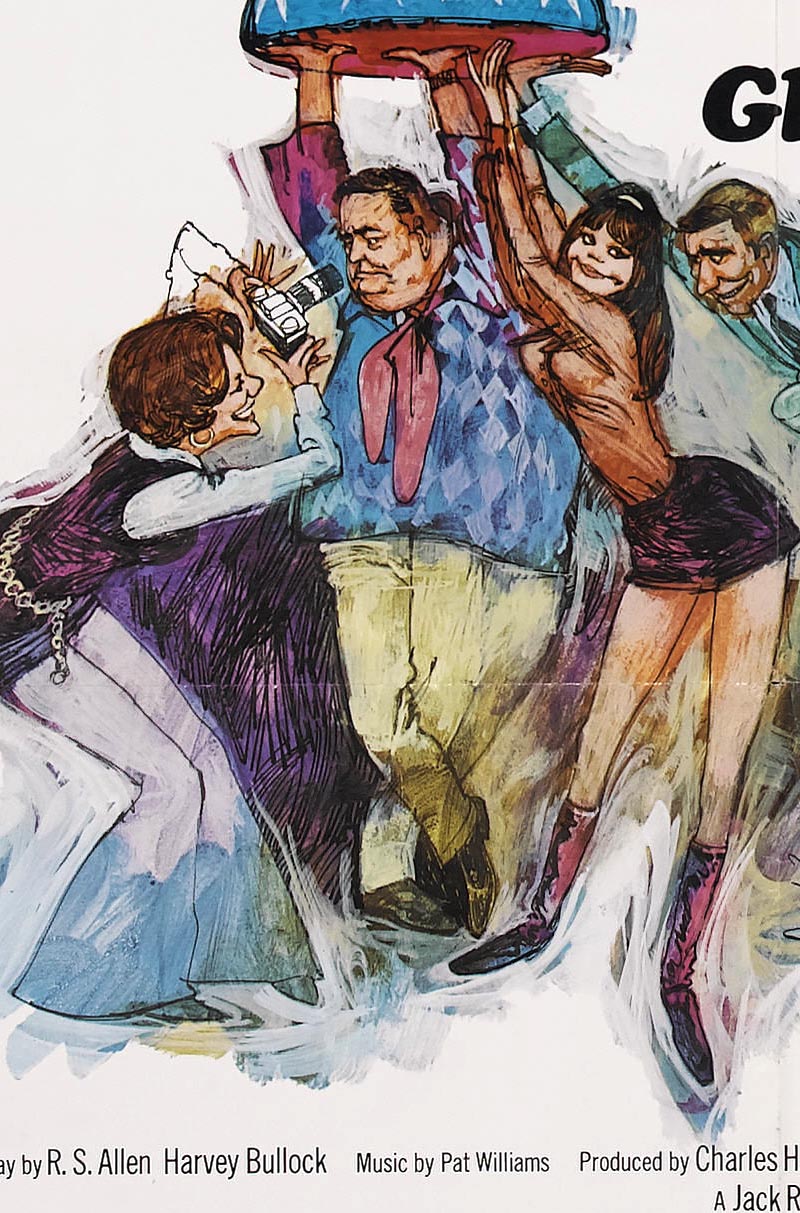
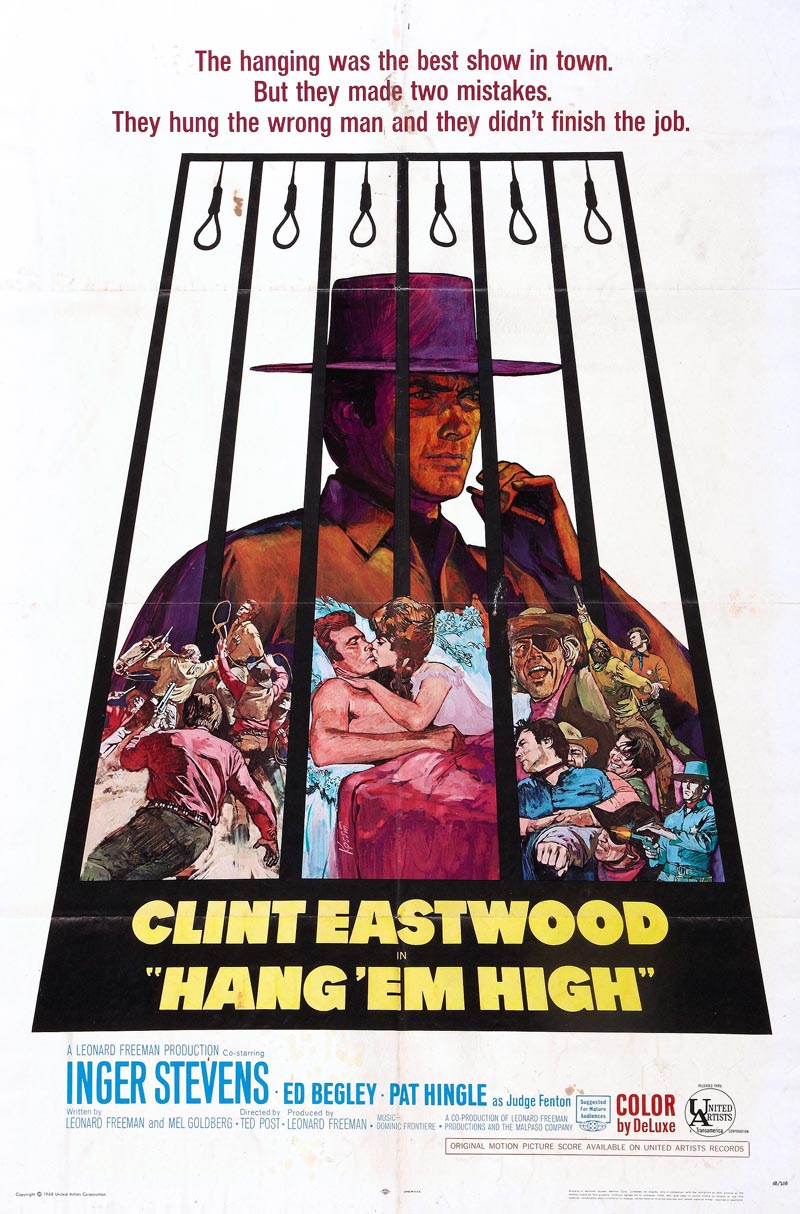
SK: This is what I call my limitations. In the Beckett I presented two large figures of the stars, and around them, in a montage, I depicted provocative scenes from the motion picture.

Kossin49.detail01

SK: My job was to fill the space in a clever fashion. I received from the movie people many stills that were taken by the photographers on the set. There may be as many as two to five hundred. It takes me a full day to go through them, at which time I may select one hundred or more that I feel will fit into this composition. Another long editing session on my part helps me to select those I feel will be useful to me.

Kossin49.detail02

HR: Are these prints in colour?

SK: No, all are in black-and-white.

HR: How do you determine the coloration? Does the art director help?

SK: No, in most cases he leaves that up to my own tastes. In this case, I used purple and blue predominantly, with warm colors running through it, because of the obviously royal subject matter. The hot reds and oranges give a feeling, I hope, of the life and adventure that was basic to this movie.

HR: Sandy, what are those strips of illustration board behind your drawing table? The ones with the color swatches and varieties of textures?

Kossin50

SK: I use them constantly to check relativity of color. Here is a brilliant intense red that goes brown when I place this fluorescent orange next to it.

Kossin51

SK: I'd rather rather have it show up here than on my painting. That could be painful.

Kossin51.detail01

SK: The textures are experiments with modeling paste to see how much impasto I can use without cracking the surface.

Kossin46

HR: Tell me, do you police the area as you go along or do you save all those little corrections for the end for a general housecleaning?

Kossin46.detail02

SK: If there's something in my picture that I don't like, I correct it right then and there because each step dictates the next step in a painting. That's why it's so advisable for me not to work on one area and complete it before going on to another. You change and you readjust and it's really a juggling job.

Kossin46.detail01

SK: I guess by policing you mean the little nicks, slips of the brush or pen. Sure, I correct those too as I move along. Some of them I leave in, because some accidents make for variety.

Kossin47

Kossin48

* Concluded tomorrow

* Many thanks to Heritage Auctions for allowing me to make use of scans from their image archives in today's post.

Wednesday, February 20, 2013

Sandy Kossin on his Bay of Pigs series: "Life magazine has resources... no one else can match."

Part 2 of Herbert Rogoff's 1969 interview with Sanford Kossin from American Artist magazine...

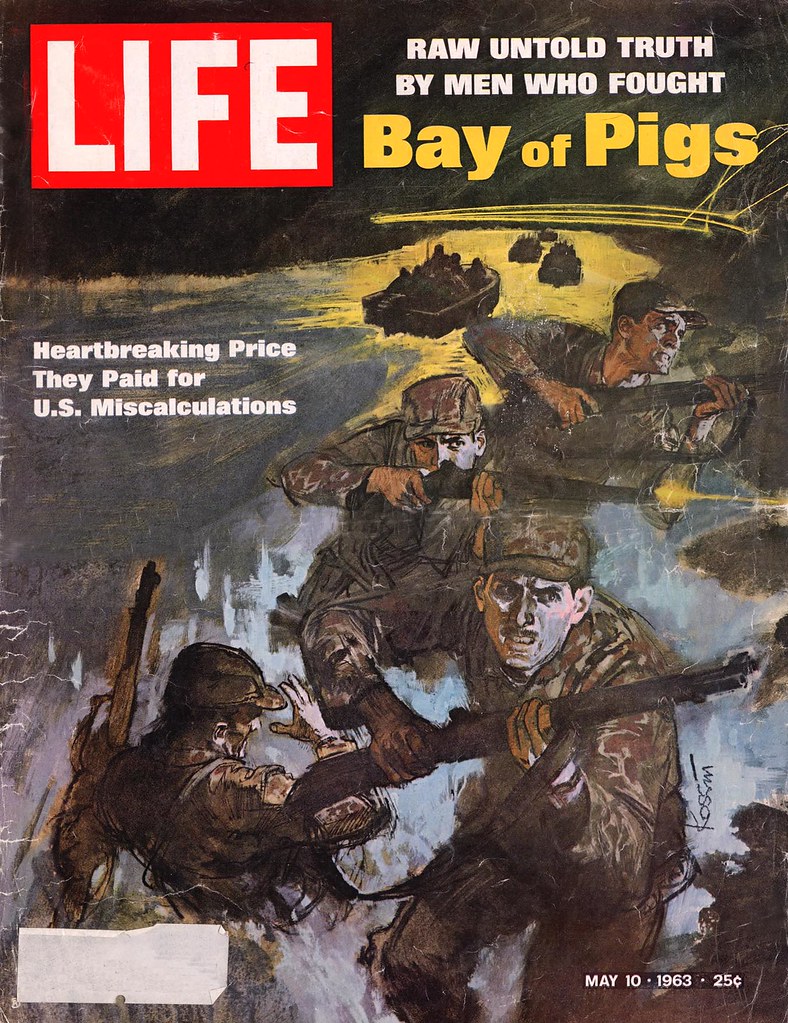
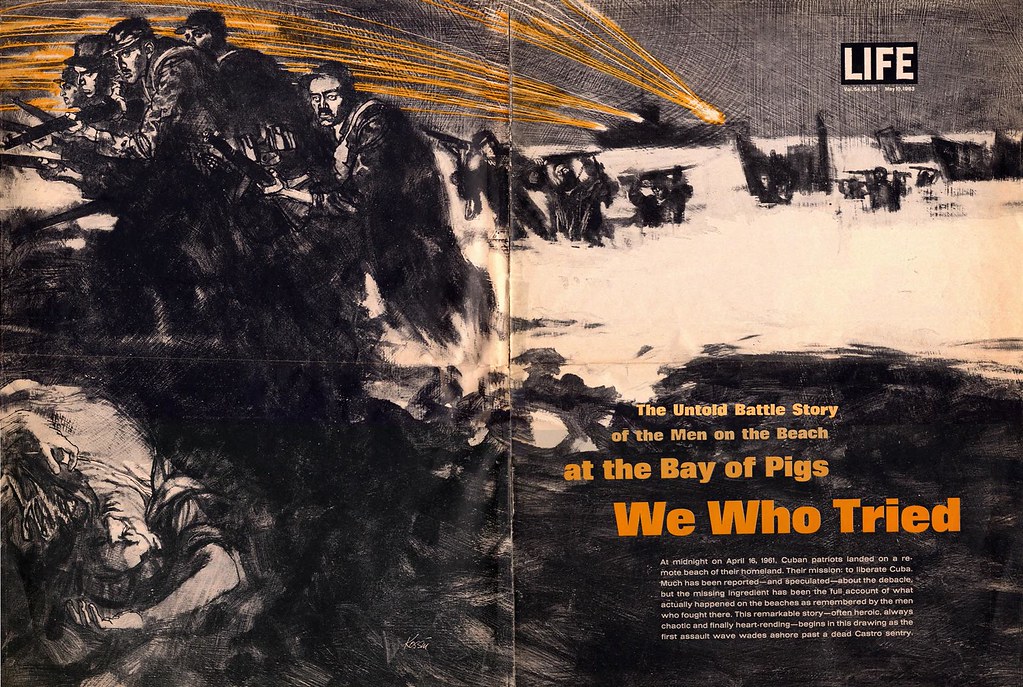
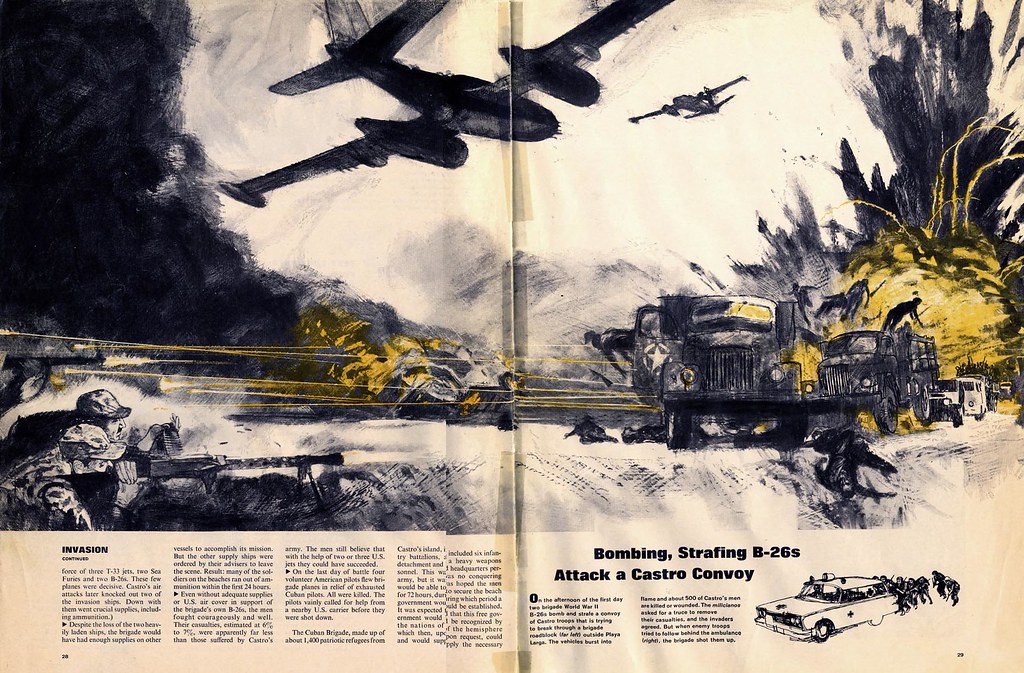
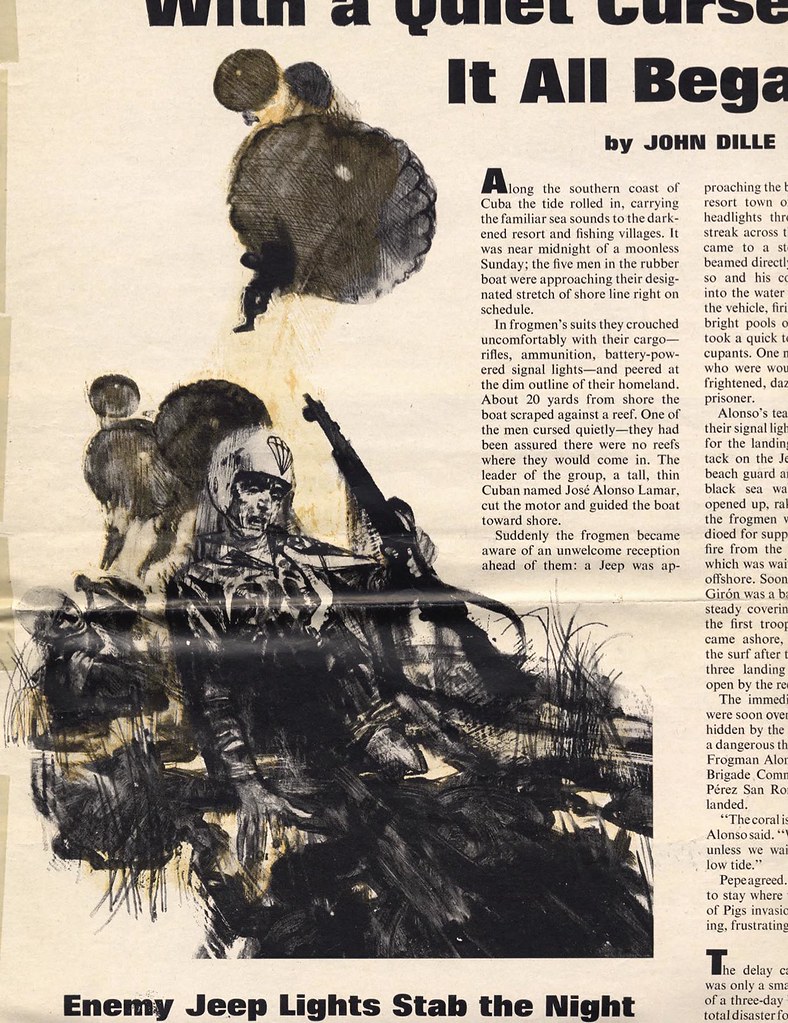
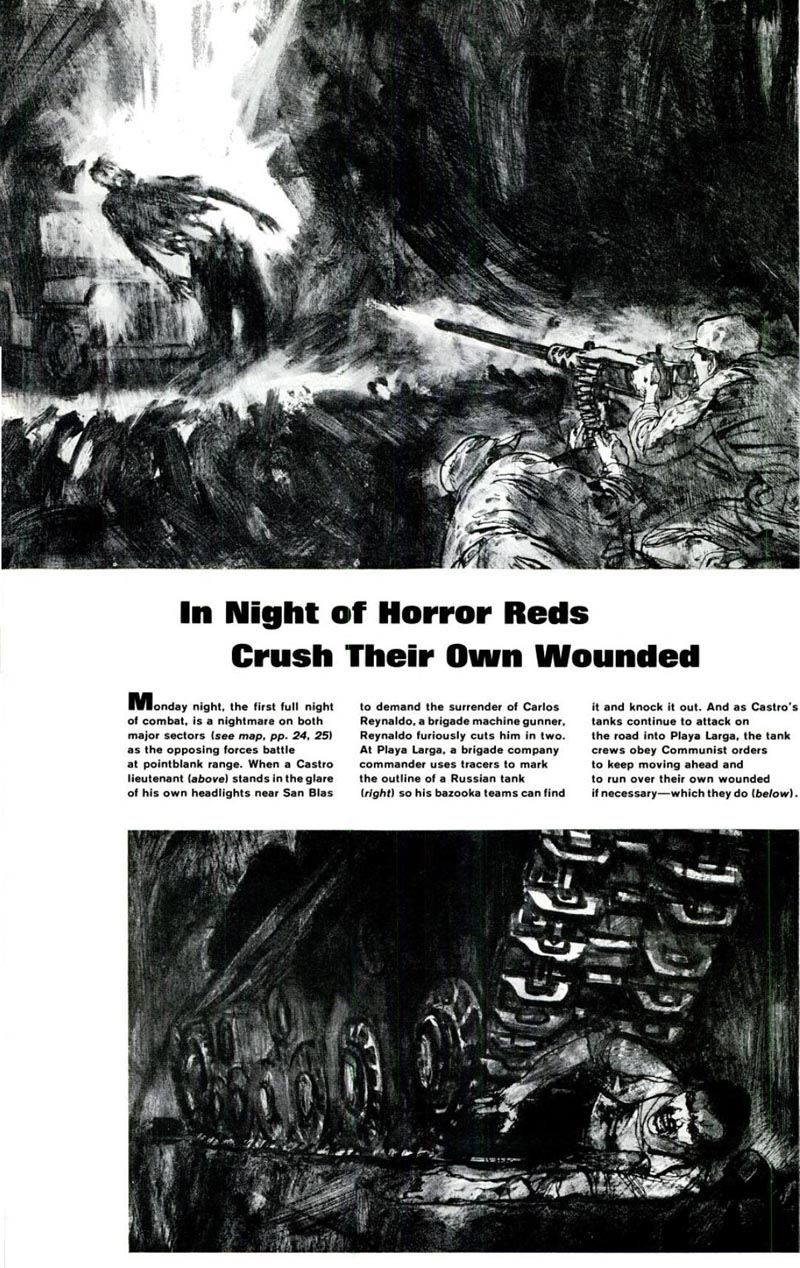
HR: In 1963, I believe, you did the illustrations for the Bay of Pigs story in Life magazine. How did you go about doing that job? What research was involved?

Kossin07.jpg

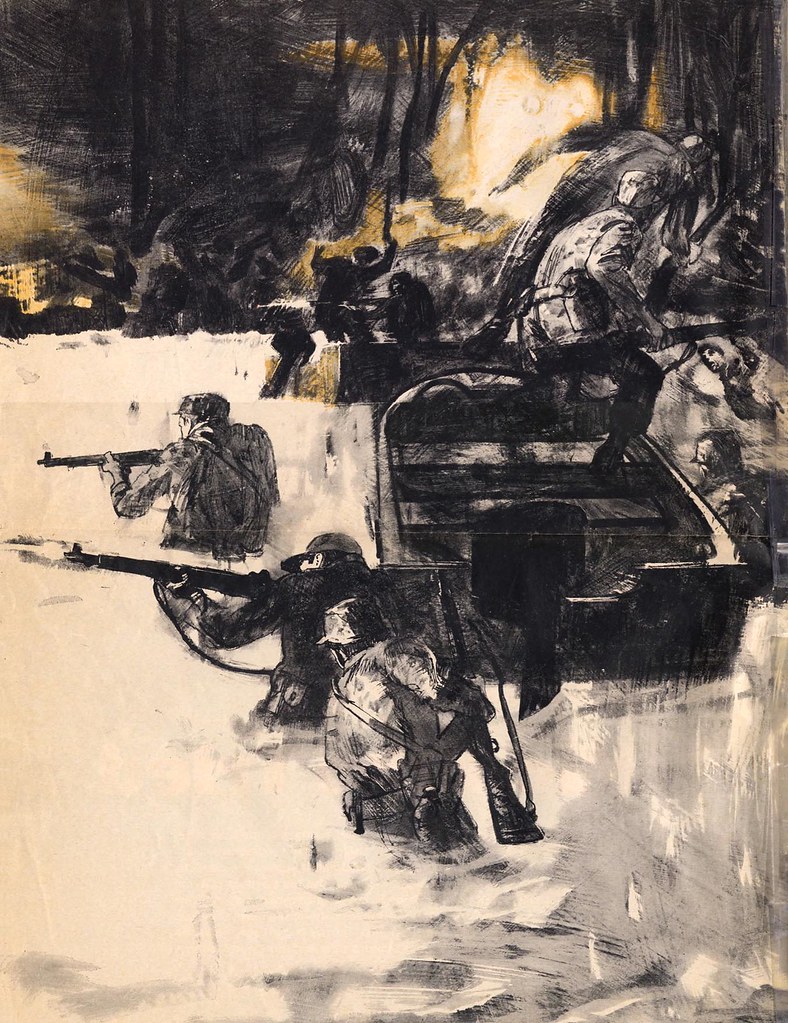
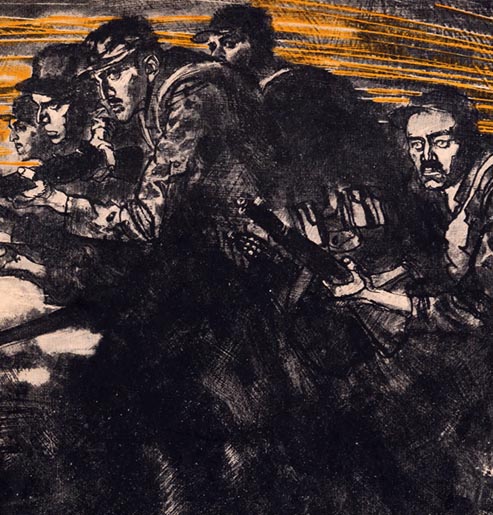
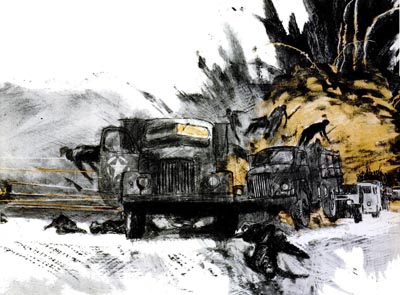
SK: Happily, that job was for Life magazine, and Life has resources that probably no one else can match. They have a picture file second to none. I worked with a Cuban who was an explosives expert and had been part of the invasion. But prior to that, I met many times with the editors and art directors to iron out the mechanical problems: what to show and how many drawings to show it.

Kossin08.jpg

SK: So when we finally decided on the nineteen spreads, we knew pretty well what each picture would depict. After that, it was a matter of making sketches that were appropriate for the page. My compositions were based on the pictures that preceded them. It was one step at a time. The opening spread dictated the next step, and so on.

Kossin09.jpg

SK: Finally, I had to pose models in the attitudes that were necessary for each picture.

Kossin08.detail01.jpg

SK: Research for the technical elements, the guns, the tanks, the airplanes...

Kossin12.jpg

... and even the terrain on which the battle was fought...

Kossin42

... was provided by the magazine. It then became a matter of creating the types,

Kossin10.jpg

the people in their roles,

Kossin43

... and trying to recreate the atmosphere of the battle.

Kossin44

* Continued tomorrow

* Thanks to Tom Watson for providing many of today's scans.
Tuesday, February 19, 2013

Sandy Kossin: "... the composition to me is a most important factor in telling the story."

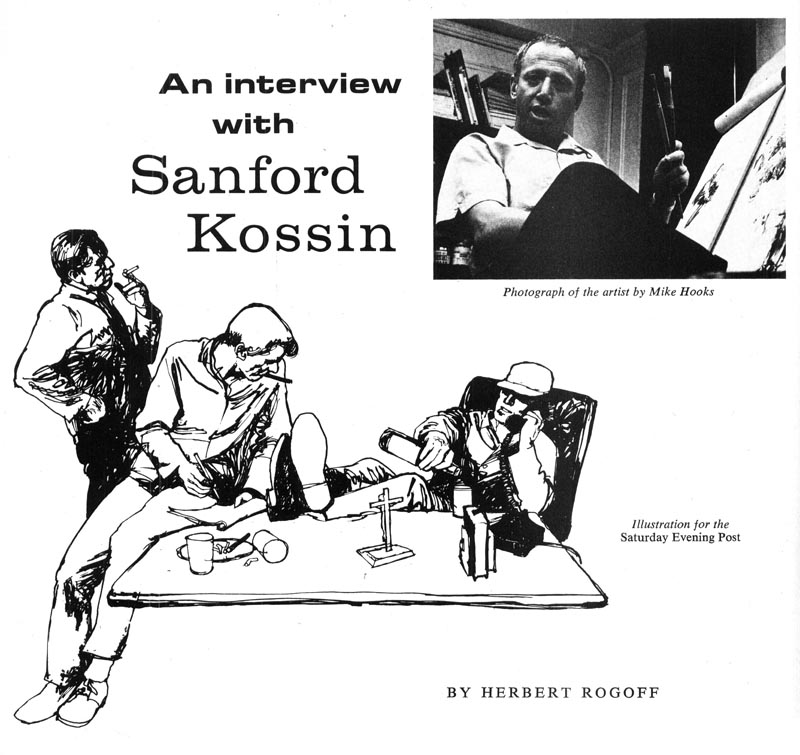
Herbert Rogoff interviewed Sandy Kossin for an article in the May 1969 issue of American Artist magazine. This week I'll present that interview along with examples of Sandy Kossin's work, both from the article and from my Flickr archives. ~ Leif Peng

Kossin33

HR: Sandy, how do you go about starting an illustration?

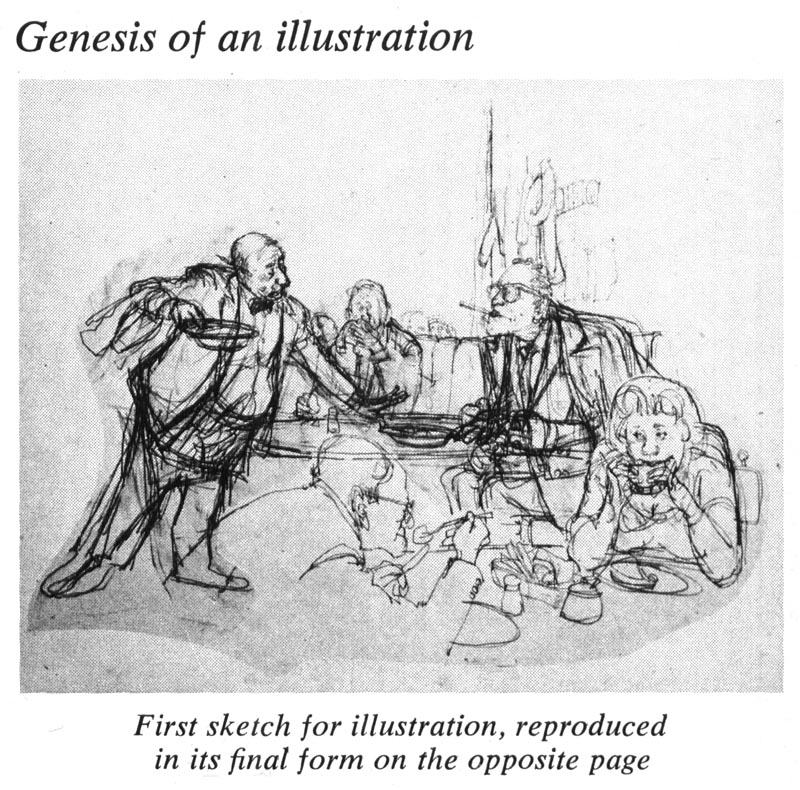
SK: I have it fairly clear in my mind what has to be done for the picture, and then it's time to come to the board. With a graphite pencil, usually a 2B lead, on a 14 X 17 tracing pad, I begin to make situations that are both pleasing and at the same time tell the story. This, of course, is based on the thinking that I went through previously.

Kossin38

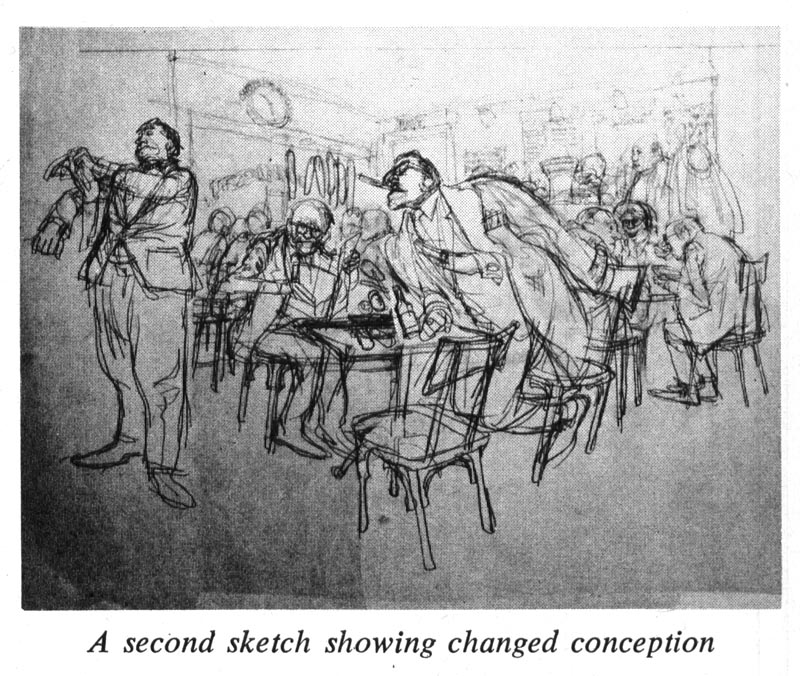
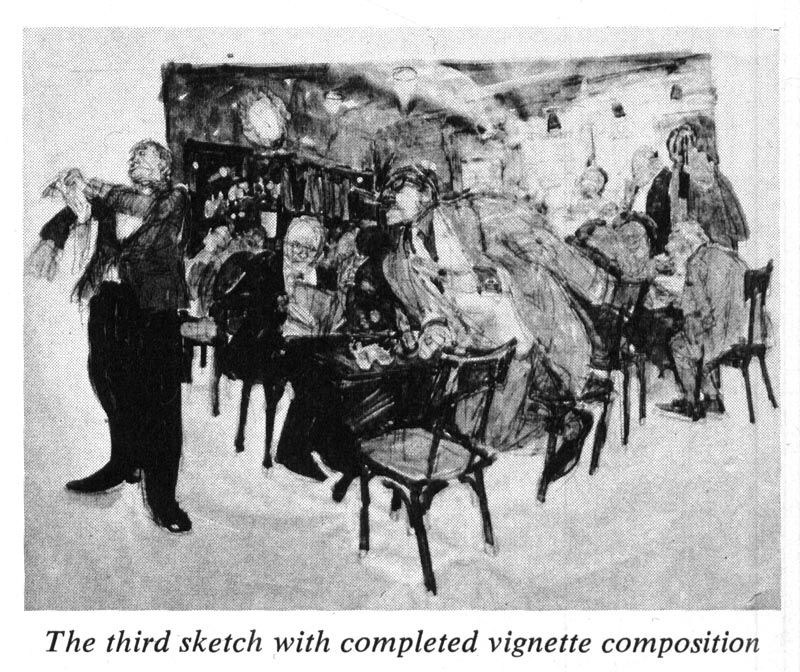
SK: The graphite is something I use when I'm doing a humorous type of drawing. I've found that charcoal - a stick of vine charcoal or some of the compressed charcoal - is a good medium for me to use when I don't want to get bogged down in detail. But I'm more concerned with putting in the composition; and the composition to me is a most important factor in telling the story.

Kossin39

SK: If it hasn't been pinned down previously by the art director, I find that with this lack of limitation I'm capable of thinking out and considering the problem, and arriving at a composition that will tell the story best.

Kossin40

SK: That's it in a nutshell - the composition should not be considered as a clever shape, but as something that should be the method of telling the story.

Kossin41

HR: I see on your board a rough sketch for a humorous illustration. I can understand your doing this from memory. When you have to do a serious illustration, when do you decide to call the models in?

Kossin34

SK: There are times when I have a fairly complete idea in my mind of what the picture calls for, and I may even hire models for my "roughs" and take photographs, because the lighting is important, and there are things that the models give me that I might never have thought of.

Kossin37

SK: If it's a situation in which I have to do some thinking and get an idea on paper, then I have to draw it first, get it approved, and then photograph my models to suit my original conception.

Kossin36

HR: In the past few weeks I've talked to people who know you and your work, and they all spoke glowingly of your great sense of composition, Where did you learn it?

Kossin35

SK: I think it probably started originally with a study of the old masters - Rembrandt up into the Impressionists, especially Degas and Lautrec. But I think that eventually, in looking even at the things once studied, you see them in a new light because of a professional attitude.

Kossin32

SK: It's a matter of having done it for so long. It's like a musician playing the same composition over and over again; he finally understands it so well that he begins to make his own variations. And this, I feel, is essentially what all artists go through.
Kossin27

SK: We begin to edit our thinking, and we realize that all the formulas we learned, when we were very young and in art school, were not really formulas, but just places from which we could take off - to use as a basis for structure.

Kossin28

SK: It's like foundation stones for a building. The buildings that are now being constructed are quite foreign in relationship to the architecture of a hundred years ago, but they still have foundations, and they still have to have the same structural integrity that those designed many years ago had.

Kossin29

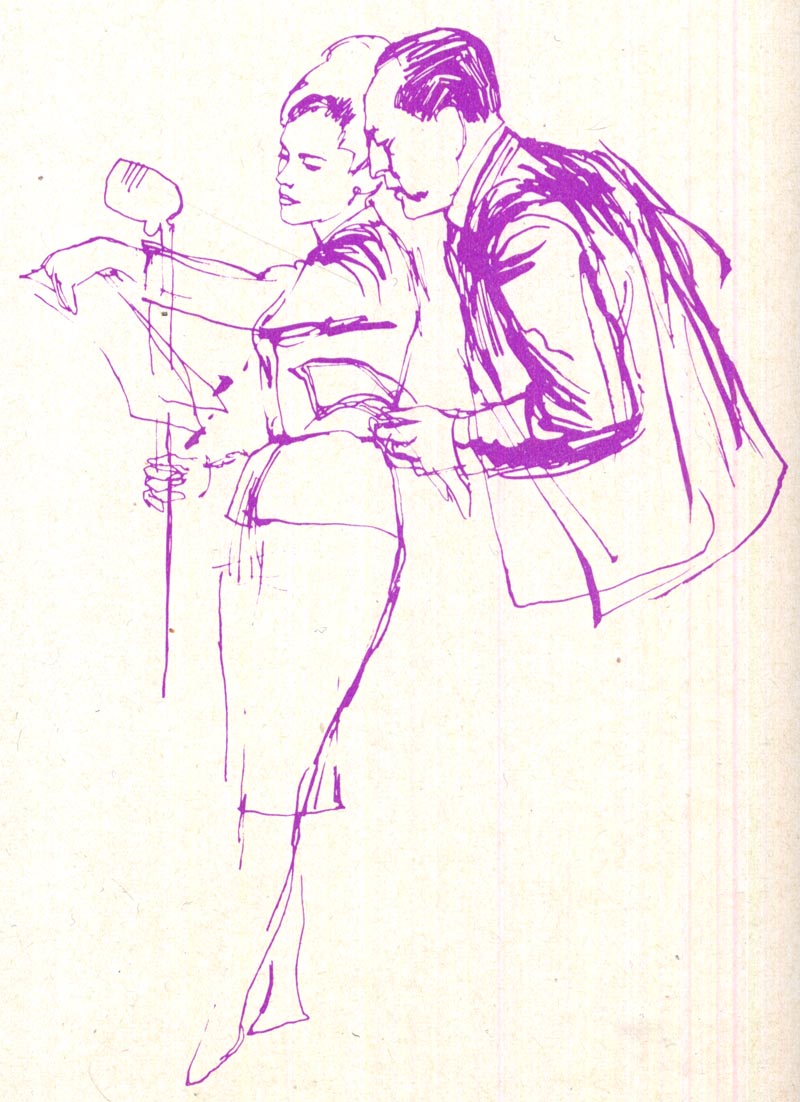
SK: I pay a lot of attention to the movement within the picture. This is different from an advertising layout, or a decorative composition where the elements are static and superficial; they're pleasant in terms of shape-making.

Kossin30

SK: I'm more concerned with what I call a traffic pattern within the picture itself - things move in, and out, and around.

Kossin31

* Continued tomorrow