Showing posts sorted by relevance for query rowland b. wilson. Sort by date Show all posts

Wednesday, May 18, 2011

"Rowland Wilson (the cartoonist's cartoonist)" - Bill Peckmann

Last week's look at Rowland B. Wilson's Playboy cartoons certainly prompted a lot of enthusiastic commentary, including this nice note from Bill Peckmann:

"Dear Leif; All of us die hard Rowland Wilson fans can't thank you enough for posting 3 days of Rowland's (the cartoonist's cartoonist) art! Any chance of posting more?"
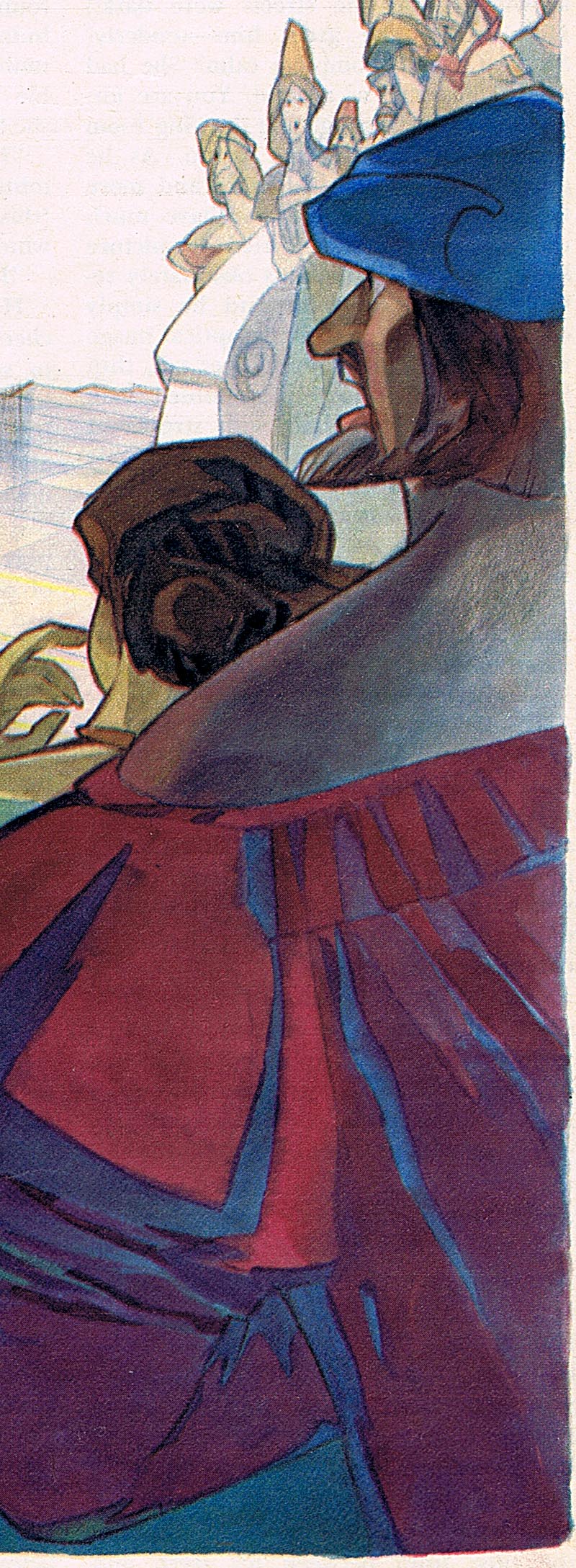
Wilson26

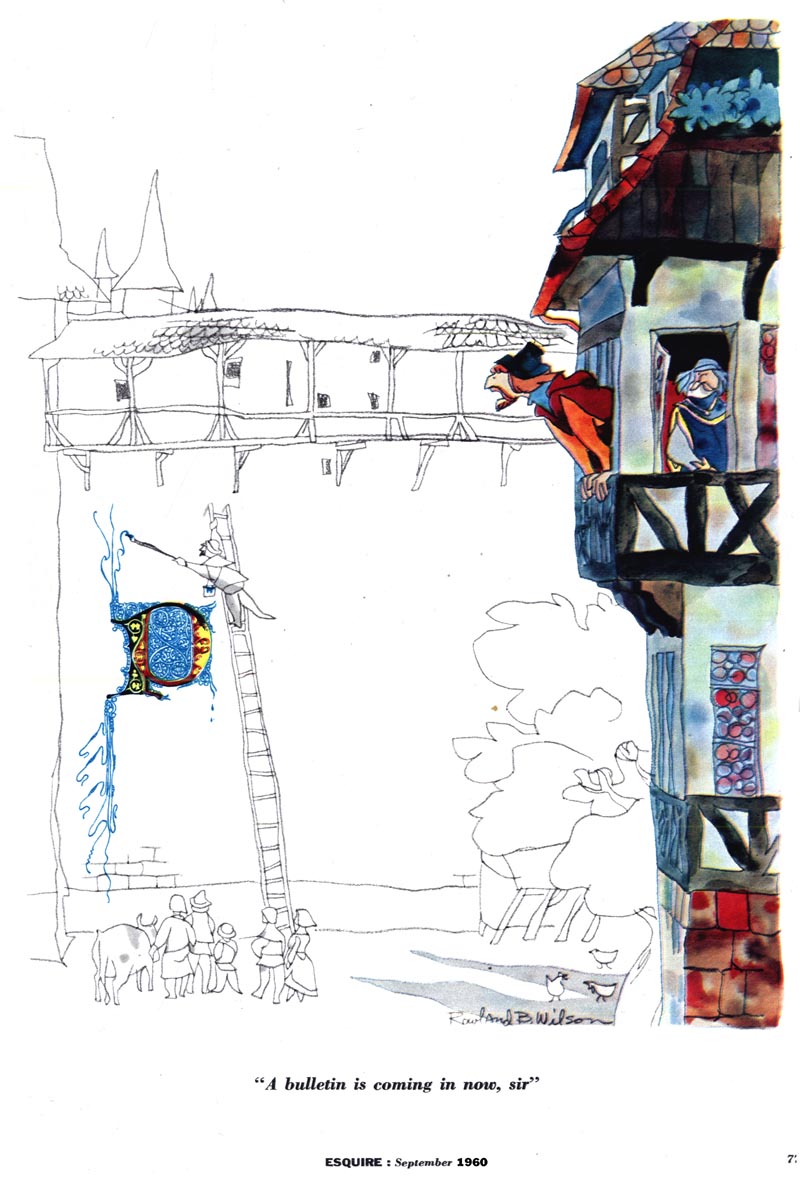
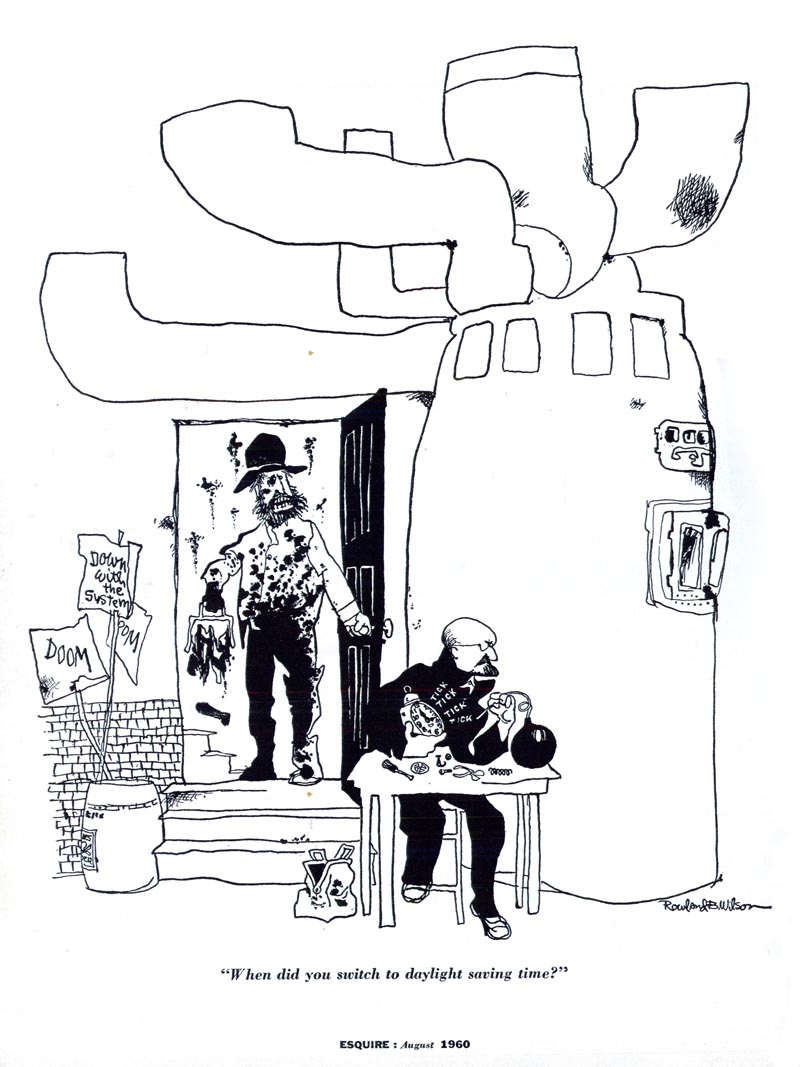
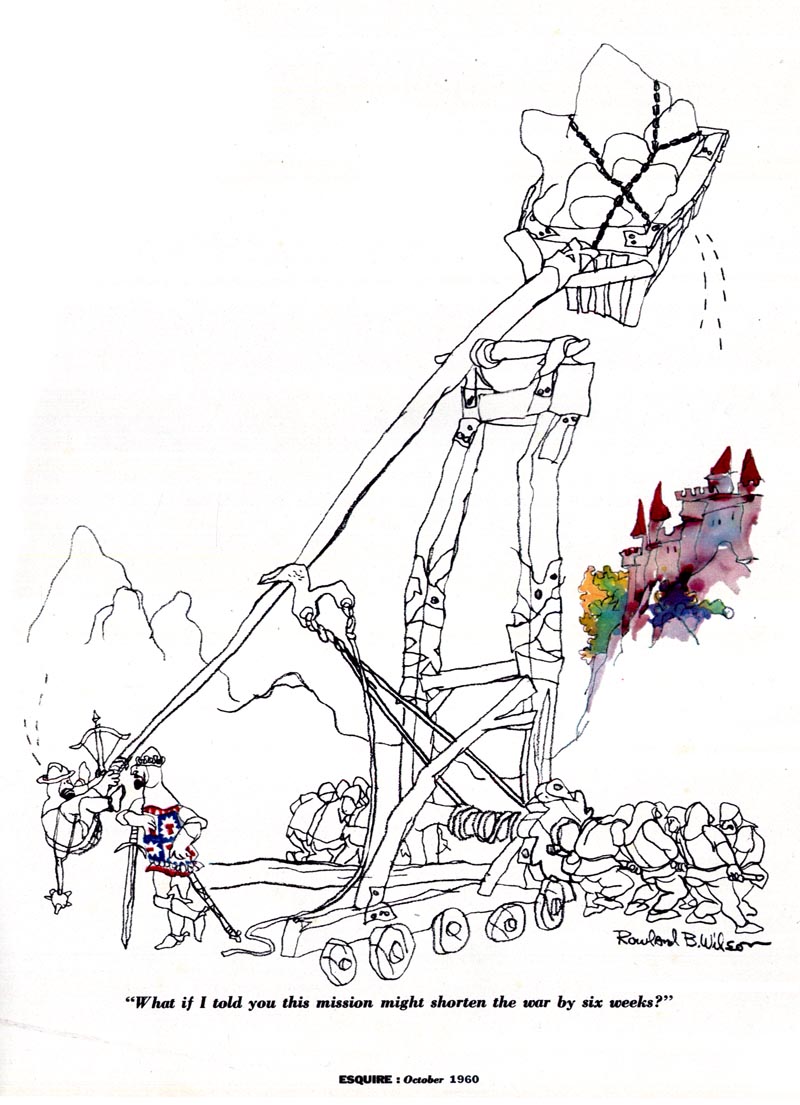
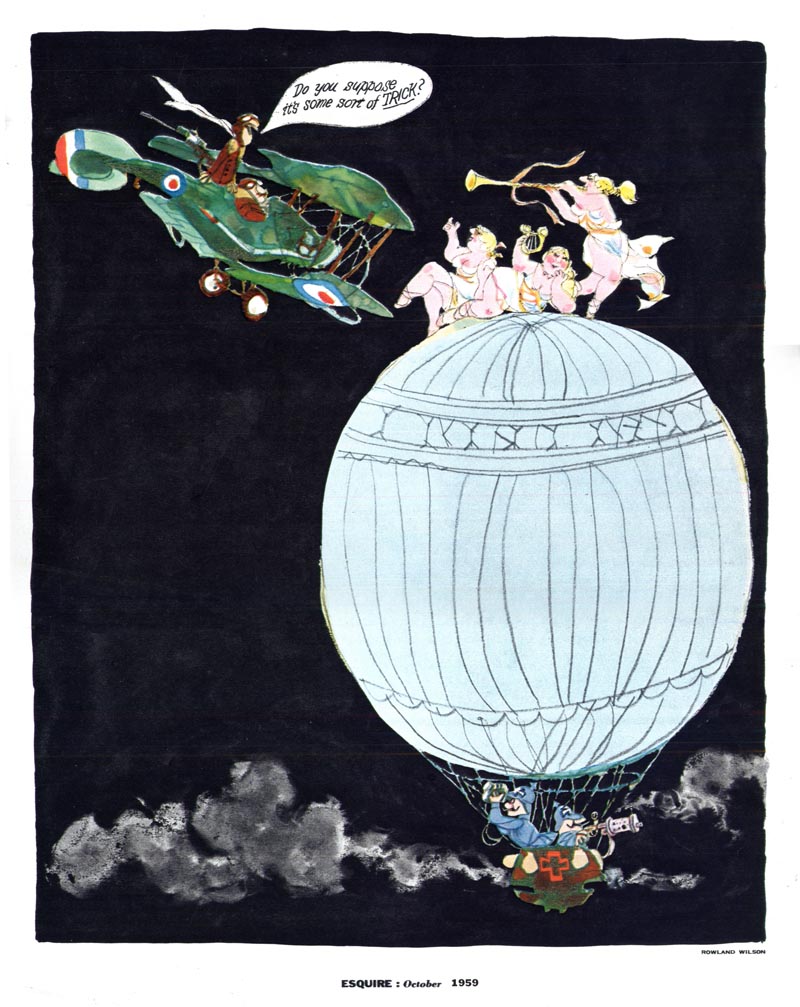
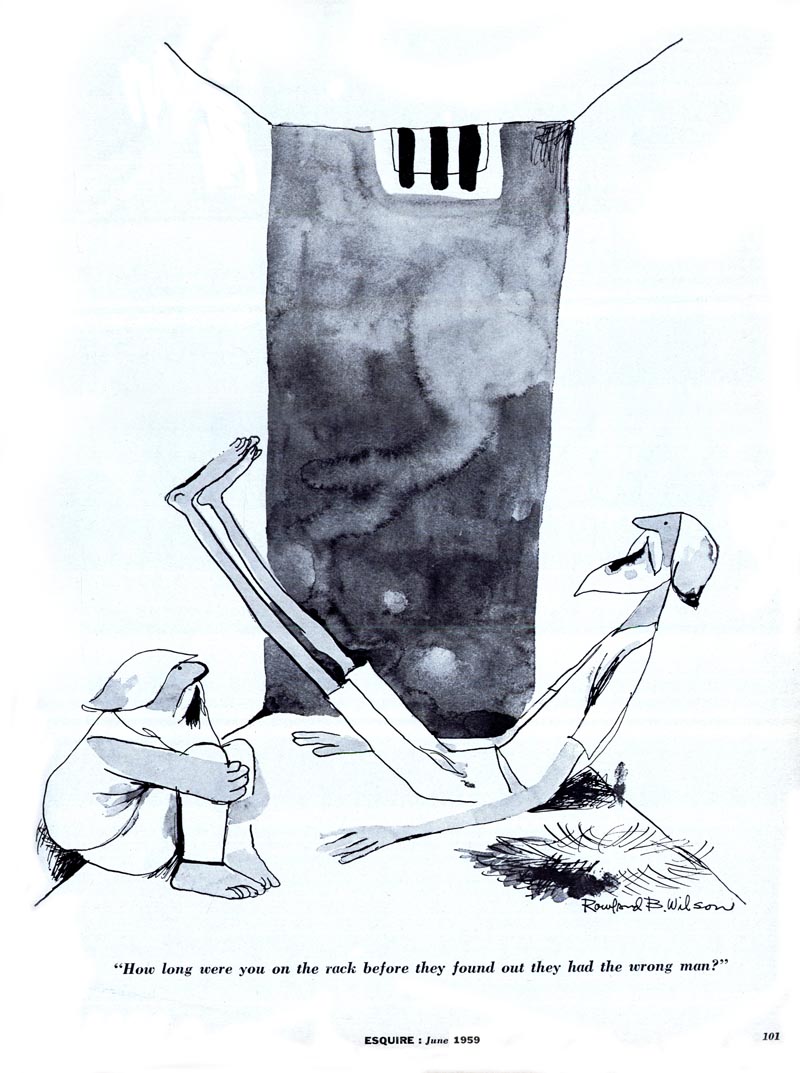
Knowing that RBW had done work for Esquire magazine, I dug out a bunch from my old magazine collection and found some wonderful pieces from 1959/'60...
Wilson23
Wilson22
Wilson21
Wilson20
Wilson19

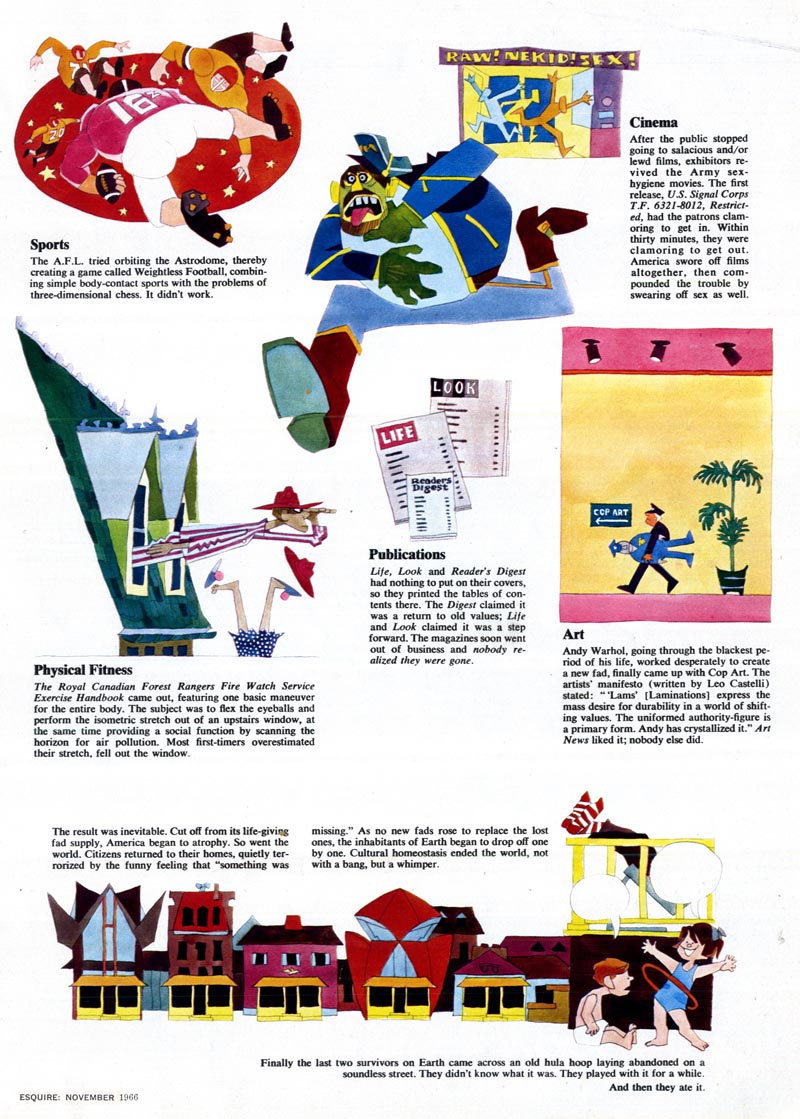
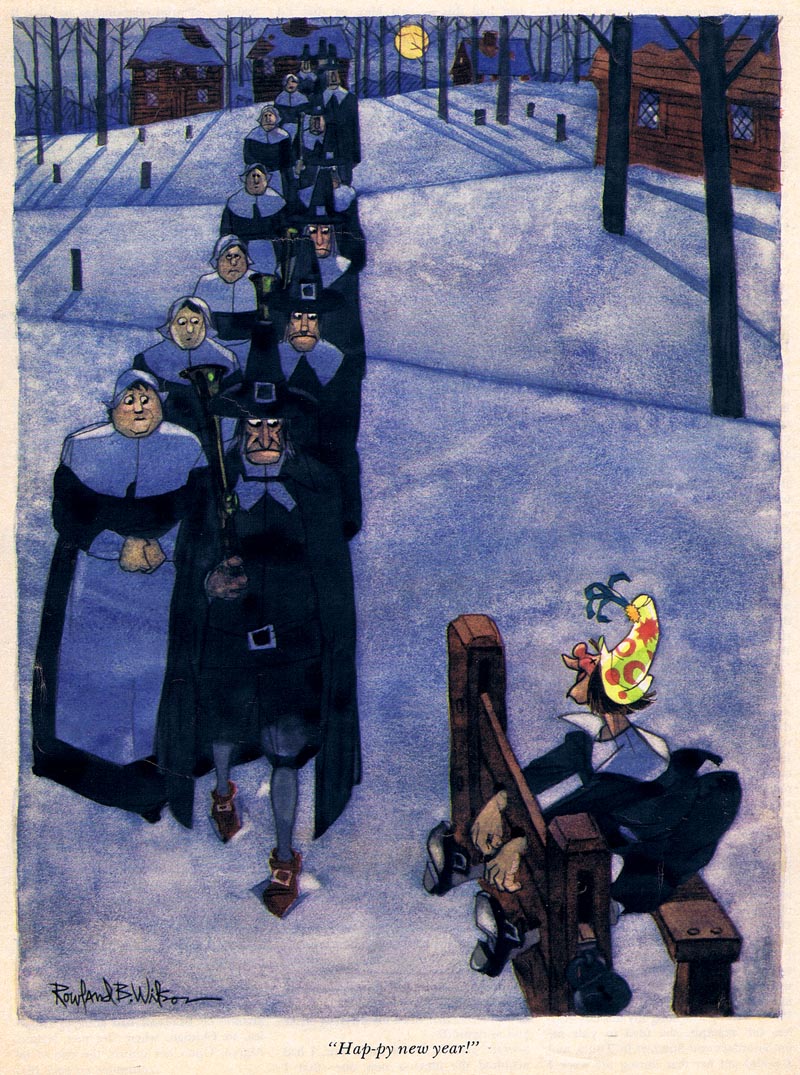
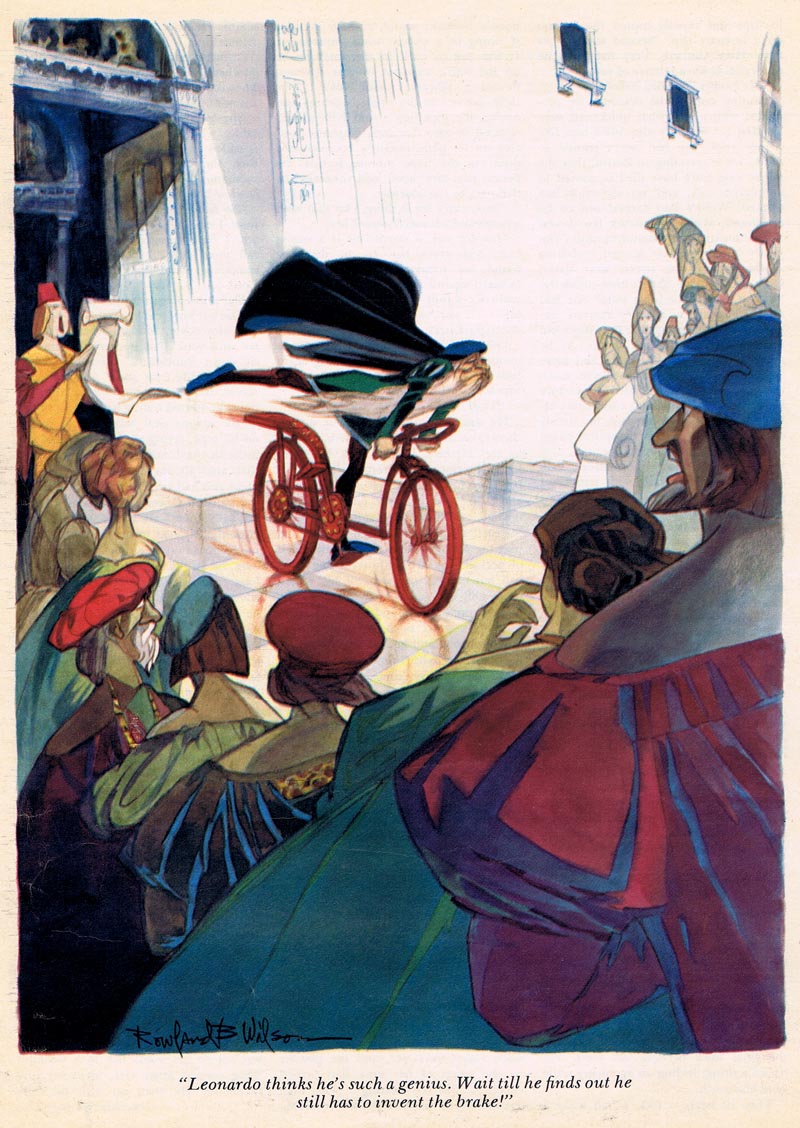
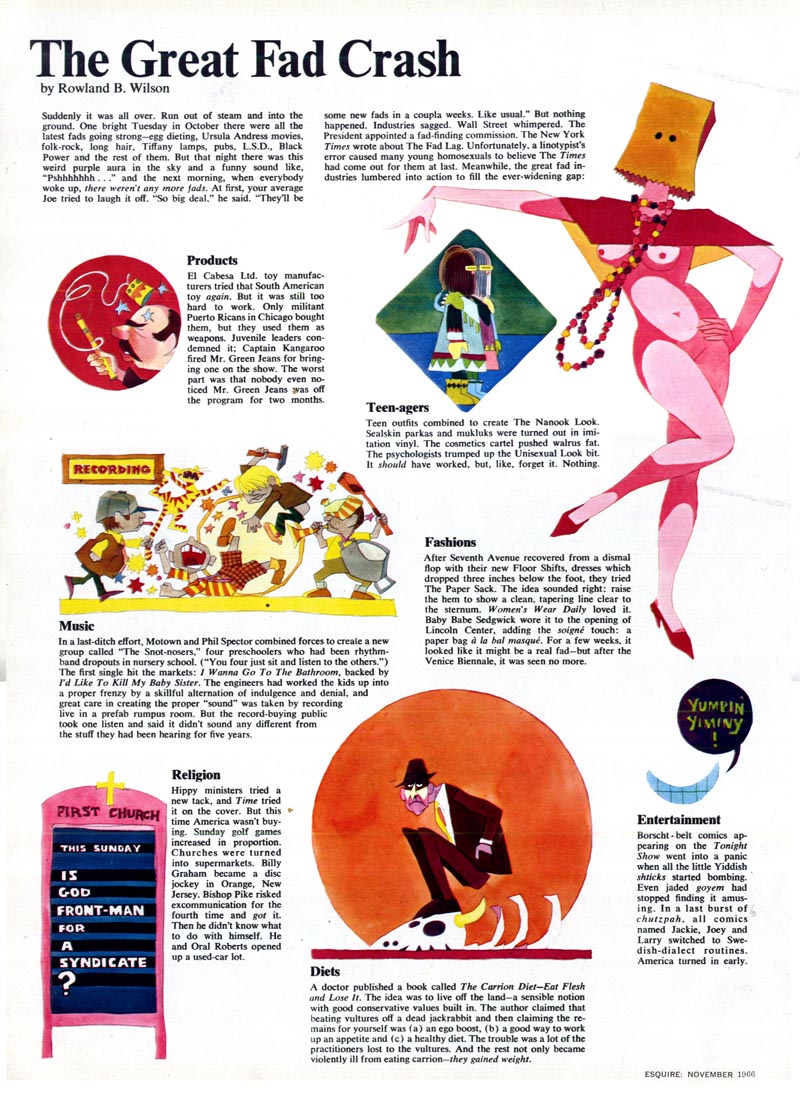
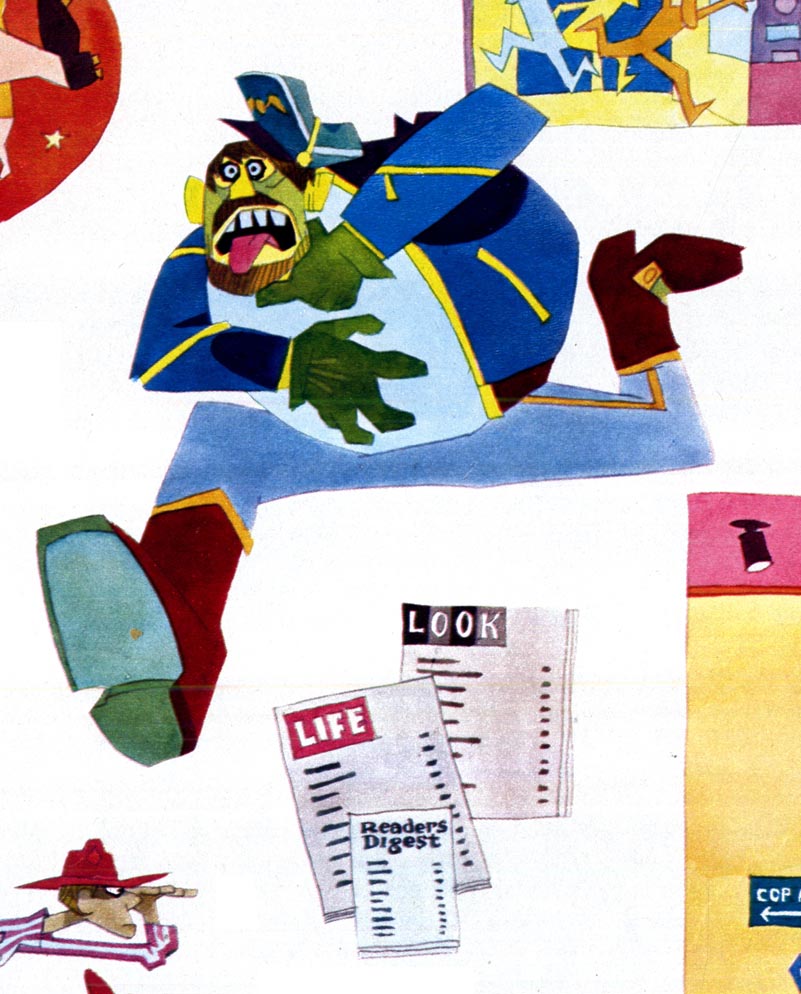
It seems that no matter what generation you're from, Rowland Wilson has probably touched your life. During the '50s and '60s he did gag cartoons for the Saturday Evening Post, Esquire, Playboy, and many others. Here's a two-page spread Wilson both wrote and drew for Esquire in 1967.
Wilson24
Wilson25.detail01
Wilson25

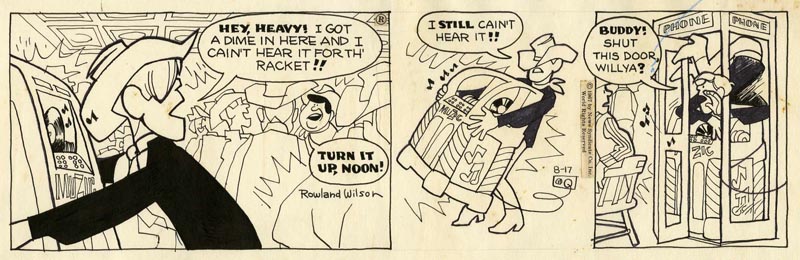
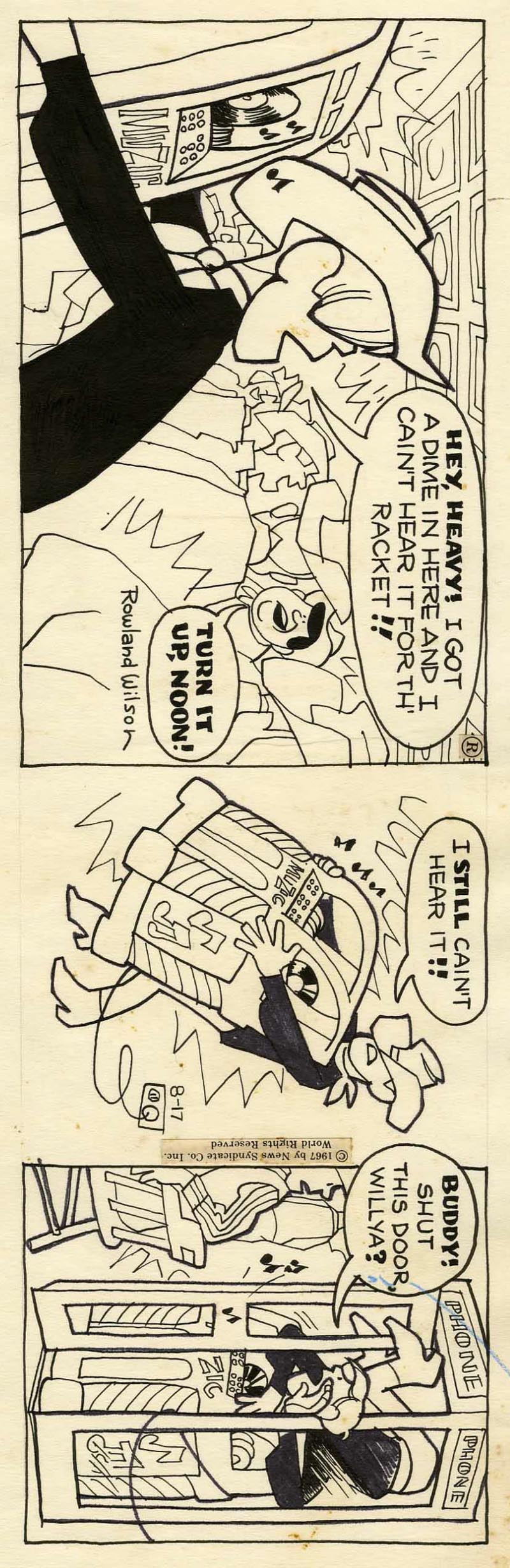
Also during the '60s, Wilson created a newspaper comic strip called "Noon."
Wilson17b

I found one daily strip original at the Heritage Auctions website.
Wilson17a

Until Bill mentioned it, I had no idea I was exposed to Rowland B. Wilson's work when I was a kid in the '70s watching Schoolhouse Rock on Saturday mornings on ABC. Bill wrote, "the two titles that Rowland designed were "Lucky Seven Sampson" and "Twelve Toes". (Side note- "Conjunction Junction" was designed by Tom Yohe and myself)."

For those of you too young (or too old?) to remember Schoolhouse Rock, here's Wilson's "Lucky Seven Sampson," found on YouTube...


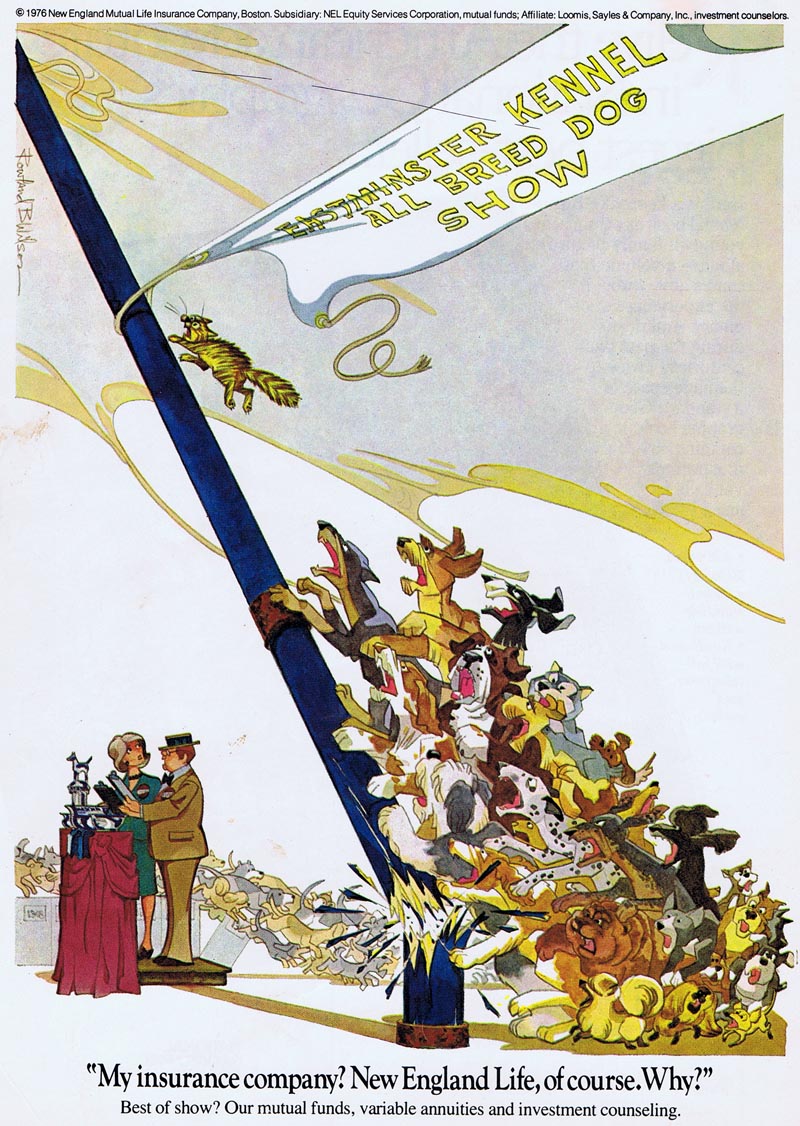
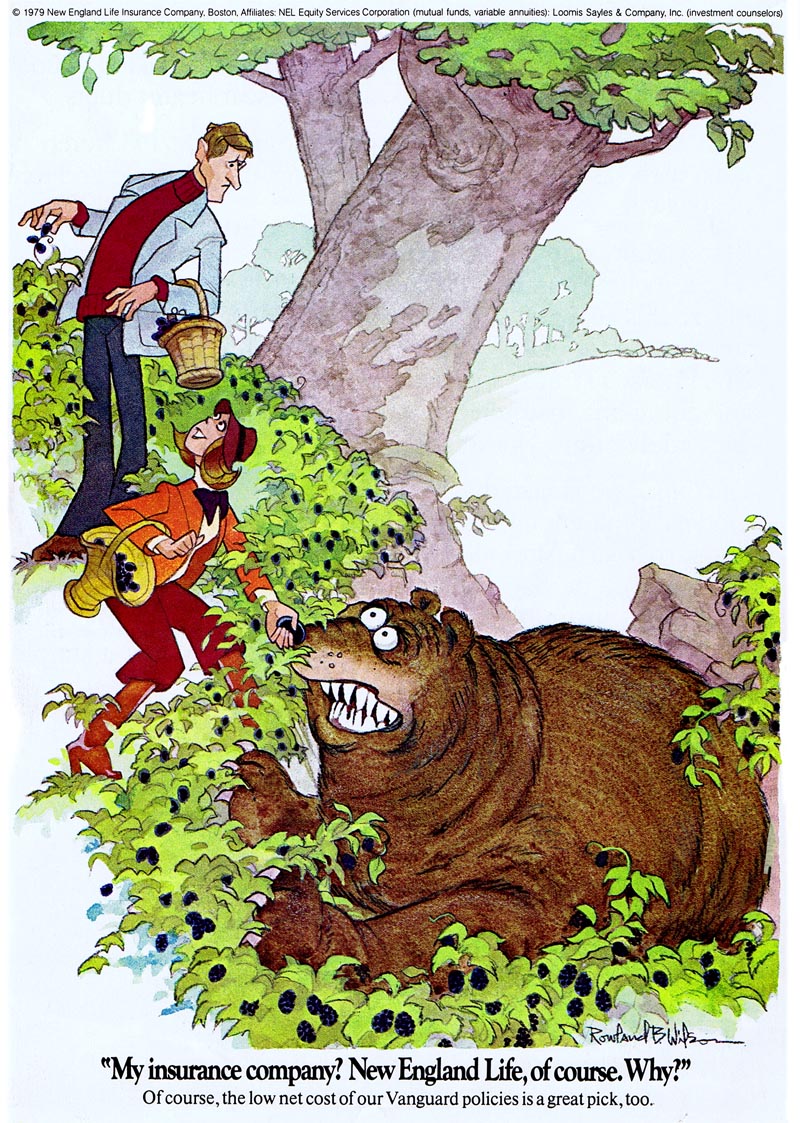
Bill wrote, "Row's life's work includes so many pieces of great art done for many different venues. New England Life campaign, editorial art, TV Guide (inside & covers), other magazines and print ads, animated TV commercials, on staff at animation studios: Richard Williams studios in London where he won awards, Don Bluth studios in Dublin working on feature films, Disney Studios in LA, working on feature films. I'm sure I've left some stuff out."

While doing my online research, I found many examples of Rowland Wilson's magazine and TV commercial artwork - especially pencil sketches! - at a site called The Deep Archives, which sells original animation artwork.

Also, Michael Sporn has posted many wonderful photos of Rowland Wilson and many more examples of his work on his blog. If you click on Wilson's name in the sidebar of Michael's "Splog" you'll see tons and tons of RBW artwork from every period of his career.
Wilson27

One last note from Bill, who wrote, "The good news there was that we found out Suzanne Wilson (RBW's wife) is in the process of putting together a "How To" book using Row's art and notes. I've seen some of those and they are unbelievable. There are also completed and unpublished graphic novels that Suzanne has that Row did before his untimely death."

Wilson18

Bill concluded, "Suzanne and all of us fans still hope that some visionary publisher would still do a bio/collection of RBW and his art. It would certainly rank up there with the recent Sickles, Fawcett and Toth books."

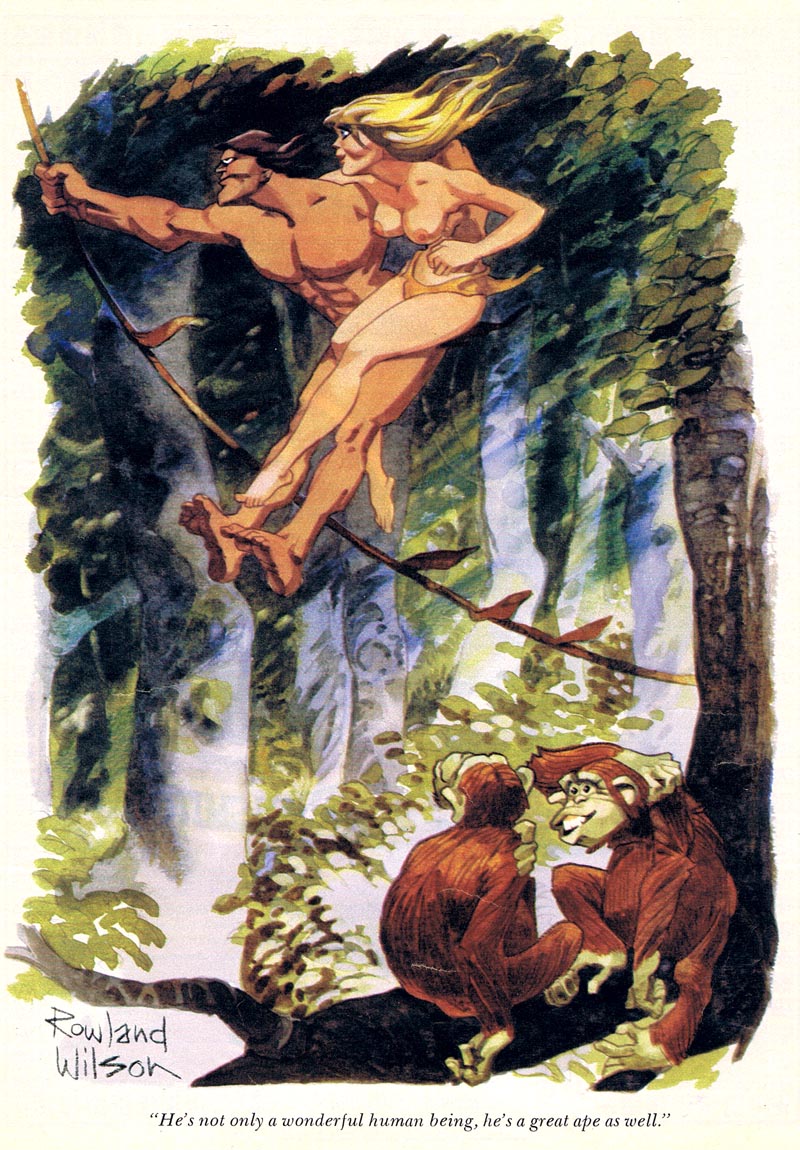
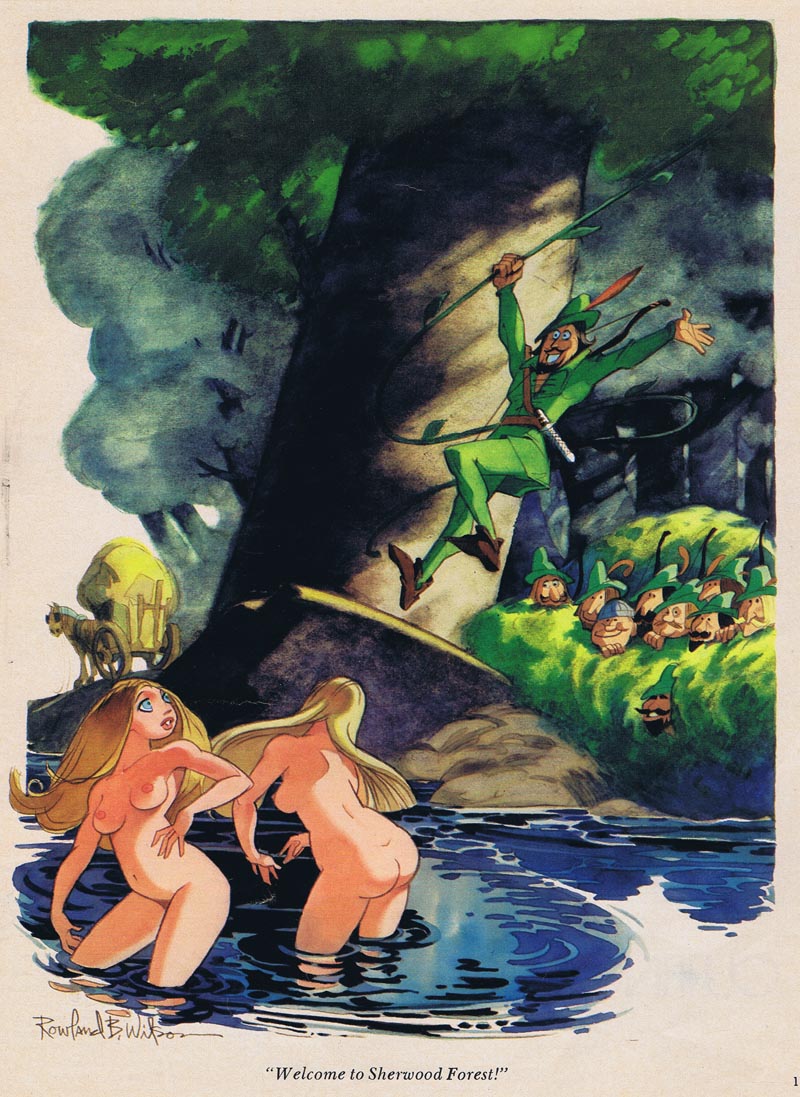
* Many thanks to Heritage Auctions for allowing me to use the scans of the RBW "Noon" daily comic strip and the final image in this post, which is a watercolour original of a Playboy gag cartoon by Wilson, both from the image archives at ha.com

Monday, May 09, 2011

The Magnificent Art of Rowland B. Wilson

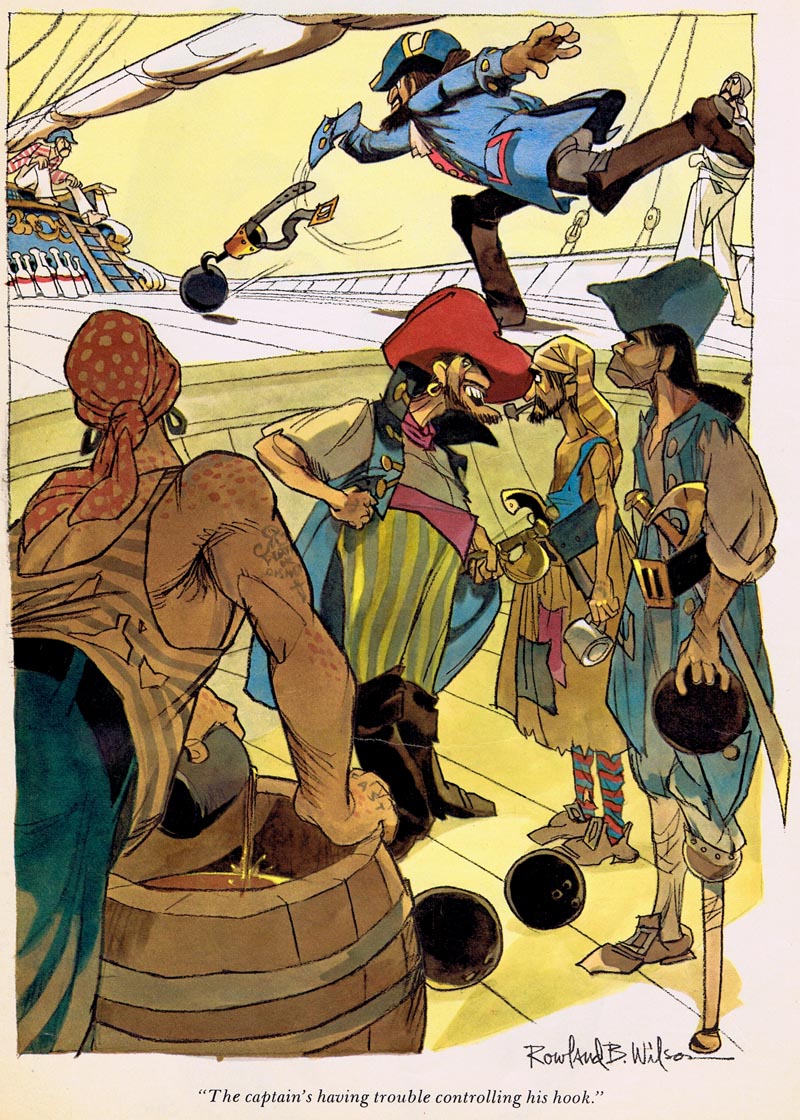
If, as a kid, you ever snuck a peek at your dad's Playboy magazines, you probably remember seeing the magnificent art of Rowland B. Wilson.

Wilson01

Now, tear your eyes away from the nekkid ladies for a minute...
Wilson01.detail02

... and take a closer look at all the wonderful stuff going on in the other parts of the picture!

Wilson01.detail04

Wilson01.detail03

This guy could paint!

Wilson01.detail01

Here are a few more Rowland B. Wilson Playboy cartoons, all courtesy of Mike Vosburg. Thanks Mike!

RowlandWilson10.detail01

RowlandWilson10

Wilson14.detail02

What a wonderful sense of design and composition Wilson had...

Wilson14

... not to mention his dazzling use of colour!

Wilson14.detail01

Wilson15

Wilson15.detail01

* I'm away this week, but I'll still try to get a few more of Mike Vosburg's Rowland B. Wilson scans posted each day. Enjoy!

Thursday, May 12, 2011

Still More Rowland B. Wilson

Wilson12

Wilson09

Wilson05

Wilson08

Thanks again to Mike Vosburg for all these terrific Rowland B. Wilson scans we've been enjoying this week!

Friday, February 17, 2012

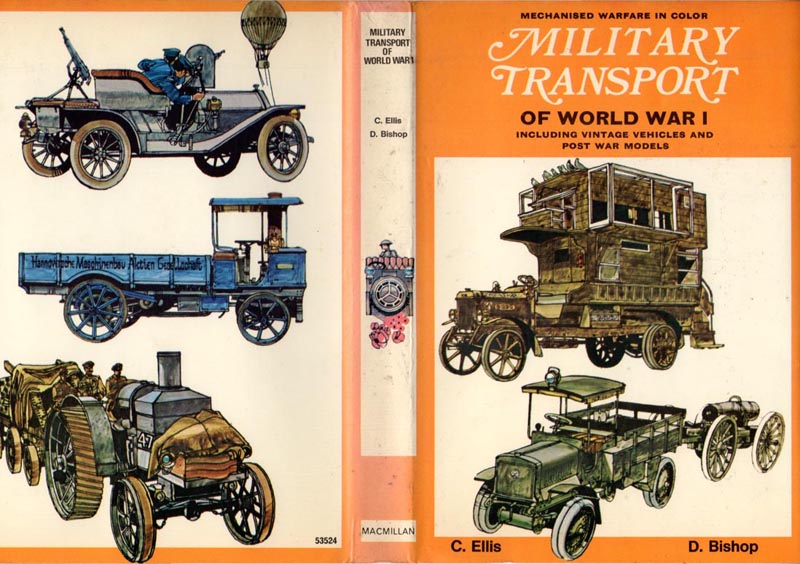
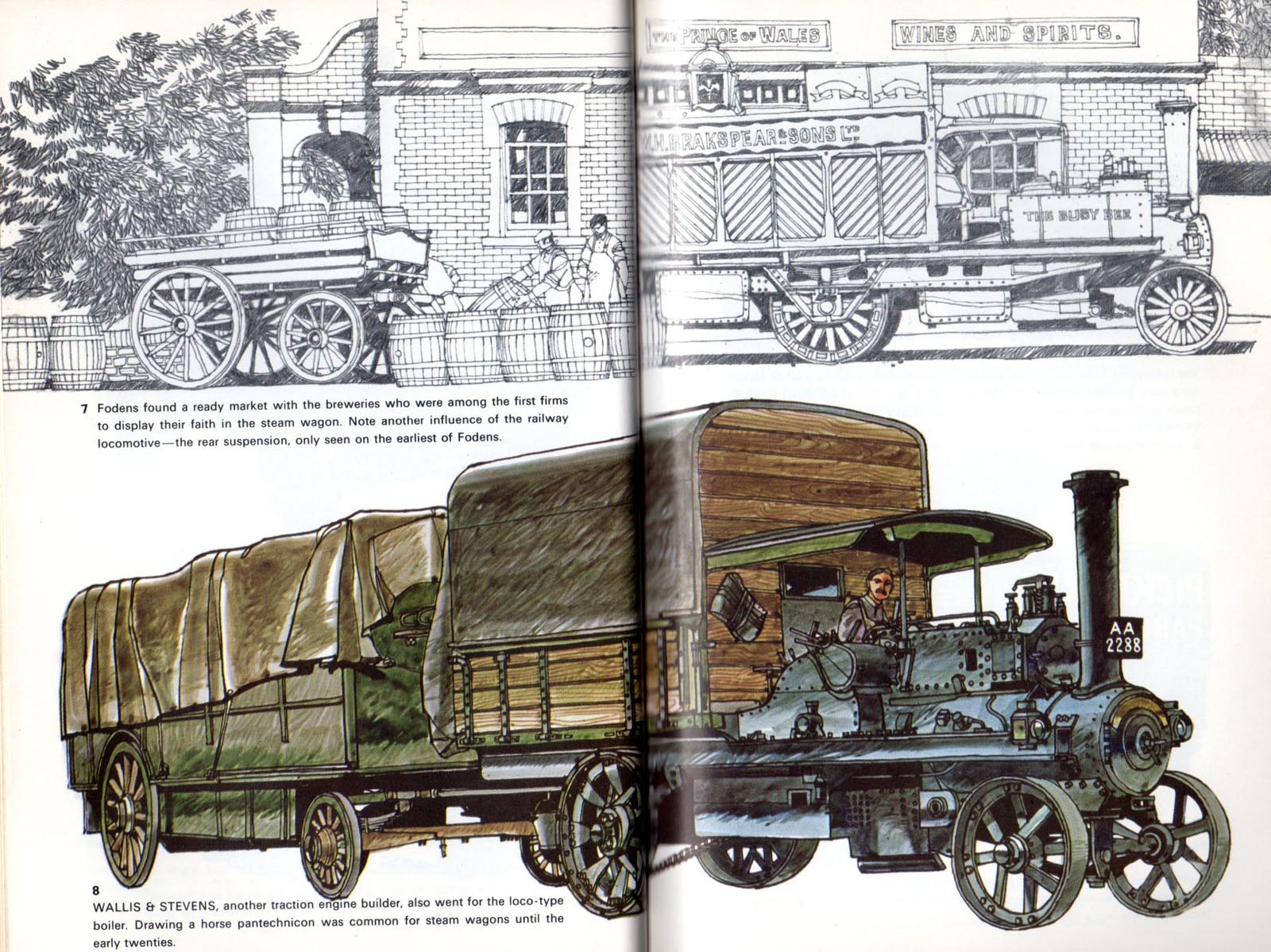
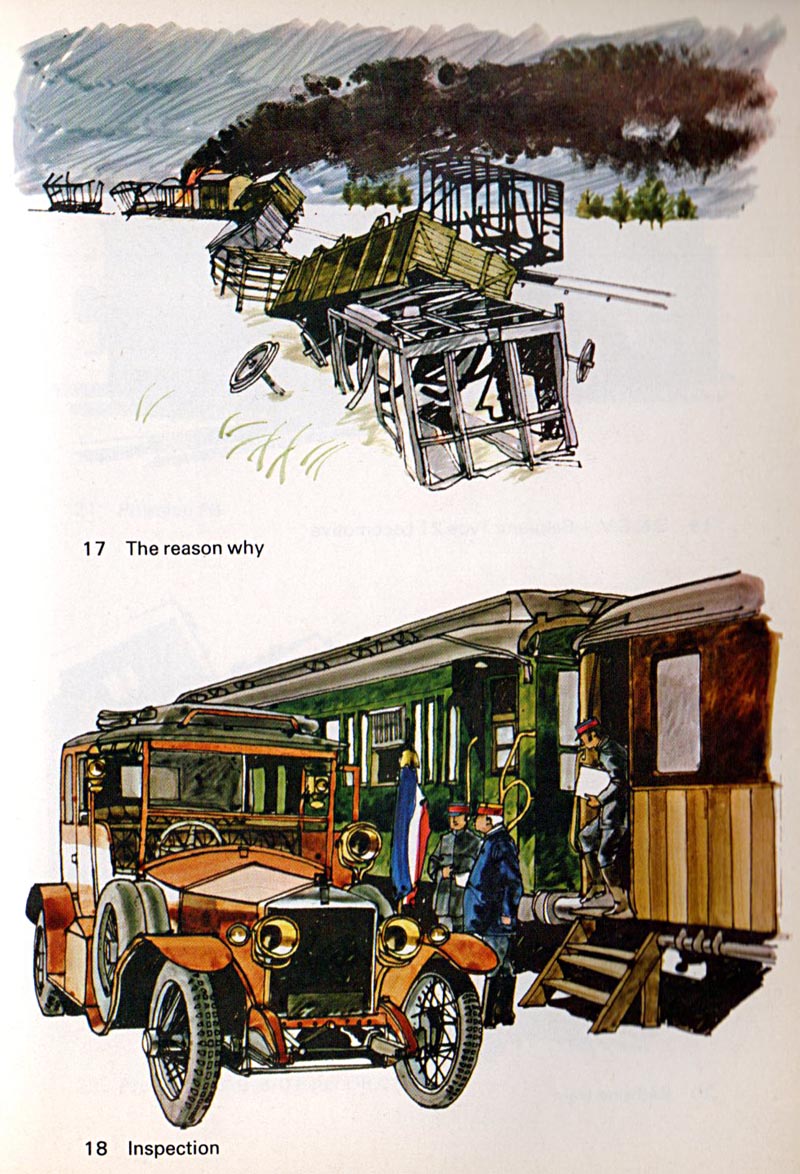
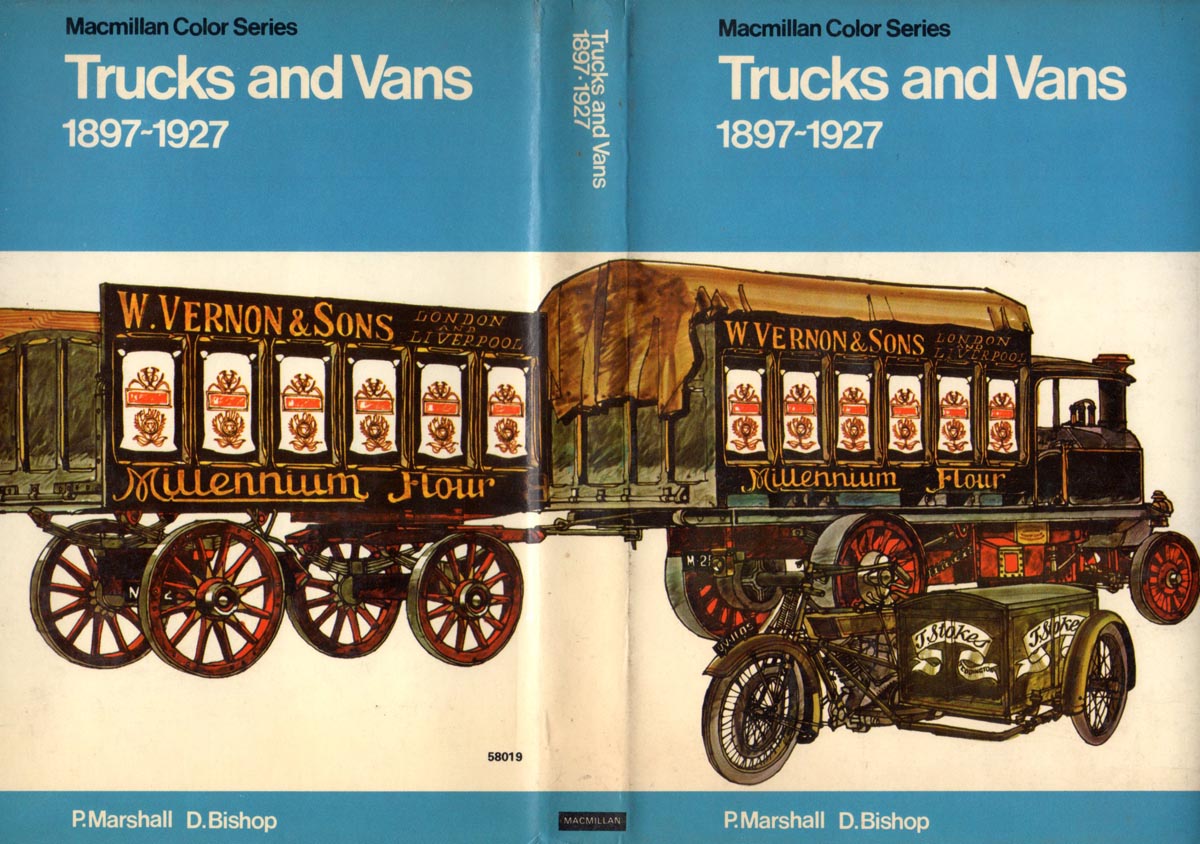
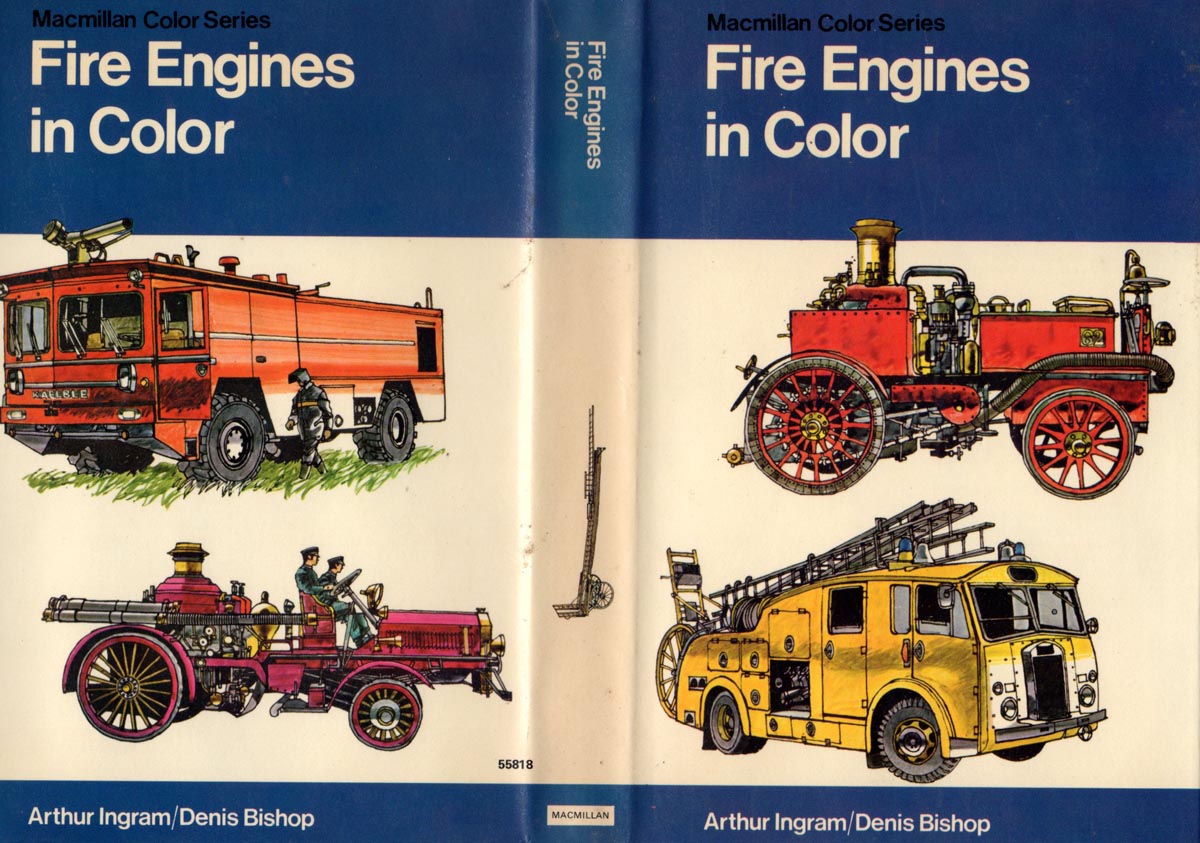
Denis Bishop and the Art of Mechanized Warfare

We end this week within striking distance of where we began, with a host of beautifully illustrated machinery, most of it from the military realm.

Bishop01

Bishop08a

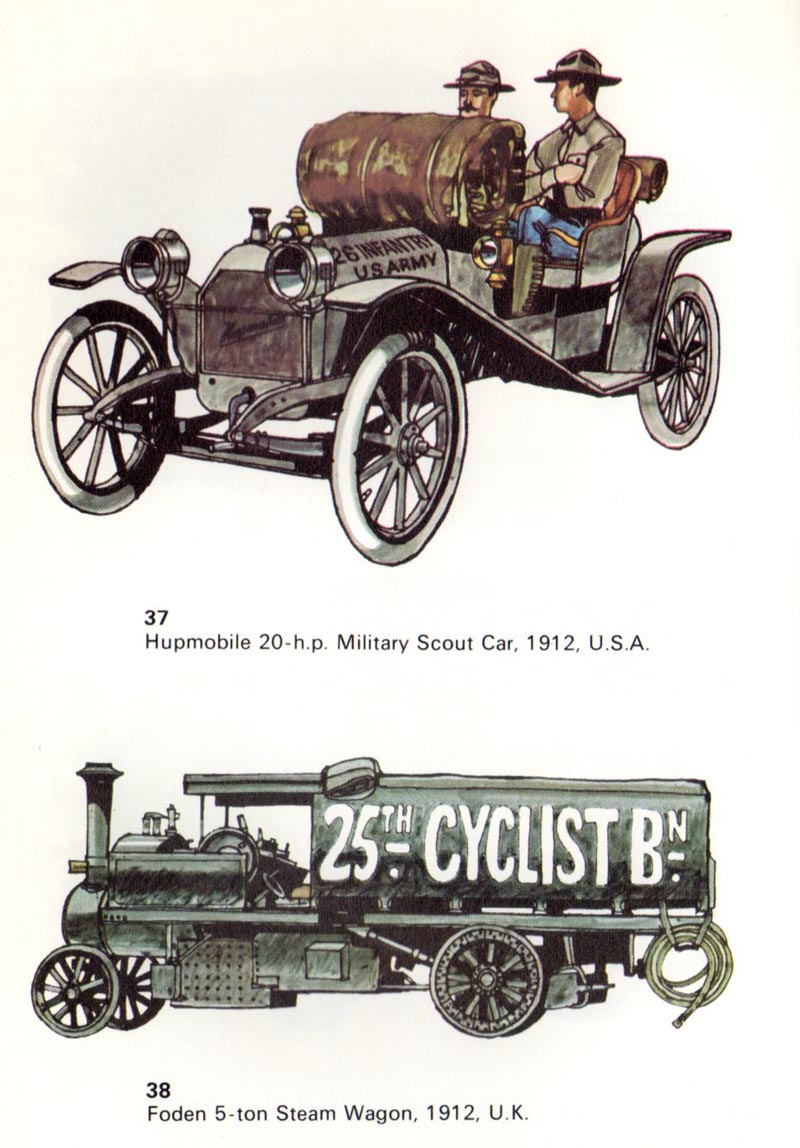
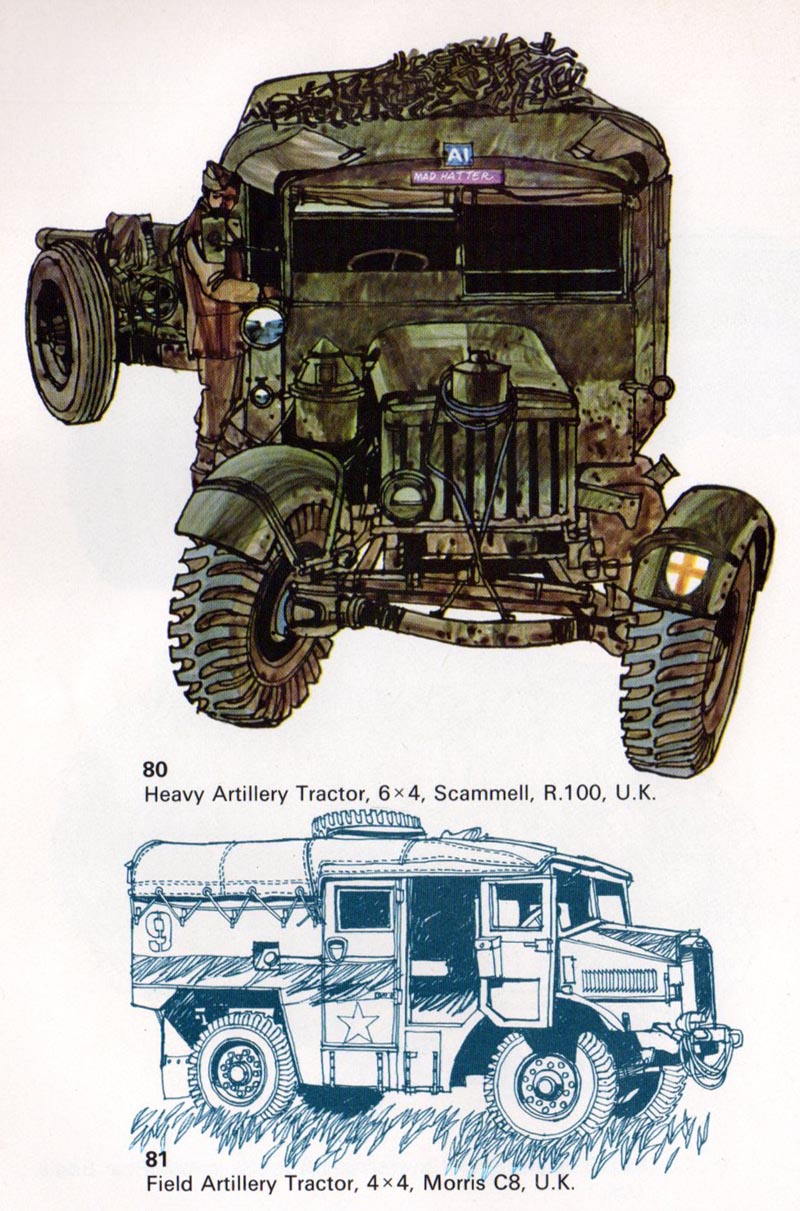
Although these illustrations present their subjects in a far more reserved manner than did the model kit box art we looked at on Monday and Tuesday, there's no denying the understated artistry in Denis Bishop's renderings of these historical vehicles and machines.


Bishop02

More than a few friends who previewed these scans said Bishop's style brought to mind the work of Ken Dalison. I have to agree.

Bishop07b


Bishop03

Since all of these books were published in the early '70s, when Dalison was "making his mark" in automotive magazines, perhaps he was an influence on Denis Bishop.

Bishop10

Bishop04

Bishop09

No info about the artist seems to be available anywhere online.

Bishop05

Many thanks to my friend Bill Peckmann, who bought these books back in the '70s and kept them through all these years, and then dug them up and scanned them for us.

Bishop06

Bishop12

Bishop11

Perhaps, as has happened so many times before, just posting these and Denis Bishop's name will lead to someone familiar with the artist getting in touch and telling us more.

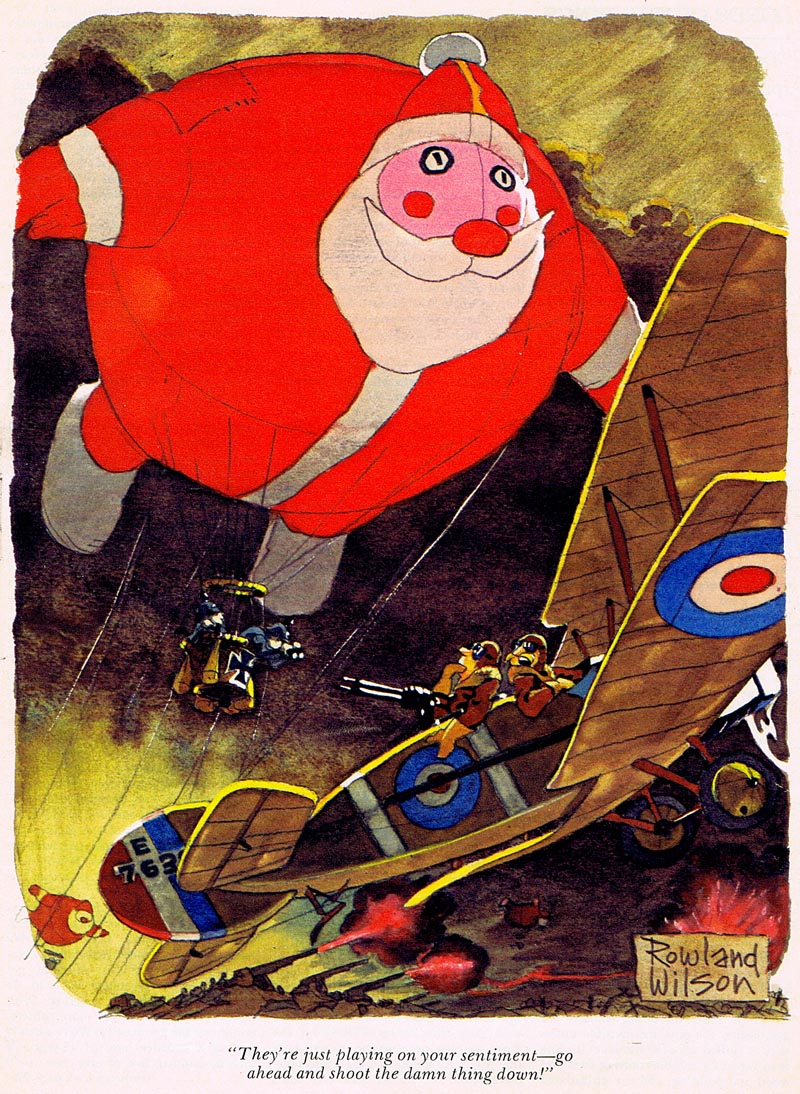
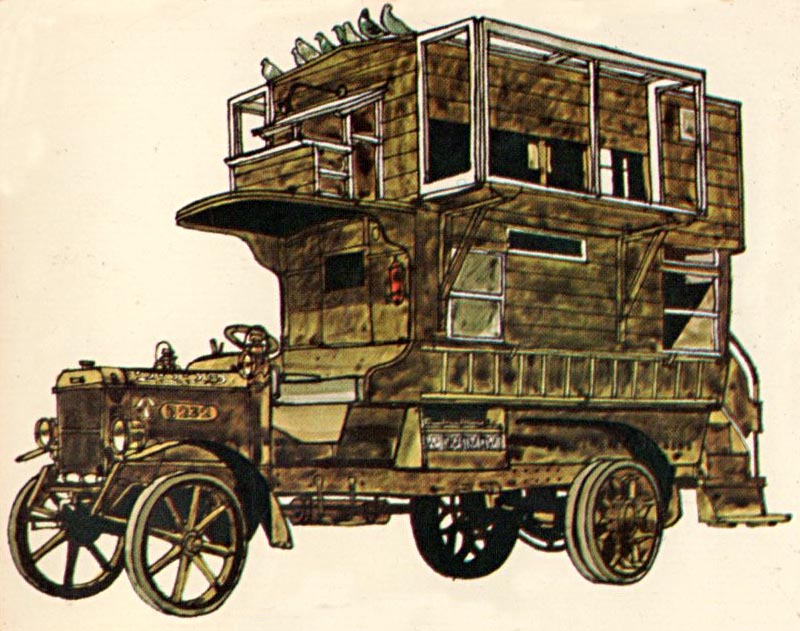
Meanwhile, here's one last visual treat to perk up your weekend... Bill Peckmann wrote, "The cover of the Denis Bishop book I sent you had a WW 1 carrier pigeon truck on the cover."

Bishop01.detail01

"Well, when the book came out in 1970, I gave Rowland Wilson a copy of it, along with a joking dare. The off-handed dare was that he would be able to use that truck in a gag cartoon. I never thought he would be able to do it. Viola!"

Wilson28

Many thanks Bill! You'll find many more beautiful Rowland B. Wilson cartoons at Michael Sporn's Blog, also courtesy of Bill Peckmann.


Monday, August 15, 2011

"Something in the water..."

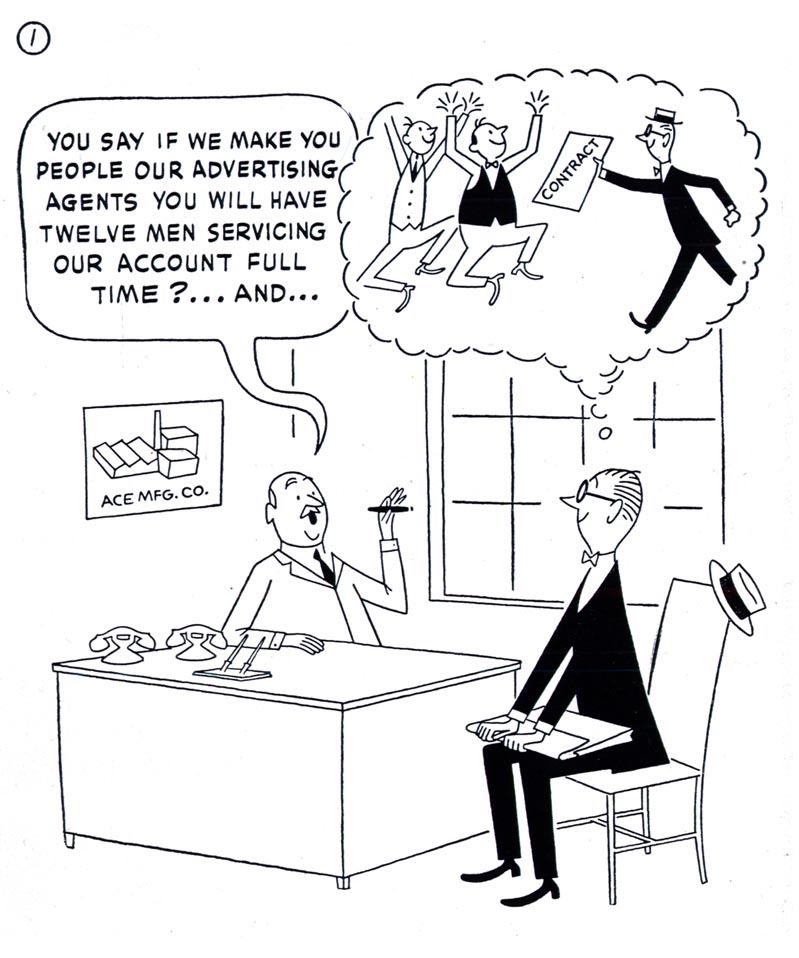
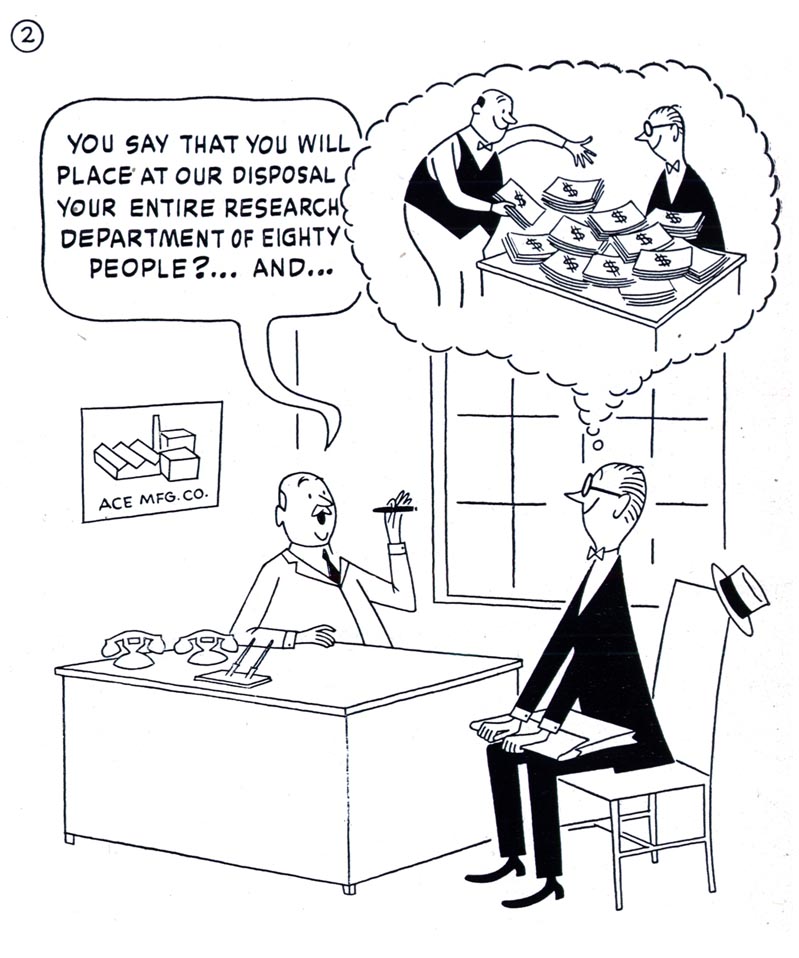
Have a look at this beautifully drawn 4-panel comic strip;  see how long it takes you to identify what company is being advertised.

  Y&R02.detail04Y&R02.detail03 Y&R02.detail02 Y&R02.detail01

Talk about subtle.  And not even a logo or tagline in sight!

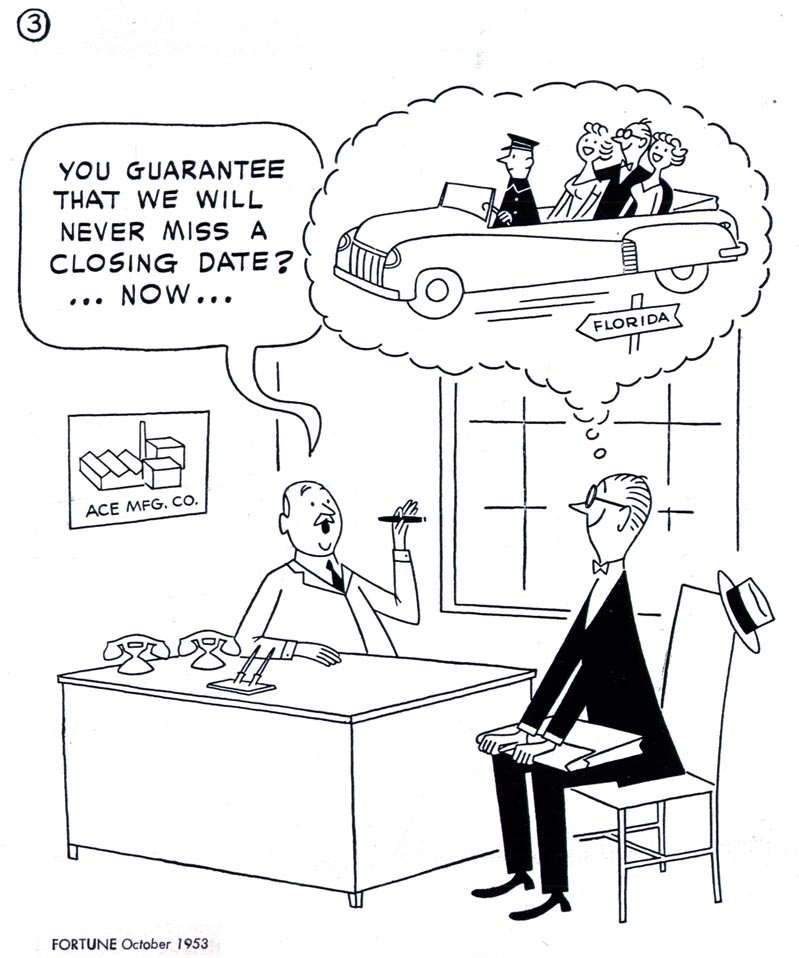
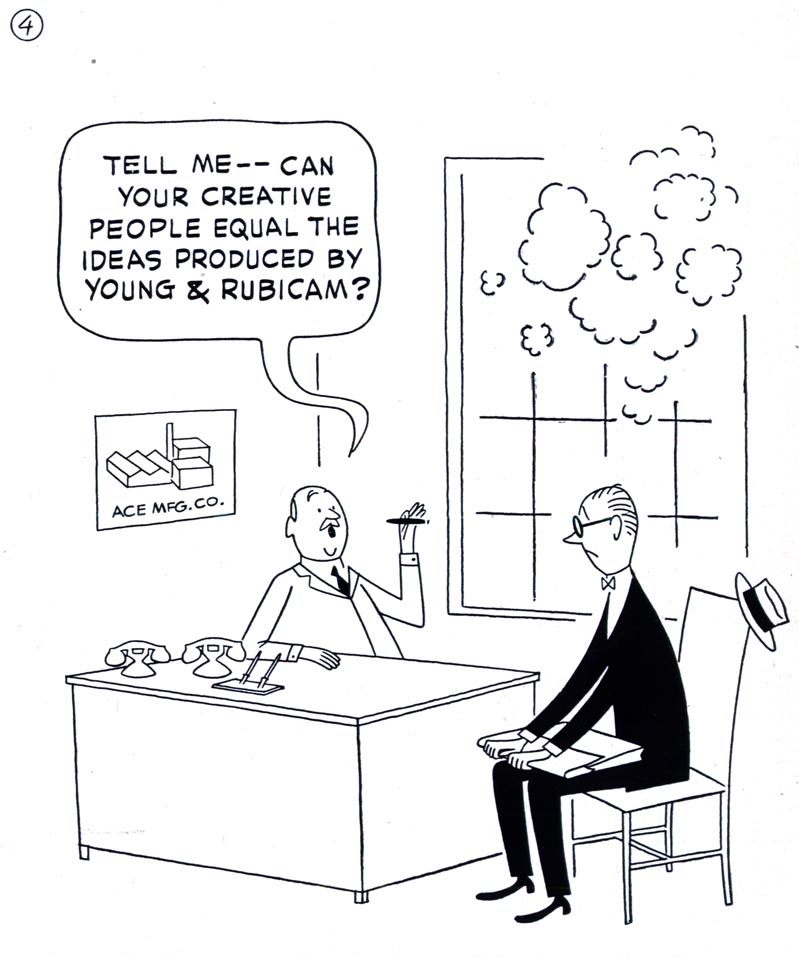
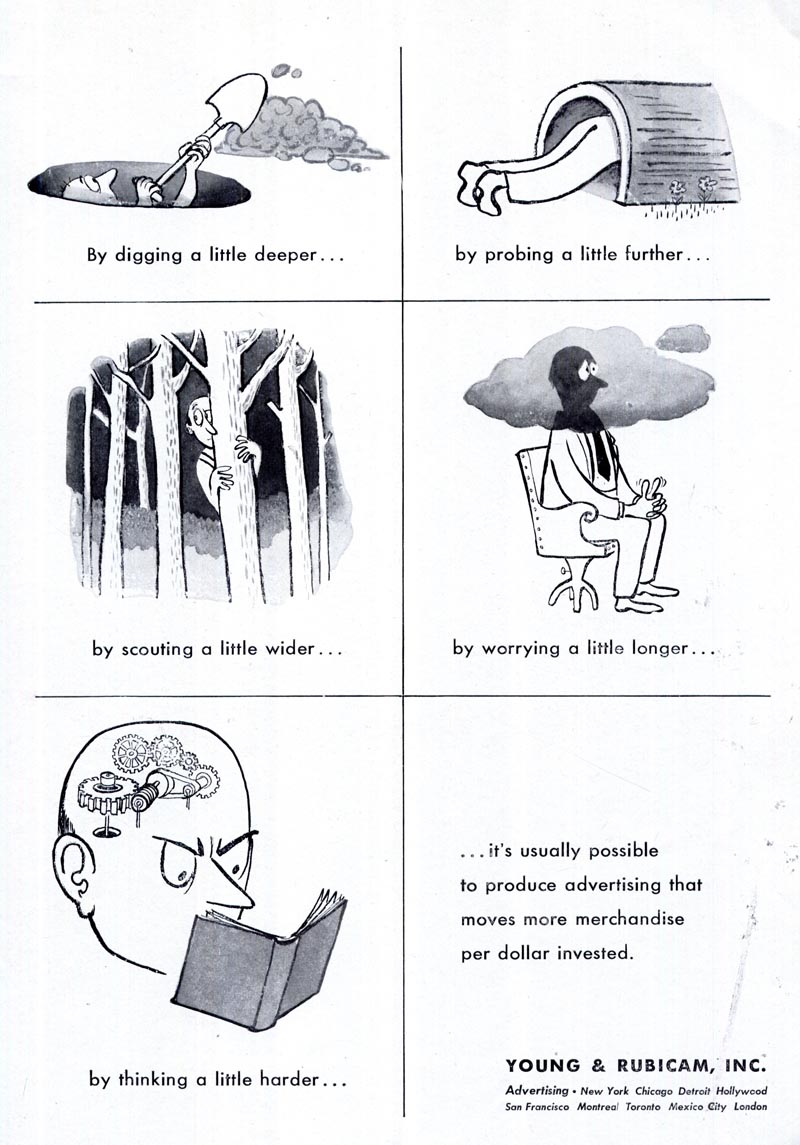
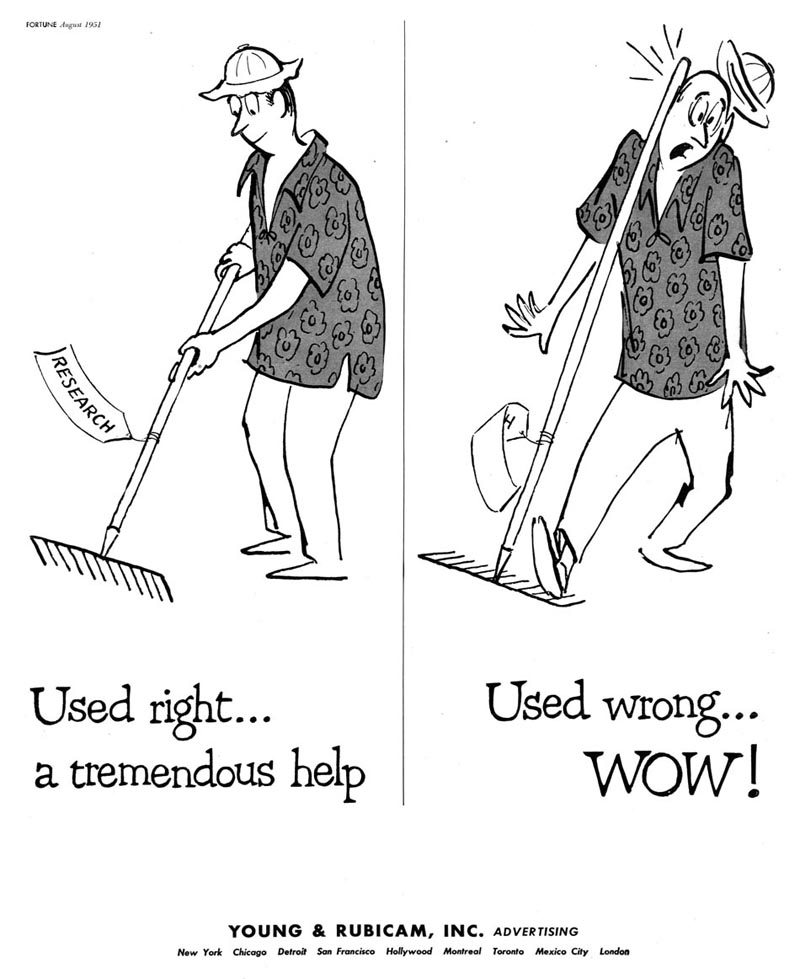
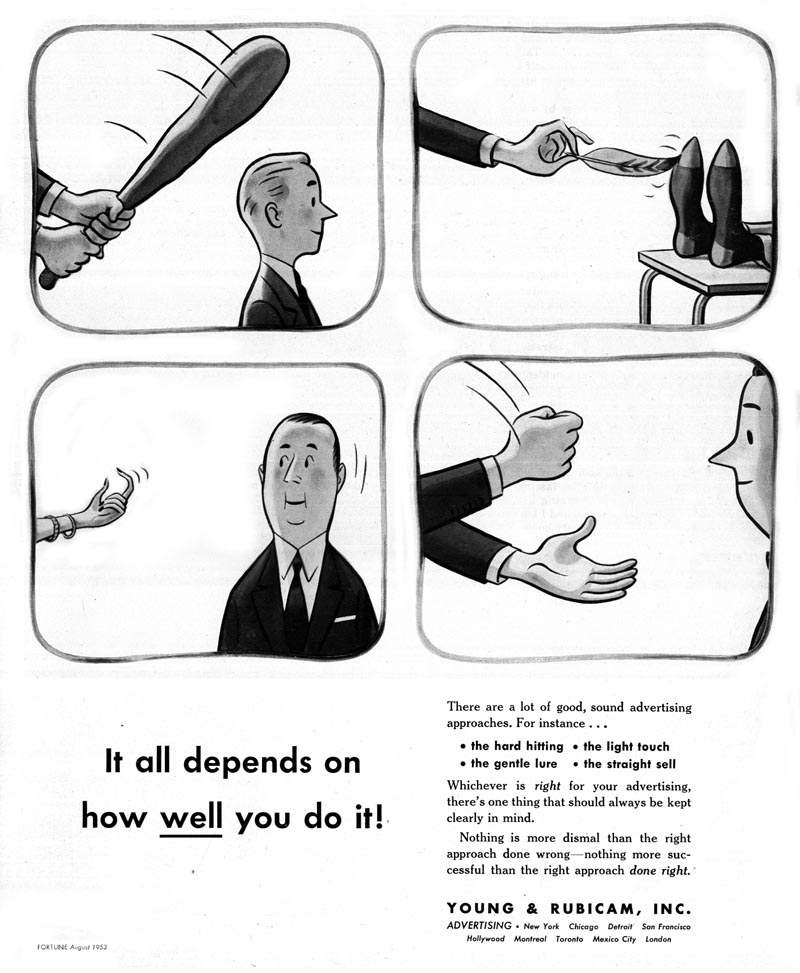
For several years during the 1950s, the Young and Rubicam advertising agency ran ads like these, featuring cartoon art, in Fortune magazine and in the back of each year's New York Art Directors Annual.
  Y&R01

Ever since I first saw them I've had been intrigued by Y&R's commitment to these unique cartoon ads -- curious about what had been their motivation in utilizing this distinctive approach.  Recently, while corresponding with my friend Bill Peckmann, it all suddenly became perfectly clear.

In passing, Bill wrote, "While I'm thinkin' of it - it seems that some of the great cartoonists, Rowland B Wilson, Tom Yohe and Jack Sidebotham (Bert & Harry, the Piels Bros. Beer designer) were all art directors at the Y&R Advertising Agency in the '50's. (I know there are more names but they're not coming to me right now.)"

Y&R03

Bill continued, "There must have been something in the water there or the agency had a style at that time where they only hired art directors who could draw."

Y&R04

Imagine that: art directors who could draw... no wonder the folks at Y&R were so committed to running ads featuring great cartoon art. They could relate because they were cartoonists themselves.  I wonder... are there still art directors who can draw?  Or is that one more reason why illustration has all but disappeared from advertising.

 Maybe today's art directors simply can't relate to the drawn image because they have no tangible connection to the act of drawing.