Showing posts sorted by relevance for query sundblom. Sort by date Show all posts

Friday, December 24, 2010

The Sundblom School of Illustration: "... its best returns came from the mutual sharing of our various abilities."

In his Haddon Sundblom article on the Illustration House website Roger T. Reed writes, "Sundblom gets pigeonholed as the painter of Coca-Cola Santa Clauses..."

Sundblom61

"... but this trivializes his central place in 20th century advertising art. More than any artist including Norman Rockwell, Sundblom defined the American Dream in pictures, proved by his work for virtually the entire Fortune 500."

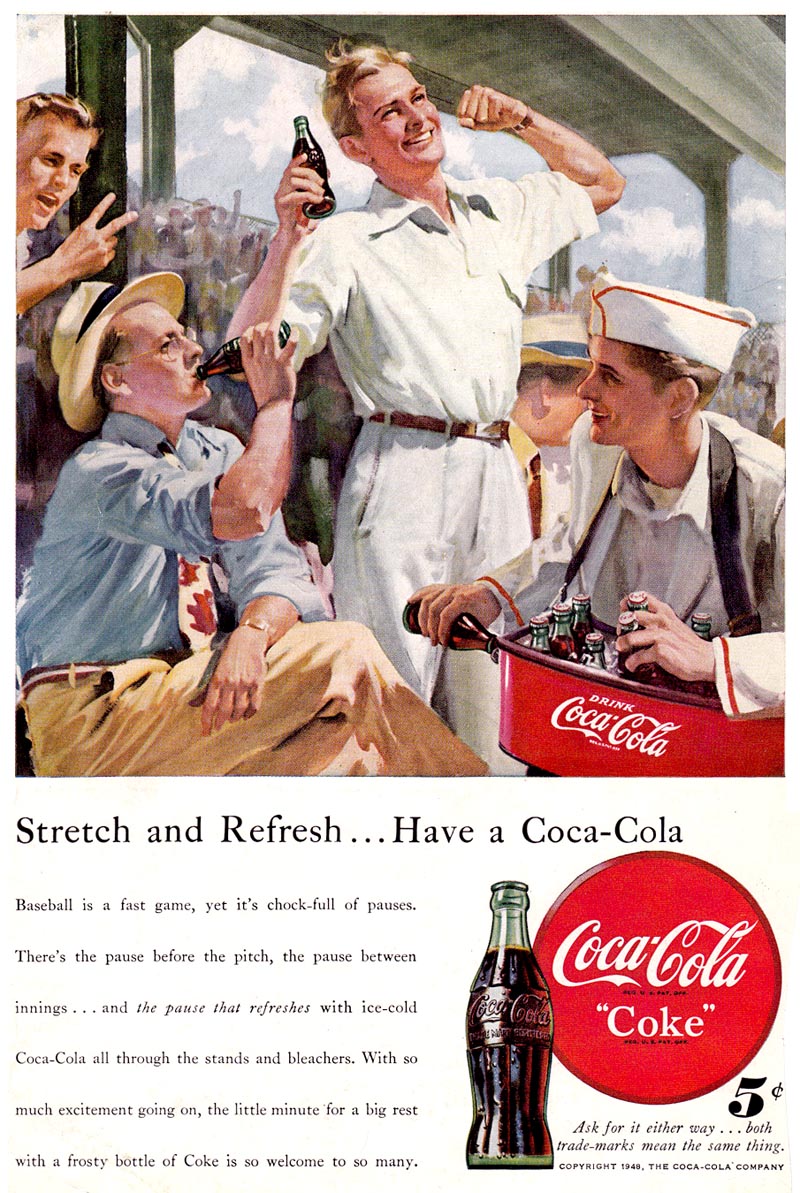
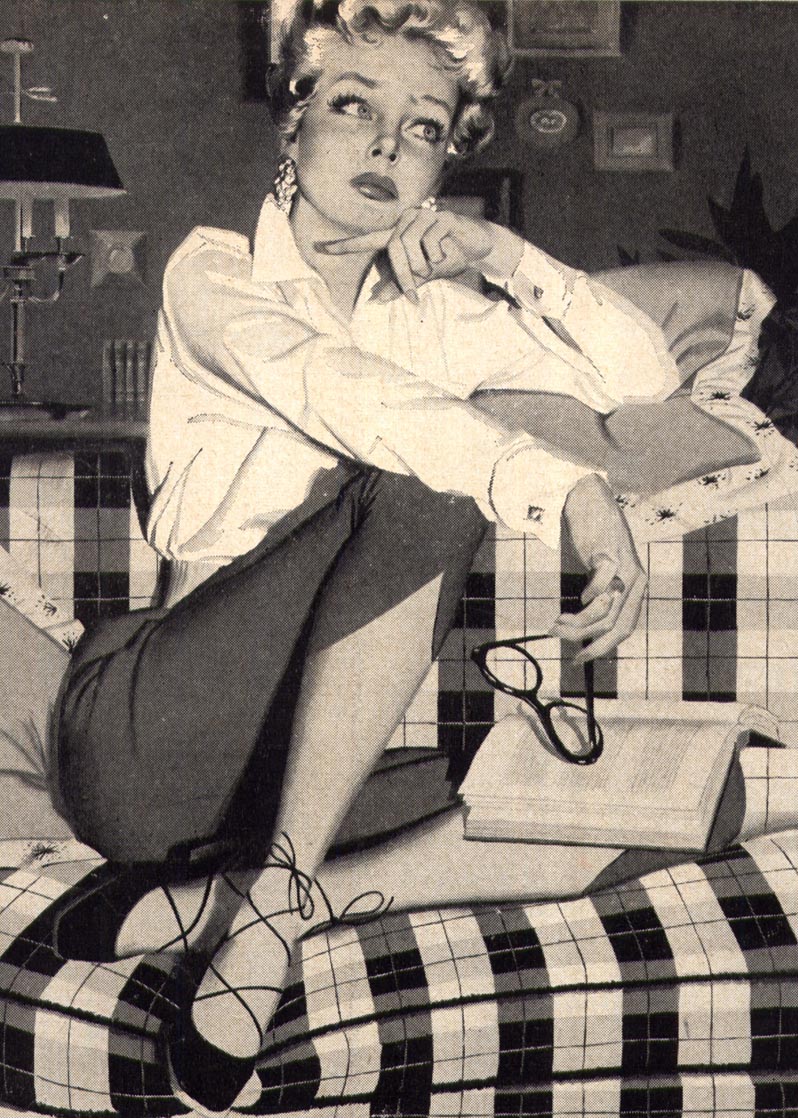
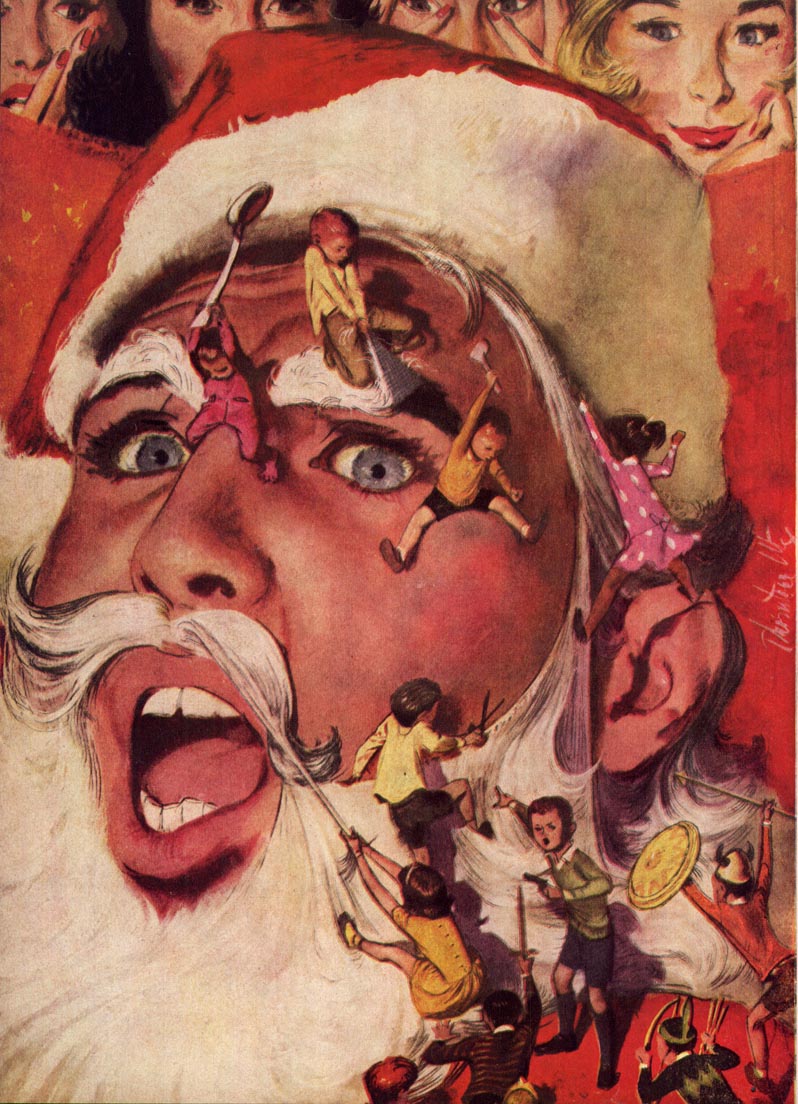
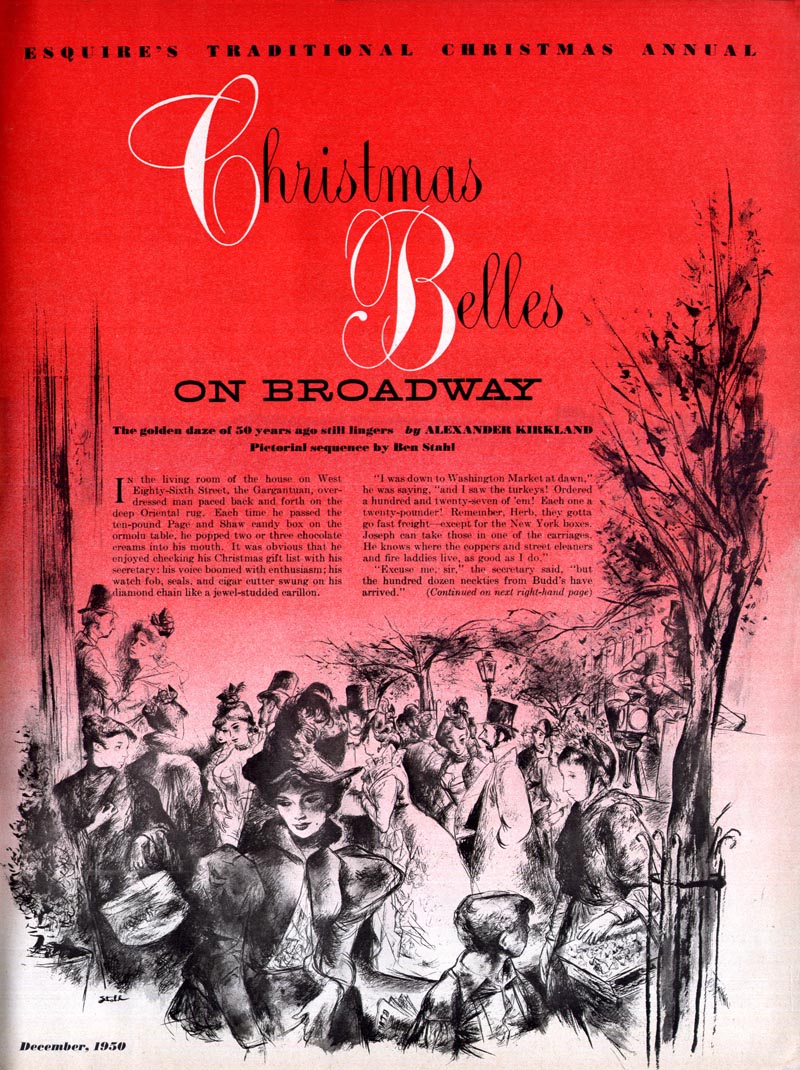
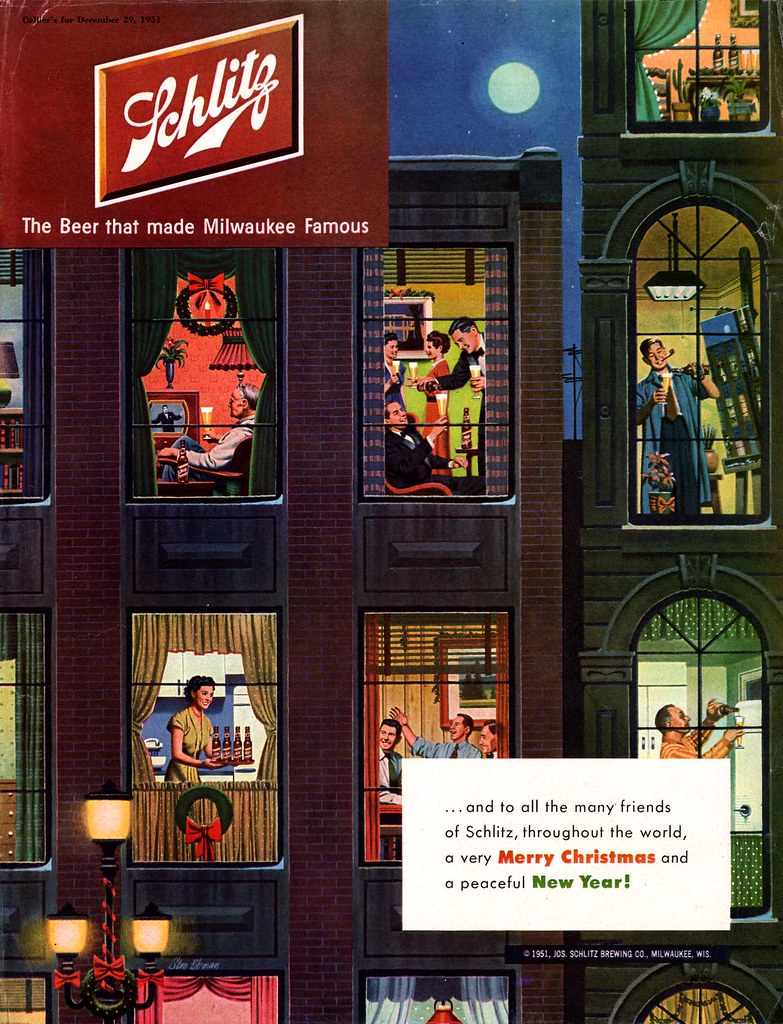
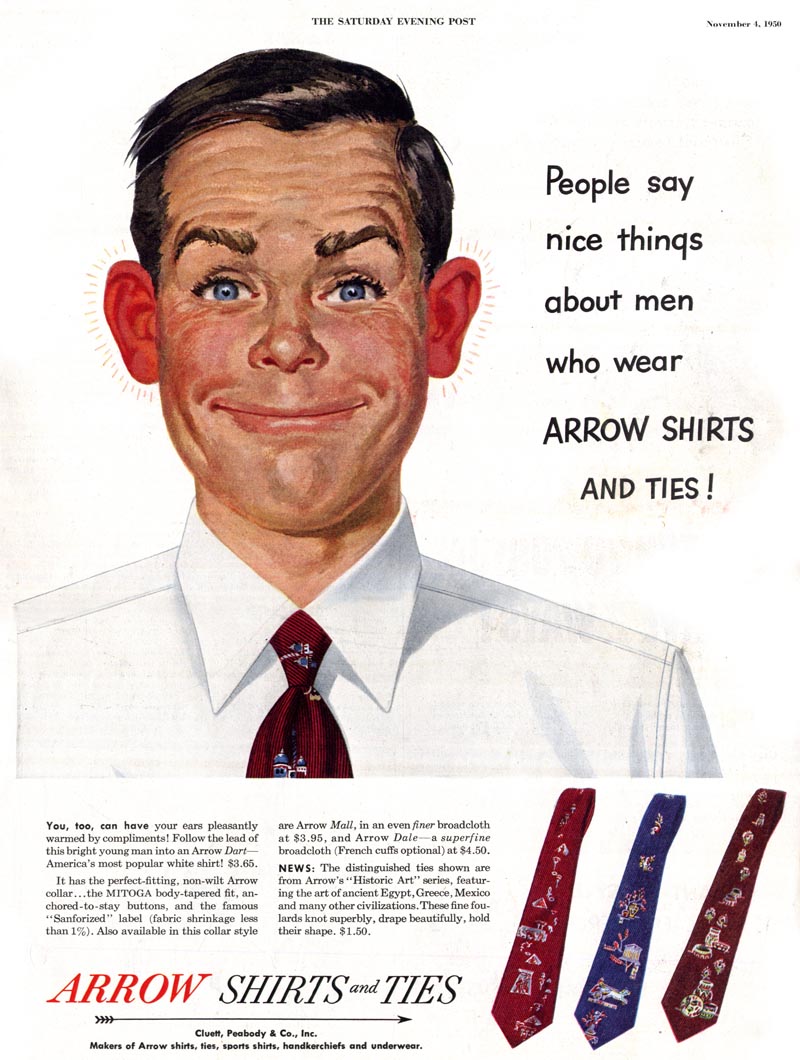
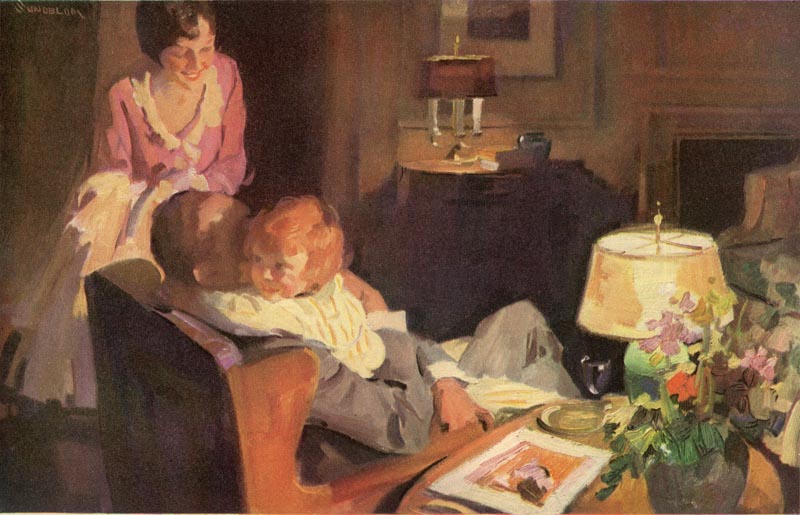
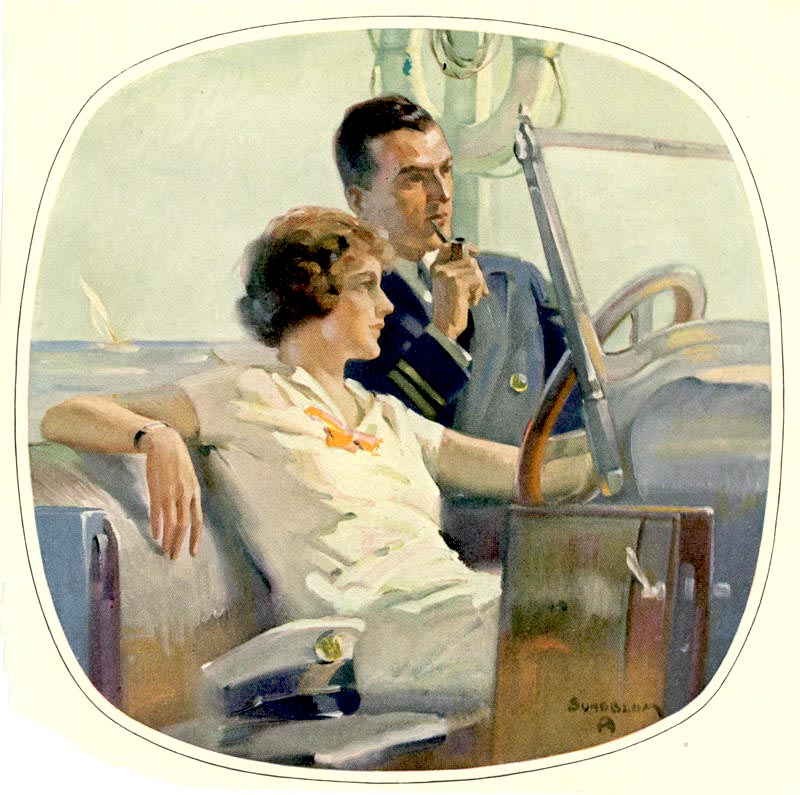
Often when I'm flipping through the pages of an old mid-century magazine, I'll come across an unsigned piece of advertising art like this example below, and I'll immediately think of Haddon Sundblom. Sunny probably didn't paint this particular illustration, but someone who apprenticed with him - or apprenticed with one of his apprentices - very likely did.
UnknownSundblomCircle01

You really can't overstate Sundblom's influence on the field during that era. Earlier in this series I ran a quote from Sunny where he described how hundreds of people had passed through his studio to take up positions in the graphic arts all across America. The day after that post, TI list member Ferol Smith (whose husband was the painter, William A. Smith) sent a note: "I worked in an ad agency in New York in the '40s called Geyer, Newell and Ganger and my boss was an art director who arrived in New York by way of Sundblom's studio in Chicago... Art Surin. He gave up illustration to tell other people how to do it!"

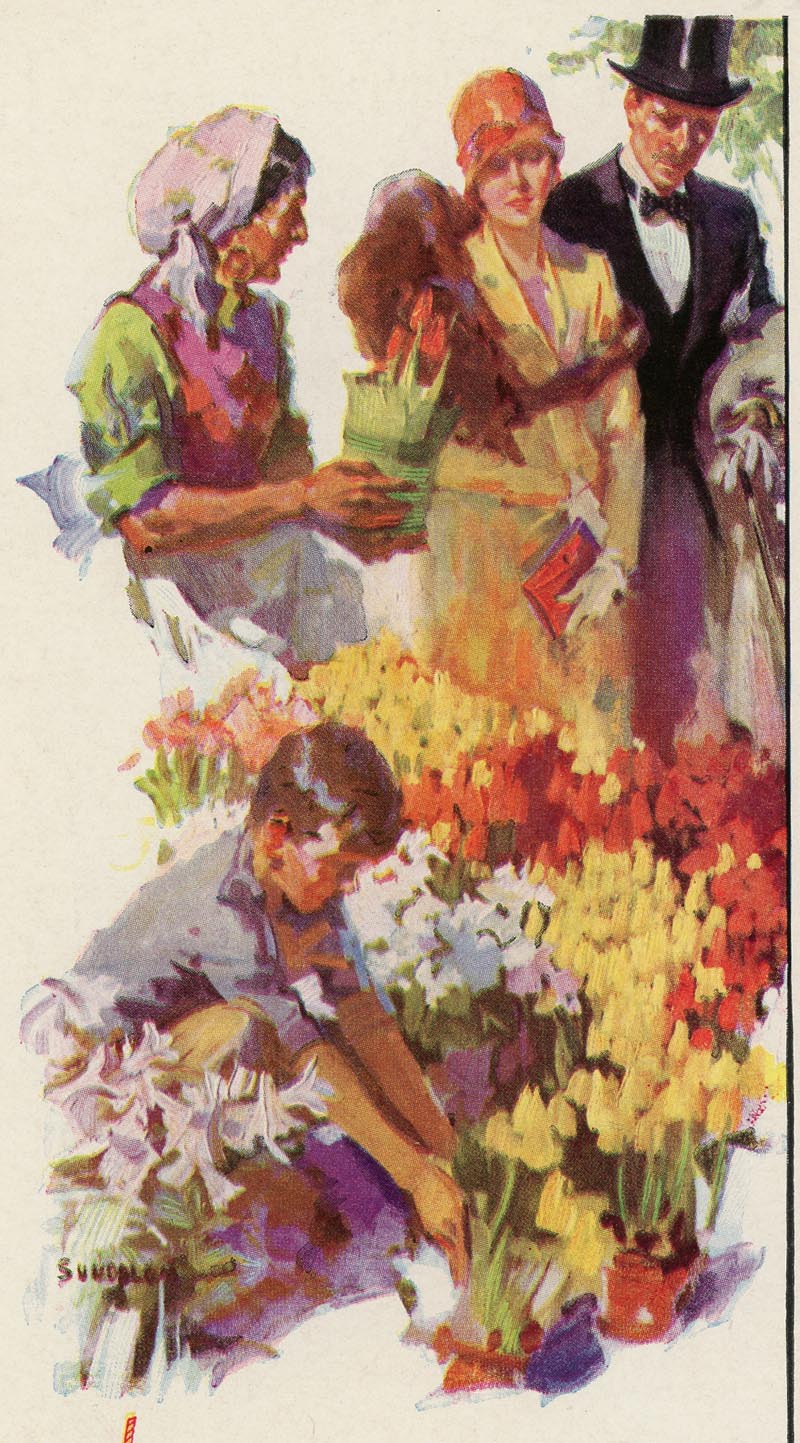
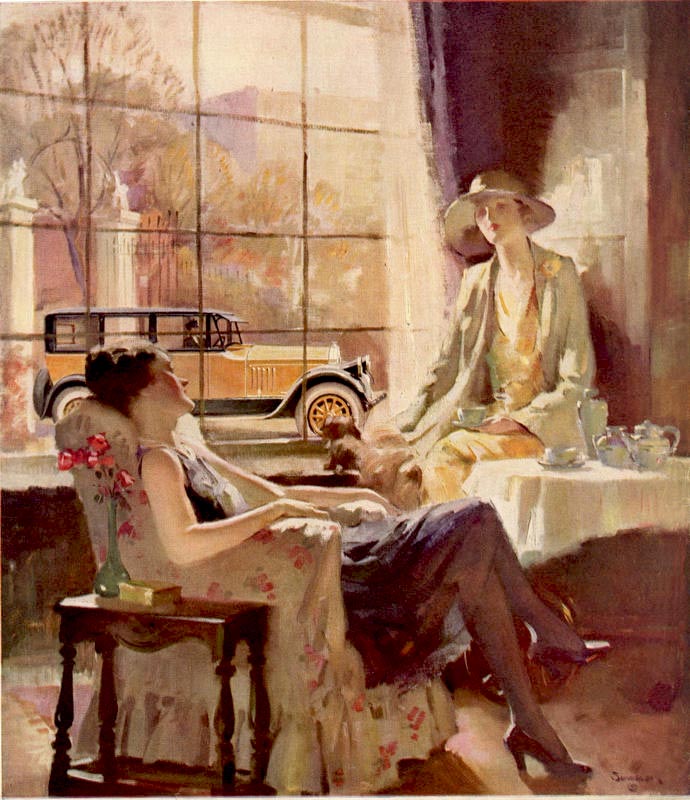
Sure enough, in the 1956 American Artist article on Haddon Sundblom, author Frederic Whitaker includes Arthur Surin among a list of "the art world luminaries who are the direct offspring of the Sundblom personality and who constitute, in part, the "Sundblom School of Illustration." Below, another example from that school - not by Sundblom - but how many (if any) strokes from his brush touched it up before it left his studio?

UnknownSundblomCircle03

Howard Terpning isn't on Whitaker's list of luminaries but he too was a Sundblom apprentice. Frequent TI contributor, Harold Henriksen, sent this scan the other day from a book called The Art of Howard Terpning. Terpning was in his early '20s when he was at Sundblom's studio and said he "made this painting for fun." The Sundblom influence is evident.
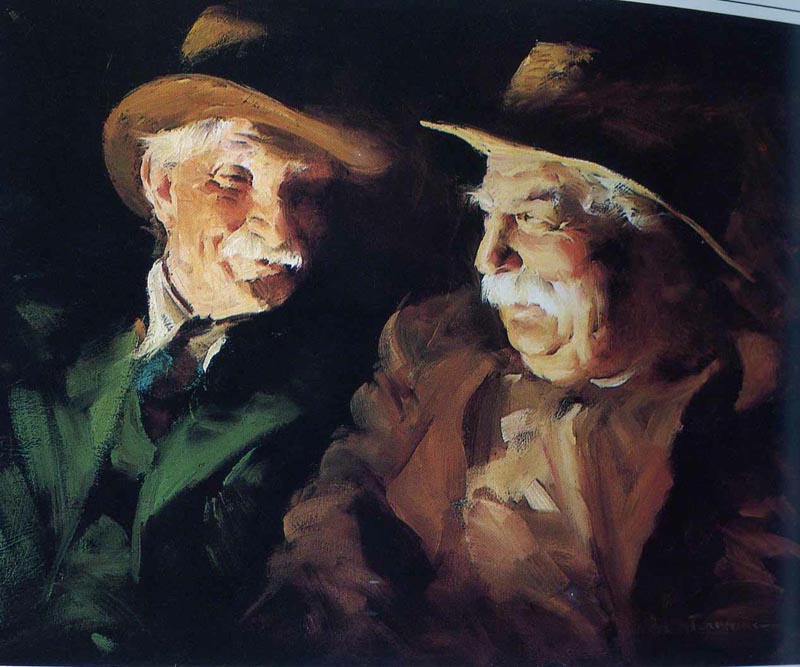
Terpning09

Two other Sundblom Circle members not previously mentioned; Earl Blossom (father of '60s/'70s illustrator David Blossom)...
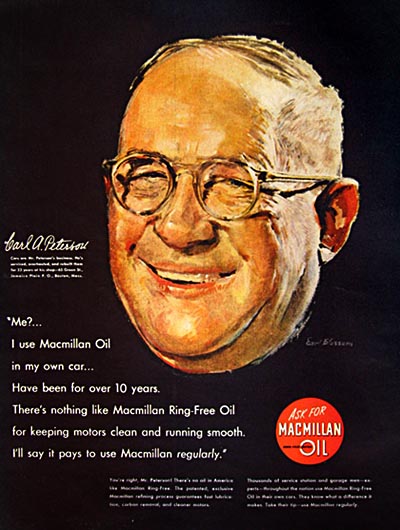
Blossom01

... and Morgan Kane. The bio on Kane's website says "After the war, Morgan moved to Chicago where he worked with well-known illustrators, including Haddon Sundblom and Harry Anderson. During that time he painted many commercial pieces for companies such as Coca Cola..."

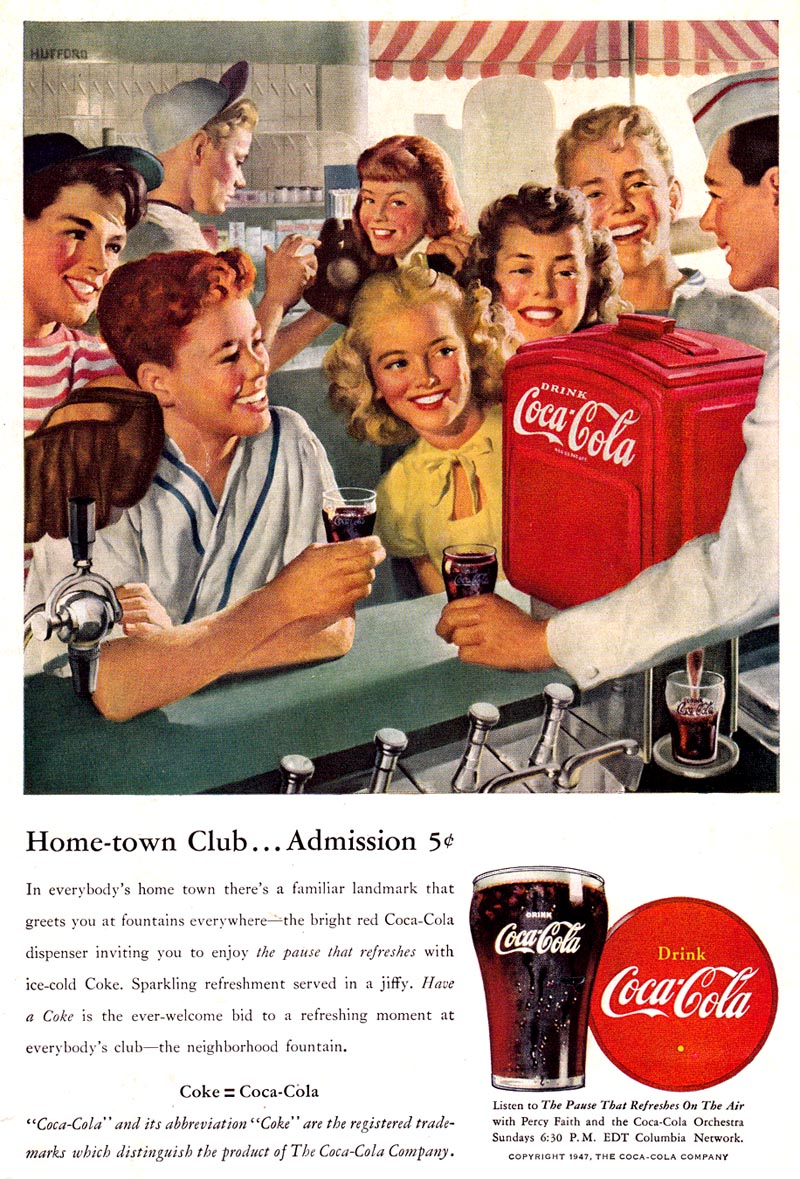
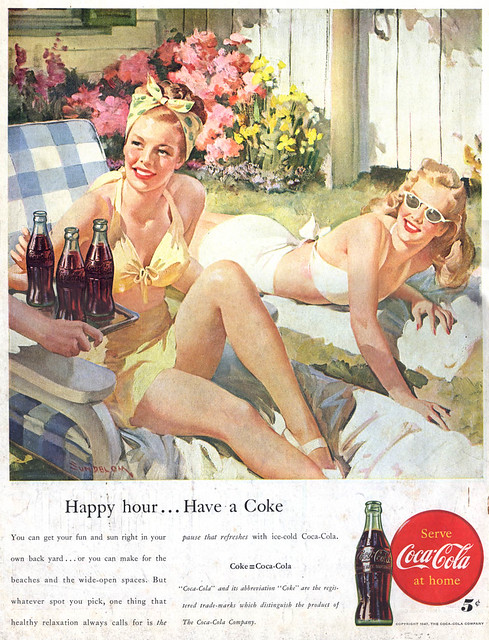
For all we know, this unsigned 1947 Coke ad below could have been painted by Kane while working for Sunny.
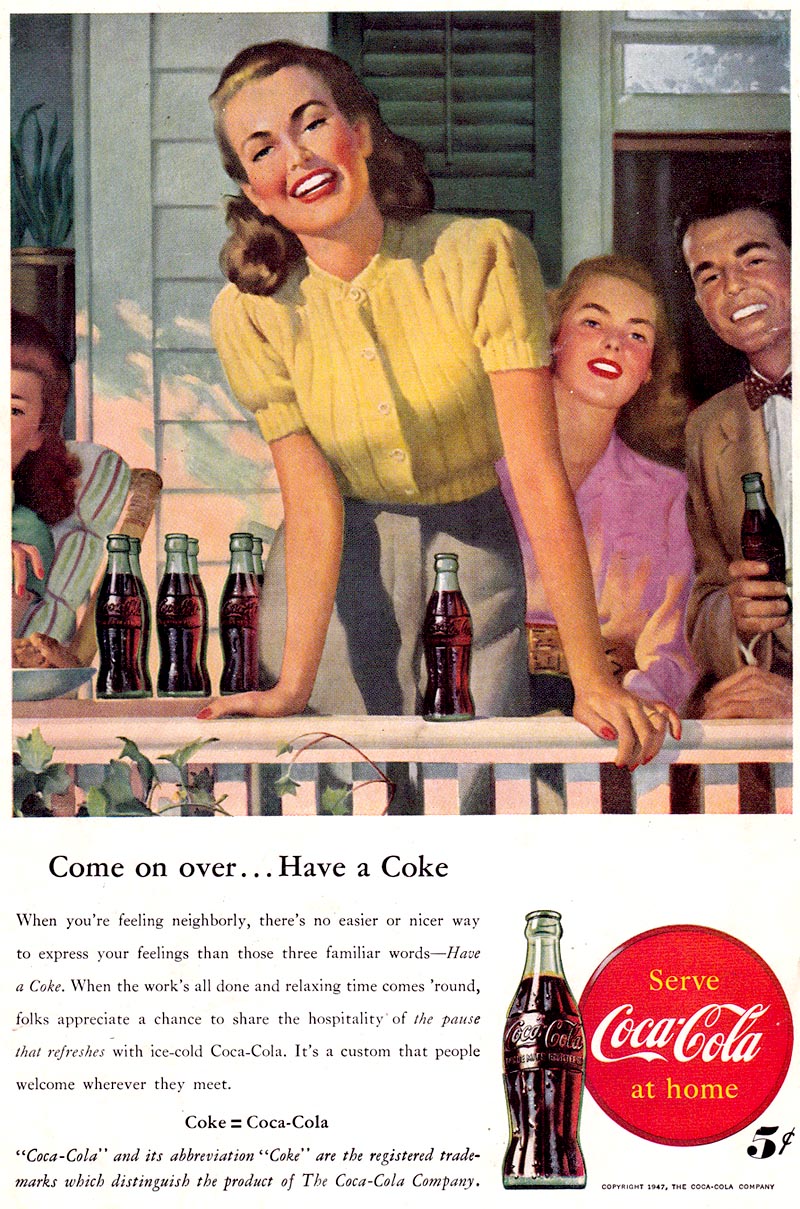
UnknownSundblomCircle02

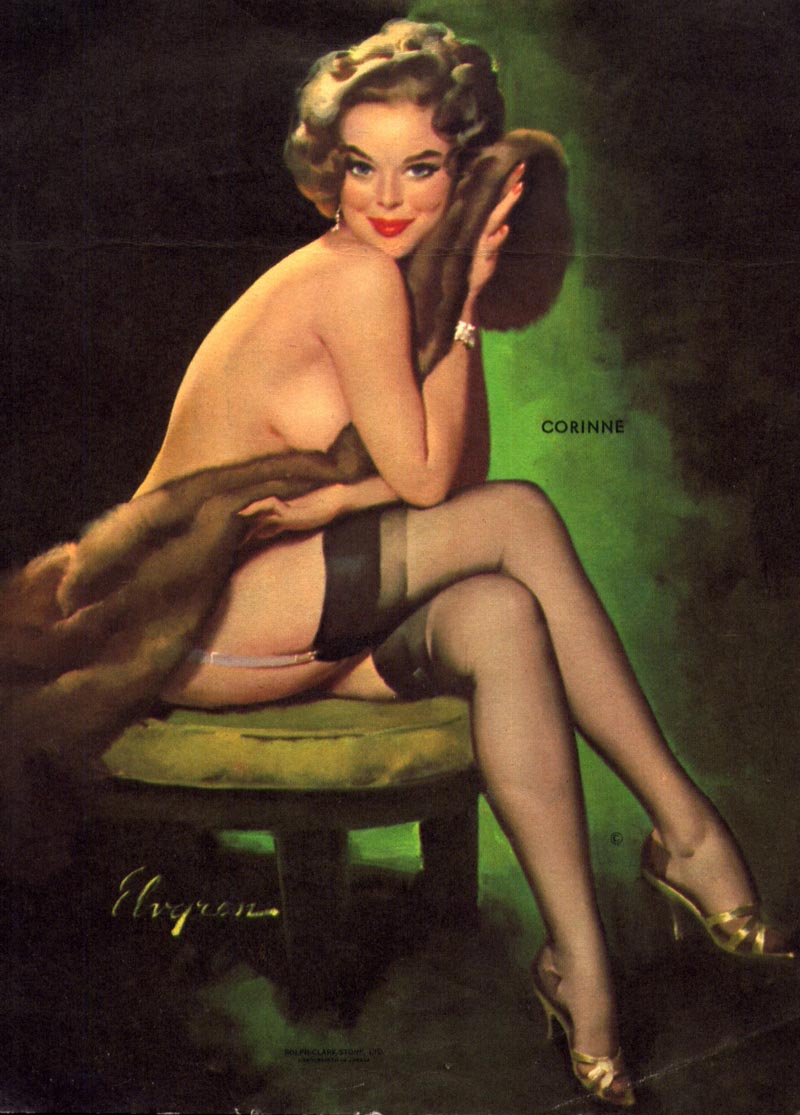
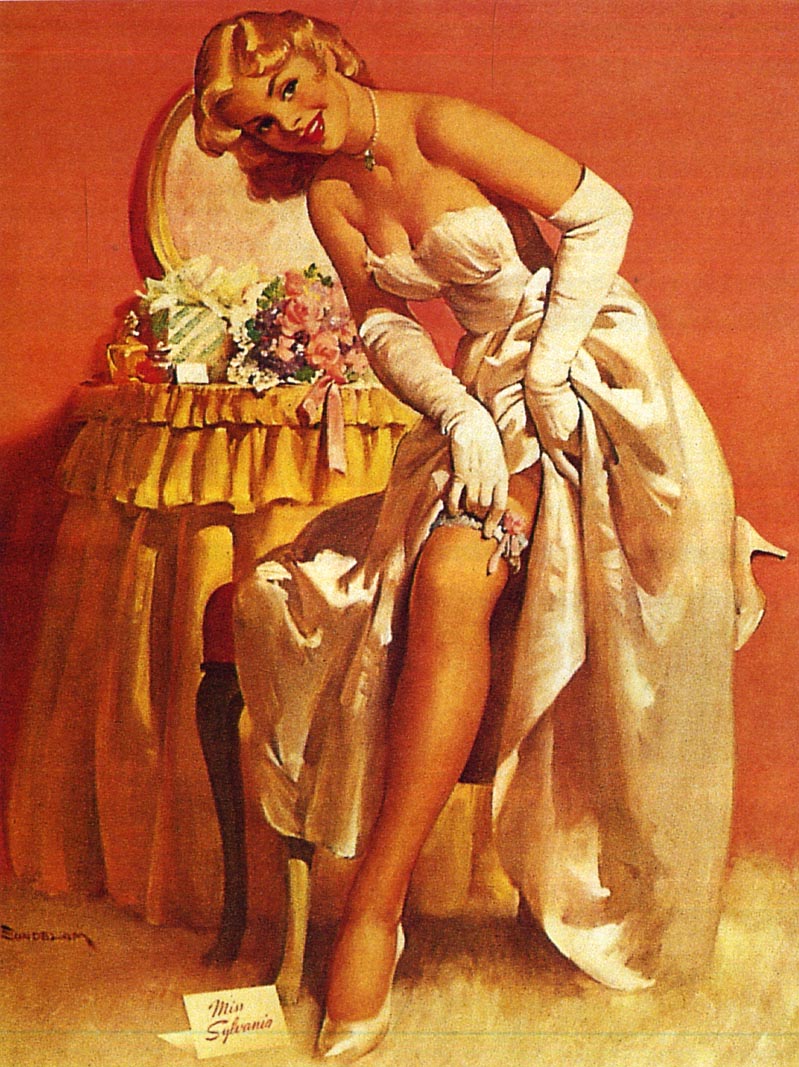
As one commenter noted on the last post, Gil Elvgren (below) is probably the most direct (and most famous) descendant of the Sundblom style.
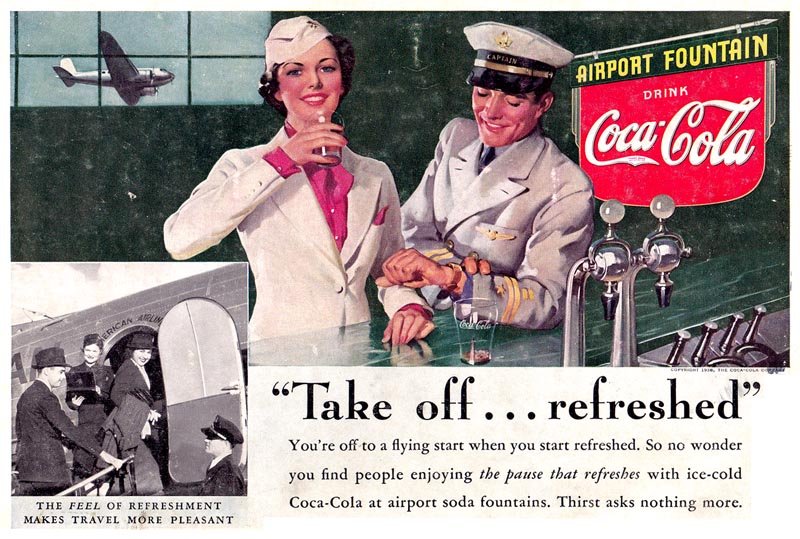
Elvgren02

Today's batch of vintage Coke ads were an early Christmas gift from Eric Bowman, who saved a stack of old National Geographics that had been collecting dust at an art studio where he worked 20 years ago. Eric very kindly scanned a whole bunch of the back covers of those Nat. Geo's and emailed them to me last week. Many thanks, Eric!

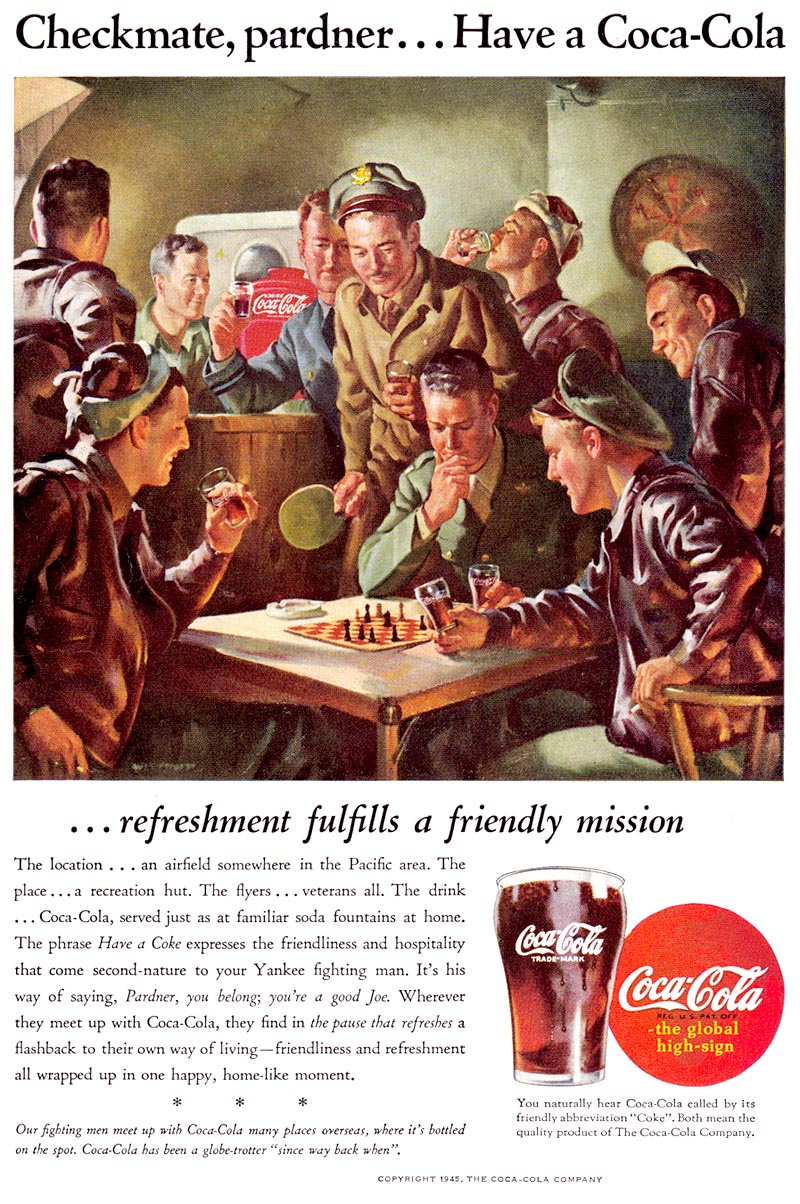
Here are some more ads by Sundblom apprentices, courtesy of Eric Bowman.

Jack Wittrup...
Wittrup02

... Nick Hufford...

Hufford04

... and Harry Anderson.

Anderson38

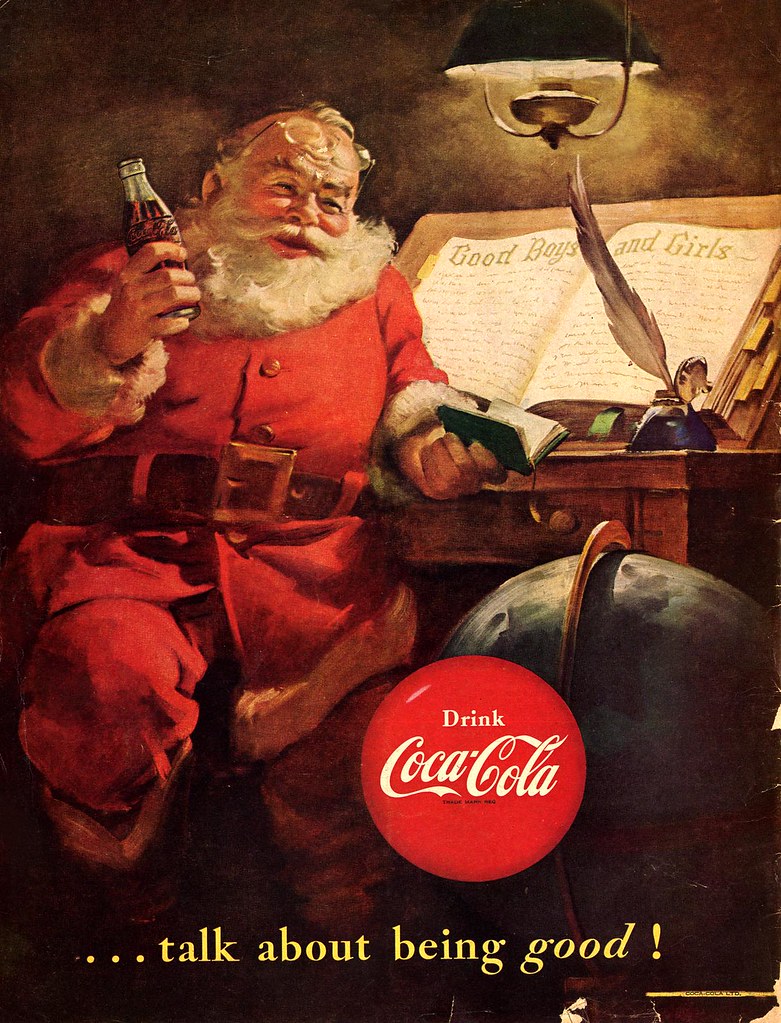
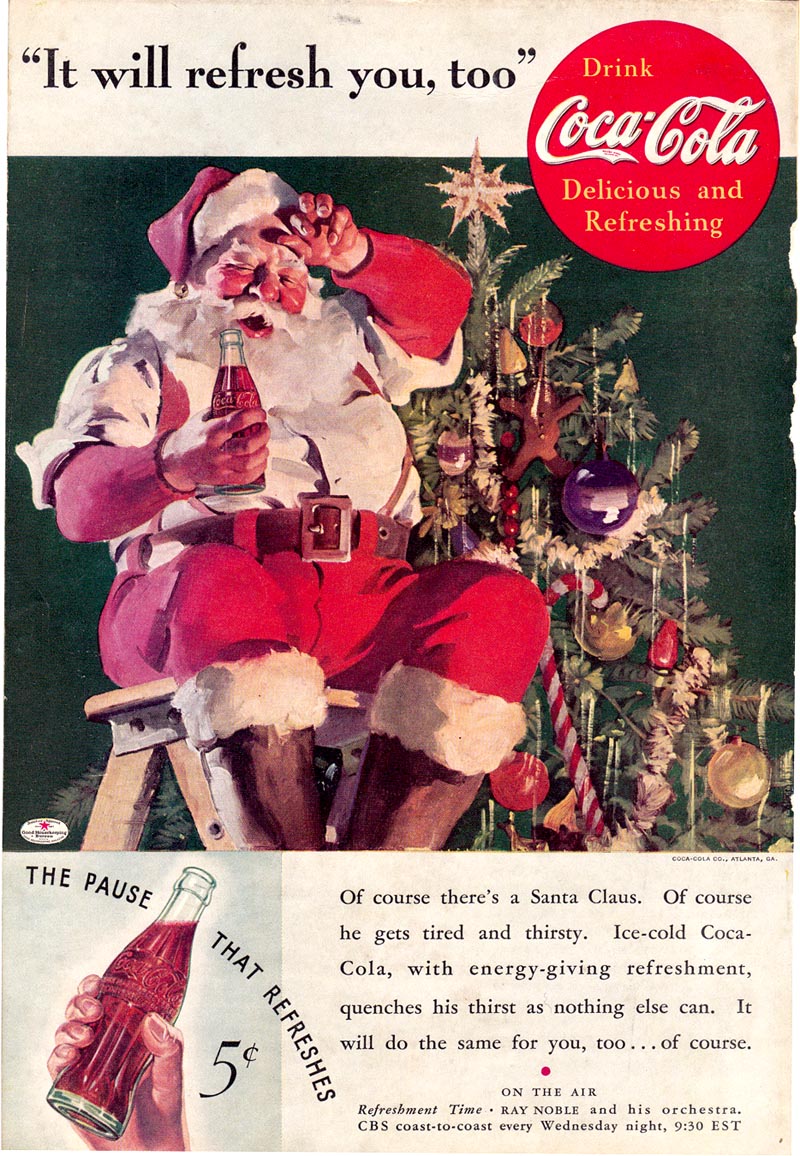
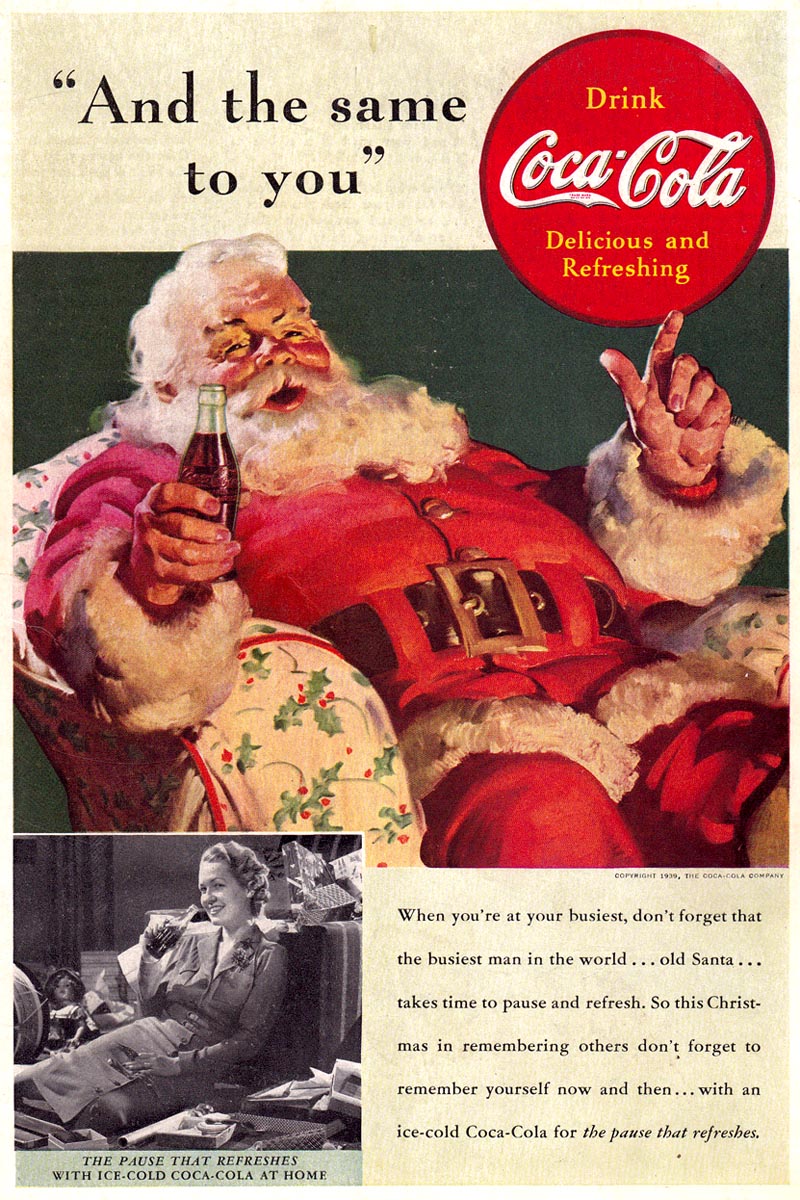
Finally, again, courtesy of Eric,a few more Coca-Cola Santas by Sundblom, from 1939...
Sundblom62

... 1947...

Sundblom63

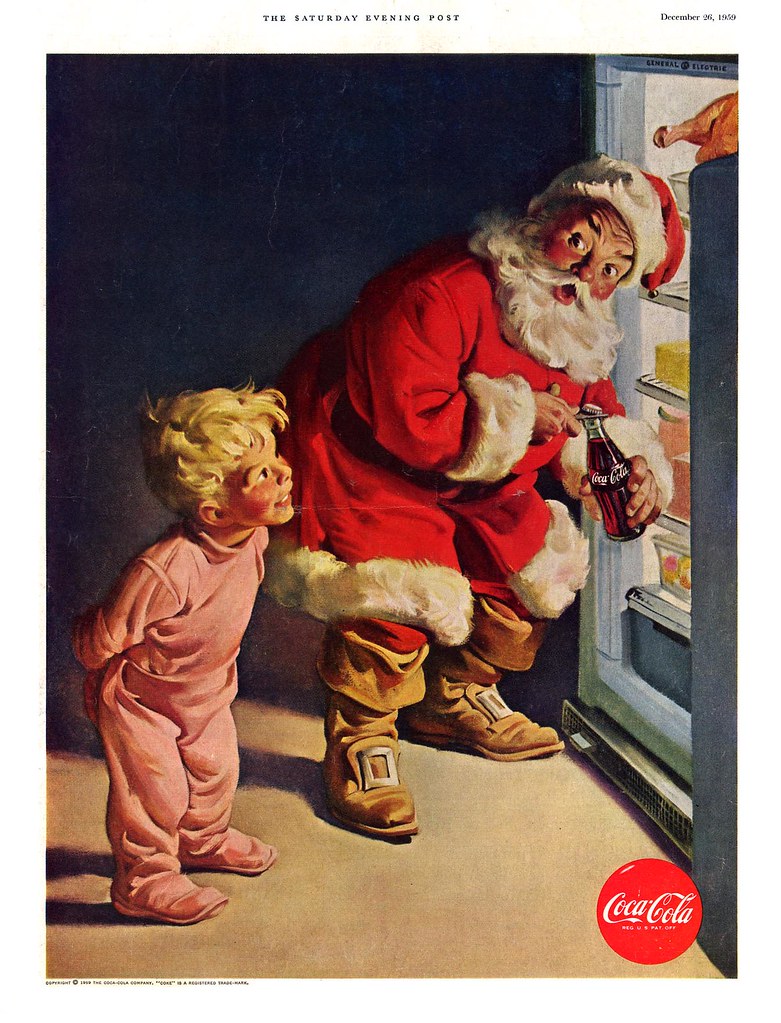
... and 1963.

Sundblom64

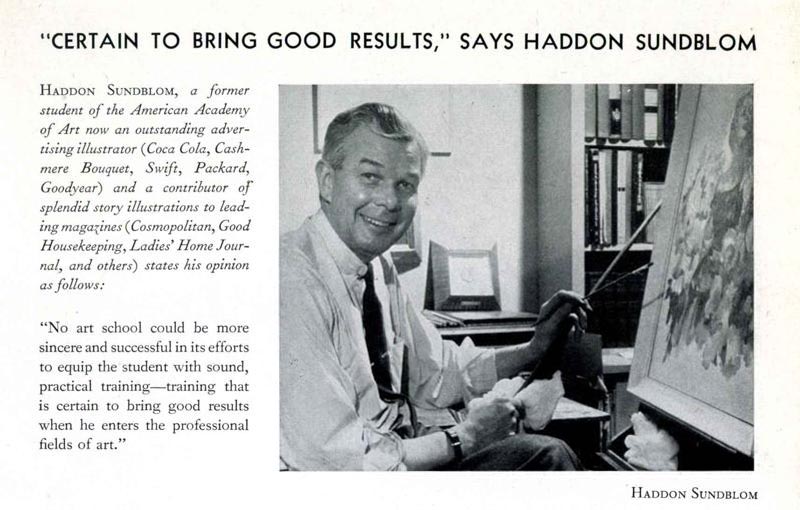
When Haddon Sundblom was interviewed for American Artist, he spoke with great affection and modesty about his studio and the artists in his Circle. "All I can say is it was an unusual studio where its members without conscious effort or charitable impulse , but rather with a spontaneous spirit of good will, inspired each other and where we learned that its best returns came from the mutual sharing of our various abilities. The place teamed with a genuine art spirit. Steve [Sundblom's studio partner/co-owner, Howard Stevens] and I were simply the guys who fortunately had hired the hall."
Sundblom34

And with that thought, let's call it a day. If ever I could feel like Haddon Sundblom, its in the sense that I had the good fortune to "hire this hall" for the spirit of good will and mutual sharing. This month-long look at one of the greatest illustrators of the 20th century could not have been possible if so many people hadn't jumped in to assist.

* Thanks to Tom Watson for his many early Sundblom scans, to Aron Gagliardo for materials from the archives of the American Academy of Art (including the photo of Sunny directly above), to Heritage Auctions for Sundblom scans from their archives, to Aaron Baker of Playboy Enterprises for information related to Sundblom's "last Santa" (the December 1966 Playboy cover), to Eric Bowman and Harold Henriksen and to everyone who commented here and on Flickr and who retweeted these posts on Twitter and Facebook.

Merry Christmas and Happy New Year, everyone - see you again on January 3rd, 2011!

Monday, December 20, 2010

Haddon Sundblom and the Chicago Pin-Up Artists

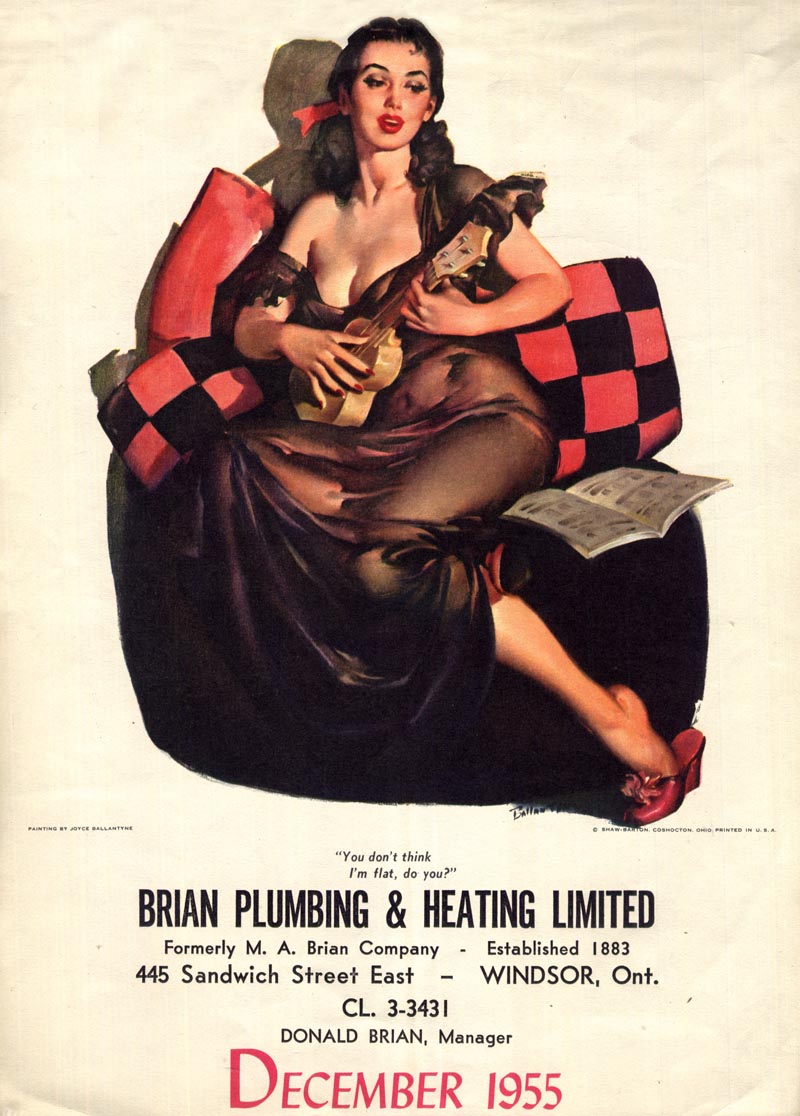
In the book, The Great American Pin-Up, co-authors Charles Martignette and Louis Meisel credit Haddon Sundblom with being "recognized today as the inspiration behind the best pin-up and glamor artists from the 1930s through the 1960s." Certainly Sundblom's Circle of apprentices are responsible for some of the most gorgeous interpretations of the female form. Below, a couple of the most famous pin-up artists of that group: Gil Elvgren...

Elvgren01

... and Joyce Ballantyne.

Ballantyne02

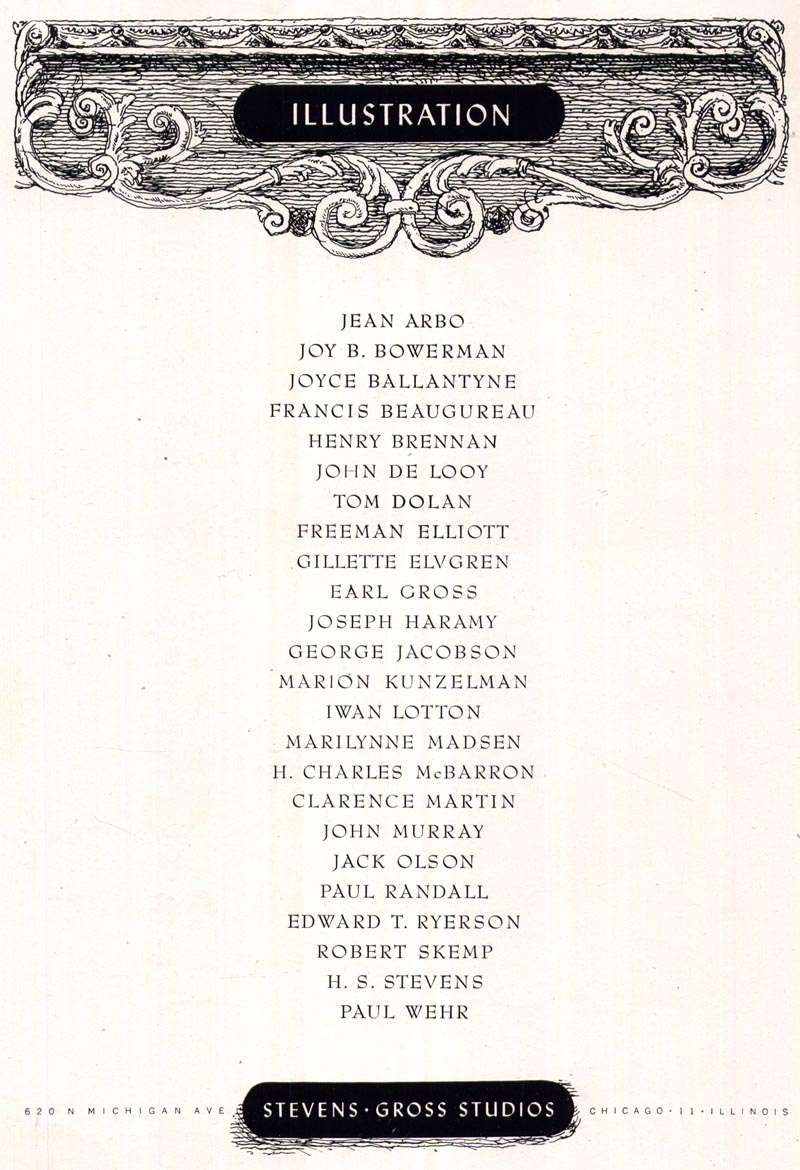
As you can see from this ad below, taken from the 1946 New York Art Directors Annual, Elvgren, Ballantyne and several other Sundblom Circle artists were represented by Stevens Gross Studios.

SGS02

This is where things get a bit confusing for me. The 1956 American Artist article on Haddon Sundblom describes Earl Gross as a "direct offspring of the Sundblom personality" - and Sundblom himself tells interviewer Frederic Whitaker that, "In 1925 Howard Stevens, Edwin Henry and I started our own outfit known as Stevens, Sundblom & Henry." So how and when did Stevens Gross come about? In another book, "The Elvgren Collection," author Marianne Ohl Phillips writes that Gil Elvgren joined Stevens Gross at age 22 and subsequently became a protegé of Haddon Sundblom, suggesting that Sunny was among the artists in Stevens Gross' stable. Very confusing...

Another Sundblom Circle artist, Chuck Showalter, joined Sundblom's studio in 1946 when it was known as "Sundblom and Anderson."  Within 8 months of his joining the studio changed to "Sundblom, Johnston and White."

Showalter01

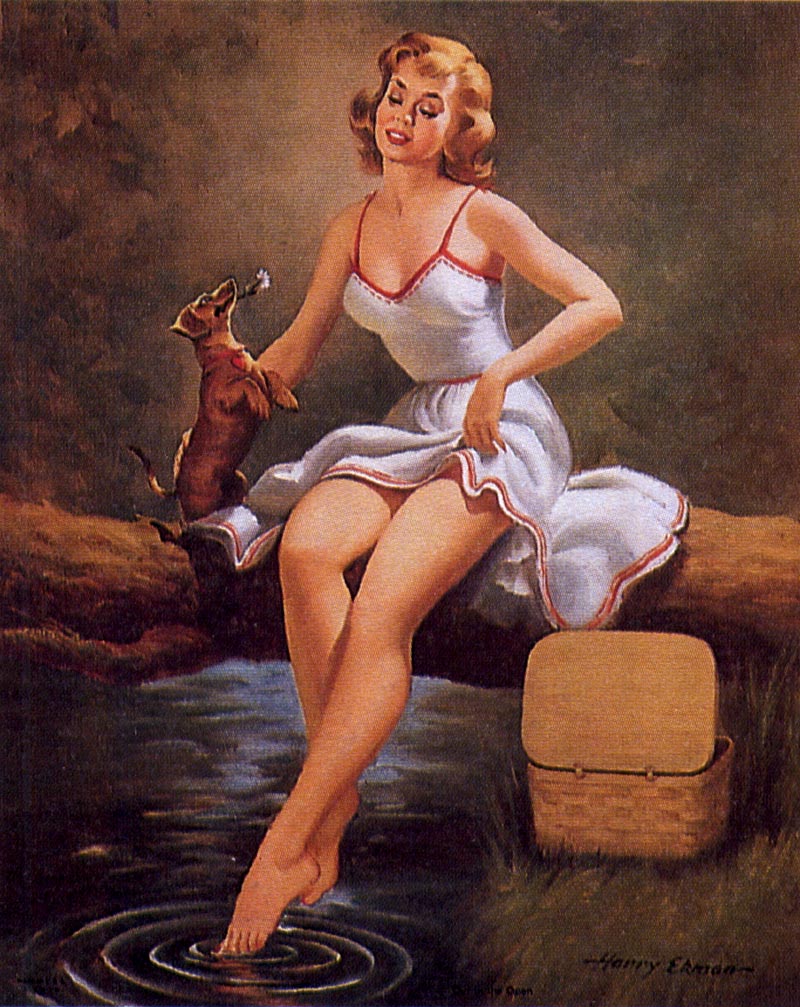
Showalter reported that Sunny left the studio in 1956 to partner with a former apprentice, Harry Ekman (below).

Ekman05

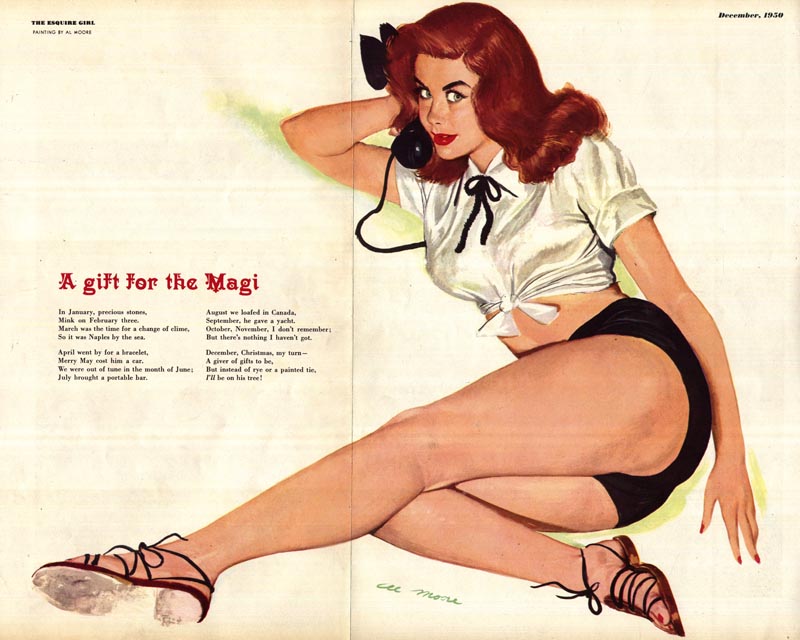
Here are a few more lovely ladies by some of the seemingly countless Sundblom Circle alumni: Al Moore...

Moore05

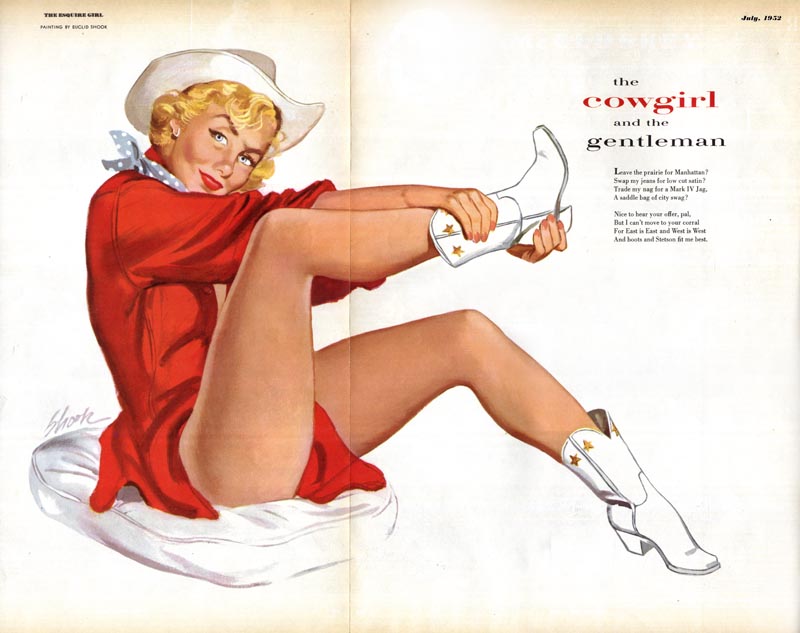
... Euclid Shook...

Shook01

... Freeman Elliot...

Elliot01.detail01

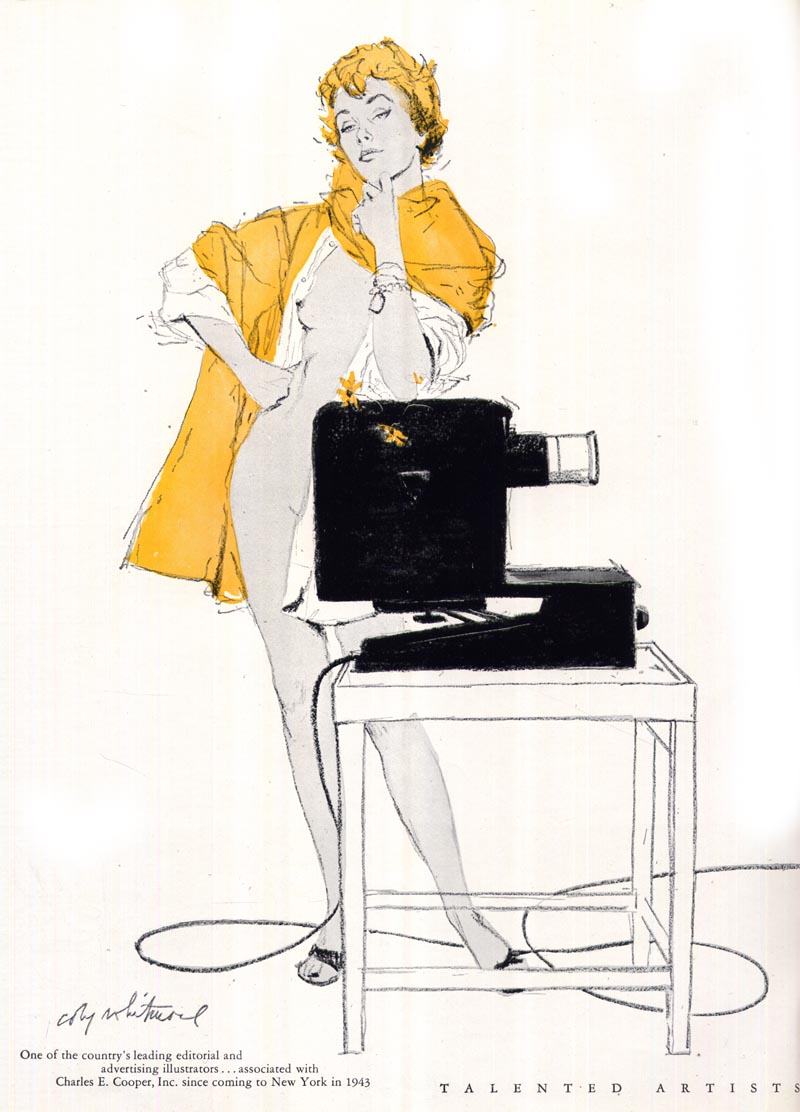
... Coby Whitmore, who by the mid-1940s had migrated to New York and became a star at the Charles E. Cooper studio.

Whitmore69

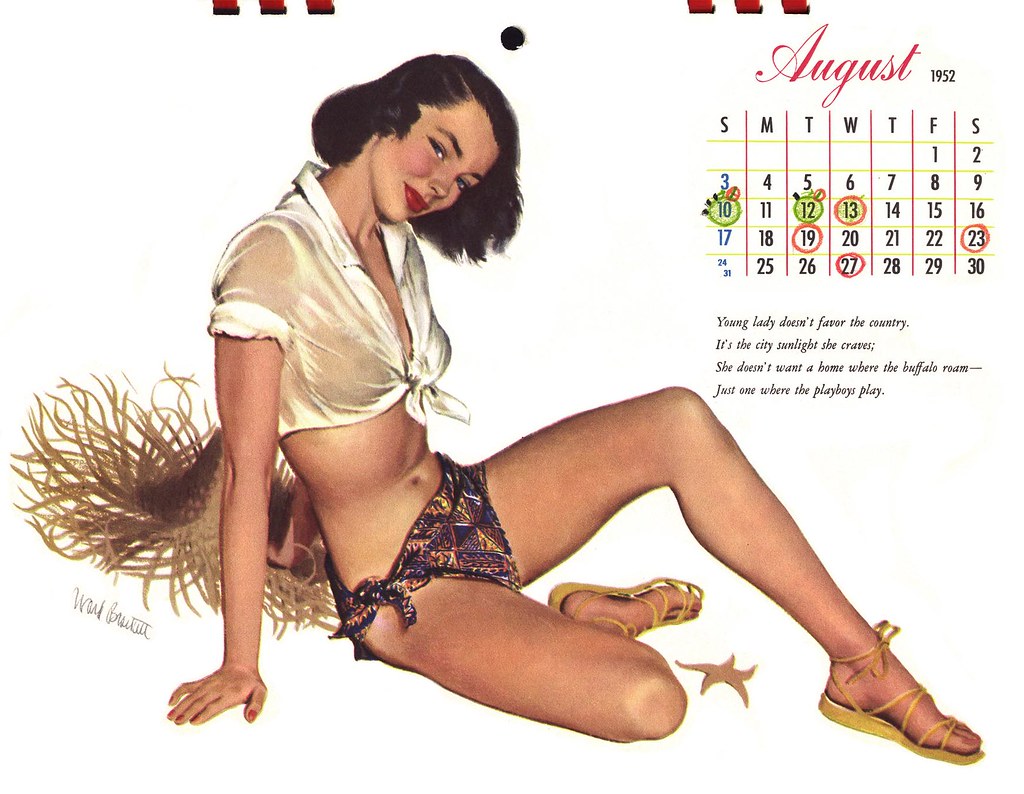
... Ward Brackett...

Brackett10

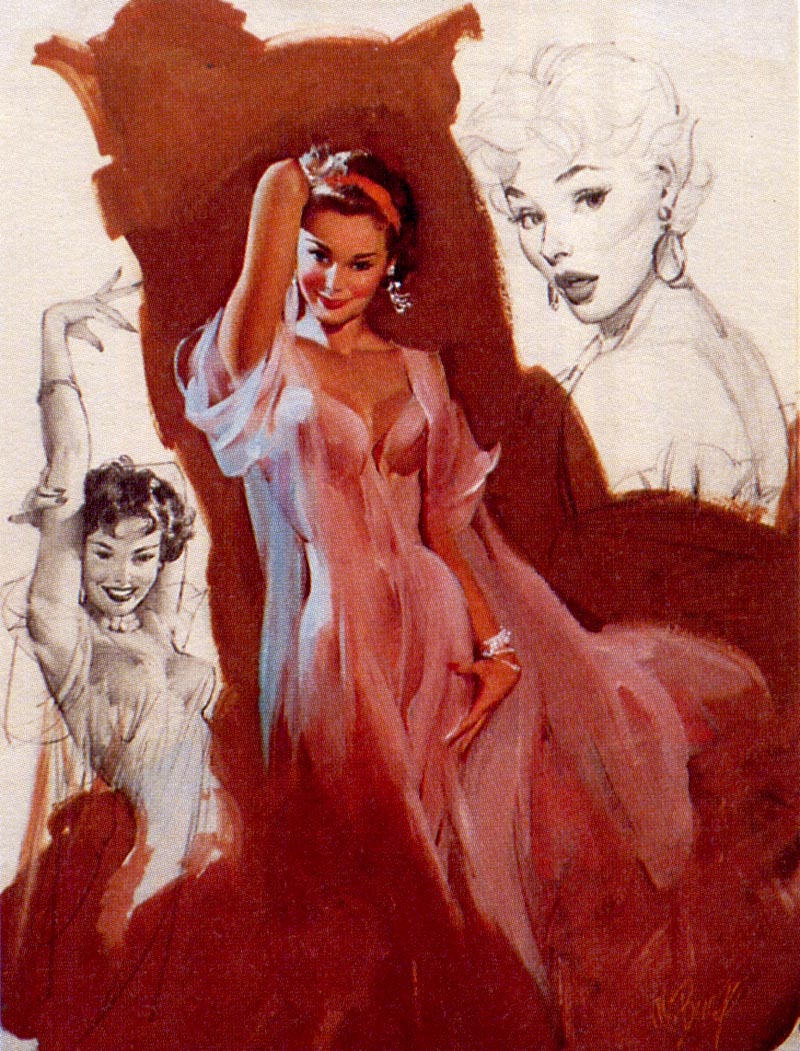
... Al Buell...

Buell05

... get the picture?

Tomorrow: one more day of Sundblom and his Circle

Friday, December 10, 2010

Sunny's Last Santa

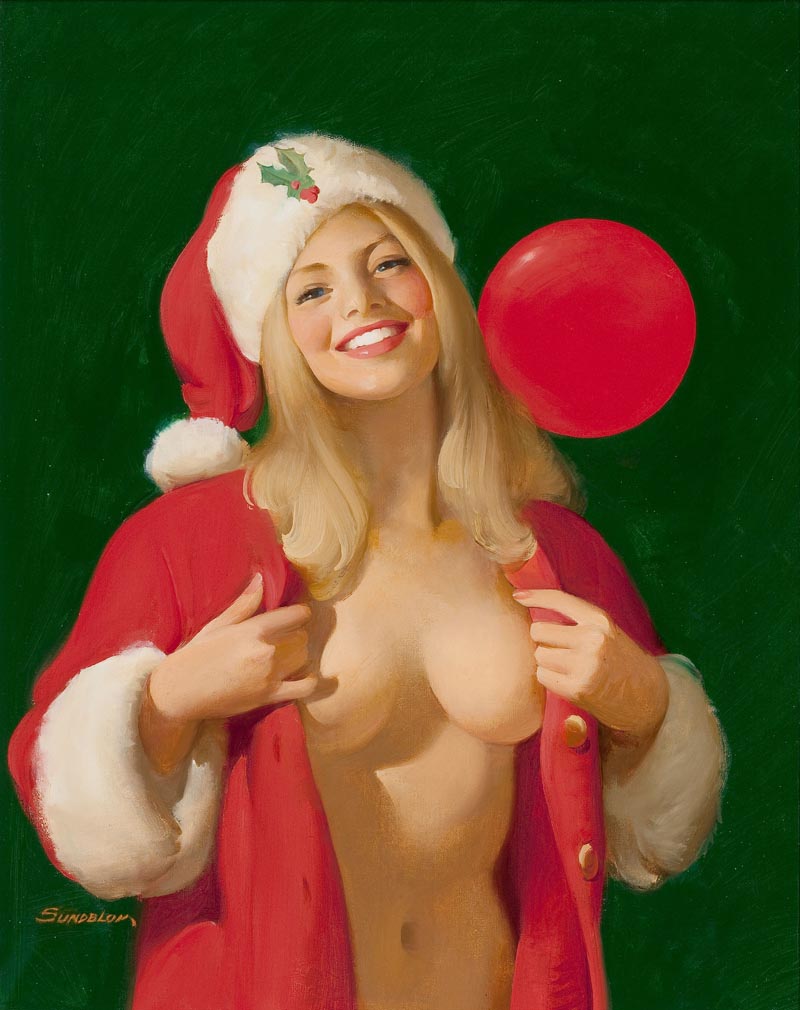
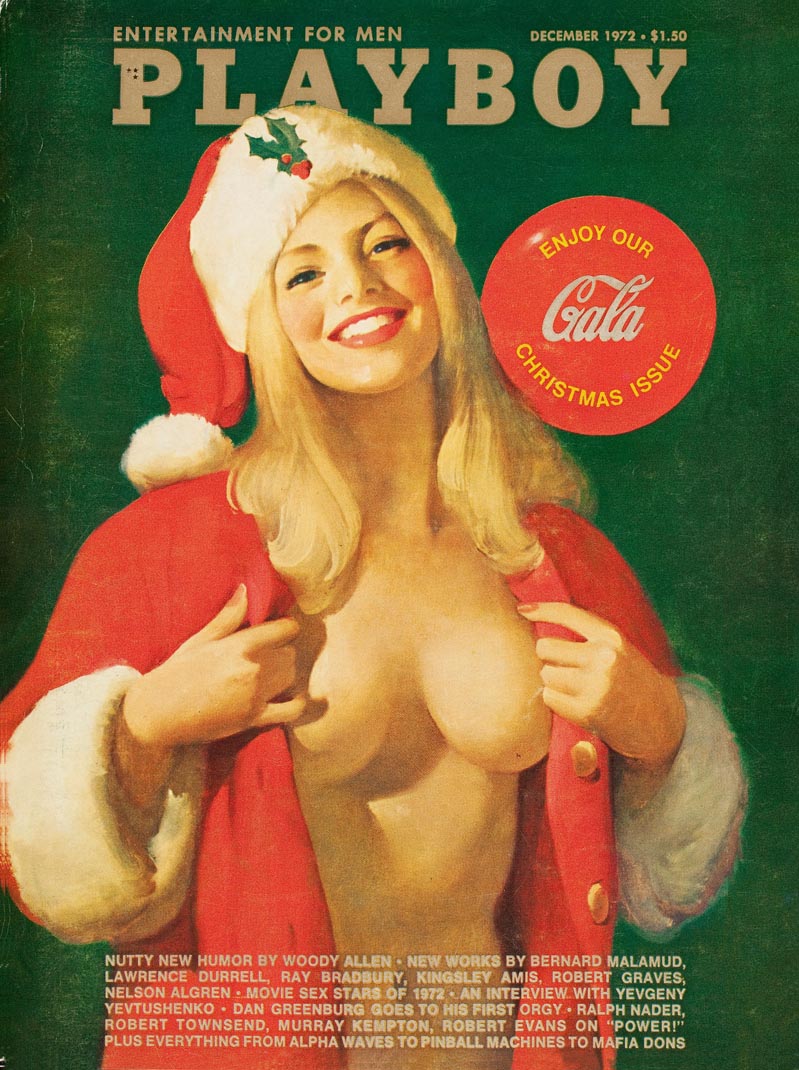
You're looking at Haddon Sundblom's last Santa (or should I say... 'Santa's little helper'...?) In fact, this was Sunny's last commercial assignment, painted when he was 71 years old, for the cover of that other Chicago institution, Playboy magazine.

Sundblom44

You'd think that Playboy and Haddon Sundblom would have had a long, ongoing working relationship, but I checked with Aaron Baker, the curator of paintings for Playboy Enterprises Inc. Aaron wrote back, "Our art director, Art Paul, wanted a sexy take on Sundblom's classic Coca-Cola Santa Claus illustration. To my knowledge, he did not do any other work for us."

Sundblom43

Sundblom seems like a natural for the pin-up genre. In the book, "The Great American Pin-Up", co-author Charles Martignette wrote about how, during and after WWII, many American companies employed pin-ups in their ad campaigns. "Coca-Cola was the largest of such companies to feature pin-ups prominently," wrote Martignette. And of course Haddon Sundblom was one of Coke's most prolific illustrators. Between Sunny and his many talented apprentices, Coca-Cola had a ready stable of some of the finest illustrators of the genre at their disposal.

Sundblom06

"The Sundblom Circle," as this group of illustrators came to be known, included many of the most prominent artists of the contemporary pin-up scene: Gil Elvgren, Joyce Ballantyne, Thornton Utz, Al Buell and Al Moore are only a few of the many artists who learned their craft at Sunny's easel. Some, like Elvgren, went on to make pin-up art their dedicated specialty. When you look at pin-up art from the mid-century period the Sundblom style seems to be everywhere! But Sundblom himself did relatively few pin-ups.

Sundblom41

No doubt, with so many steady advertising accounts - Coke, Palmolive Soap, Colgate Toothpaste, Maxwell House Coffee, Aunt Jemima Pancakes, just to name a few - Sunny had his hands full all of the time with tremendously lucrative work. Fans of the genre, like myself, would certainly love it if there were more Haddon Sundblom pin-up pieces like the ones seen here today.

Sundblom42

We can take some comfort in the knowledge that, as Charles Martignette wrote, "Sundblom is recognized today as the inspiration behind the best pin-up and glamour artists from the 1930s through the 1960s."

* The Haddon Sundblom original at the top of this post is up for auction right now at Heritage Auctions. Thanks to Heritage for allowing me to use their scans of this piece.

* Thanks to Aaron Baker of Playboy Enterprises Inc. for his assistance with the information on Haddon Sundblom's December 1972 cover for the magazine.

* The last two images in this post are from the book, "The Great American Pin-Up", co-authored by Charles Martignette and Louis K. Meisel, © 2009 Taschen GmbH

Friday, December 17, 2010

Sundblom's Sarasota Circle

This may not look anything like a Sundblom Santa, but you could say that Haddon Sundblom had a hand in its creation.

Utz68.detail01

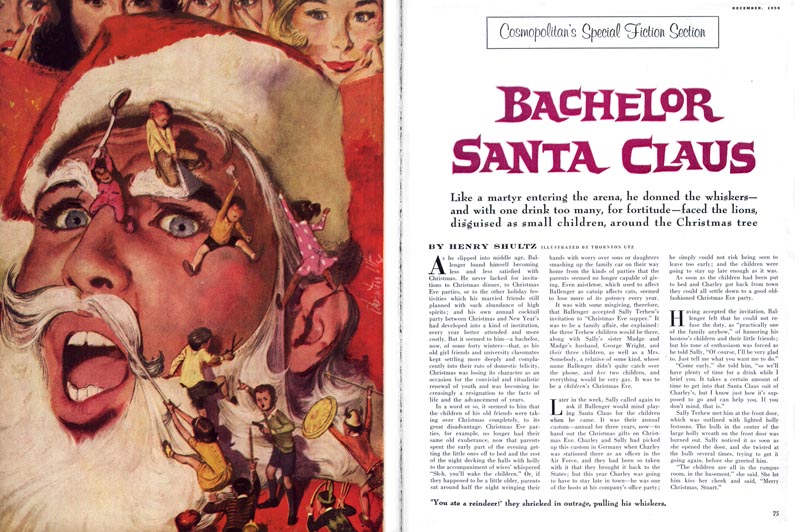
It was painted by Thornton Utz, and Utz was another of Haddon Sundblom's many apprentices during the early days of his career.

Utz68

Utz was a long way and many years from Sunny's Chicago studio when he painted this piece for the December 1958 issue of Cosmopolitan magazine.

Utz63

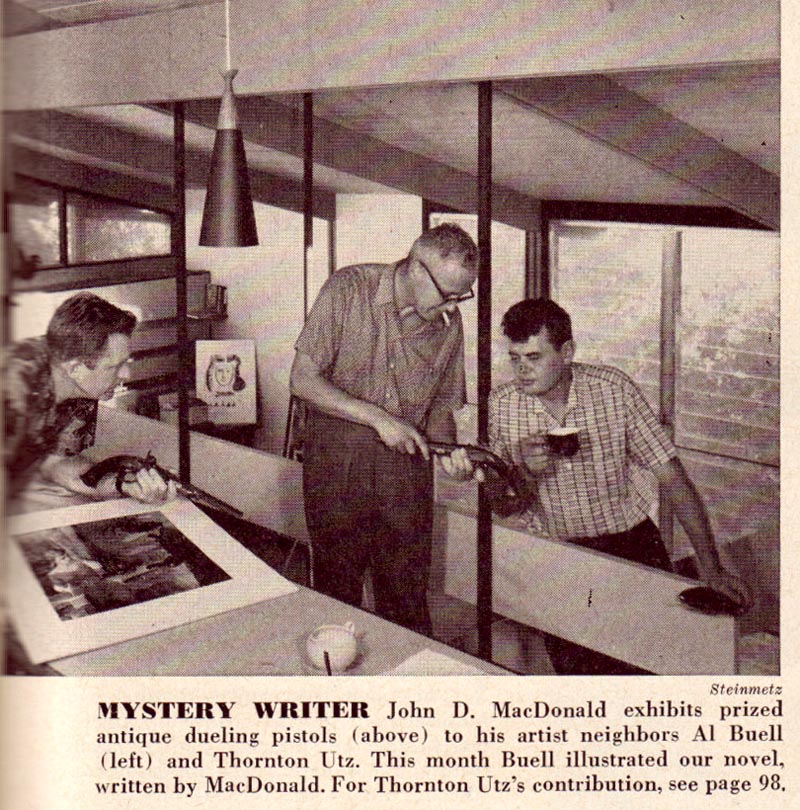
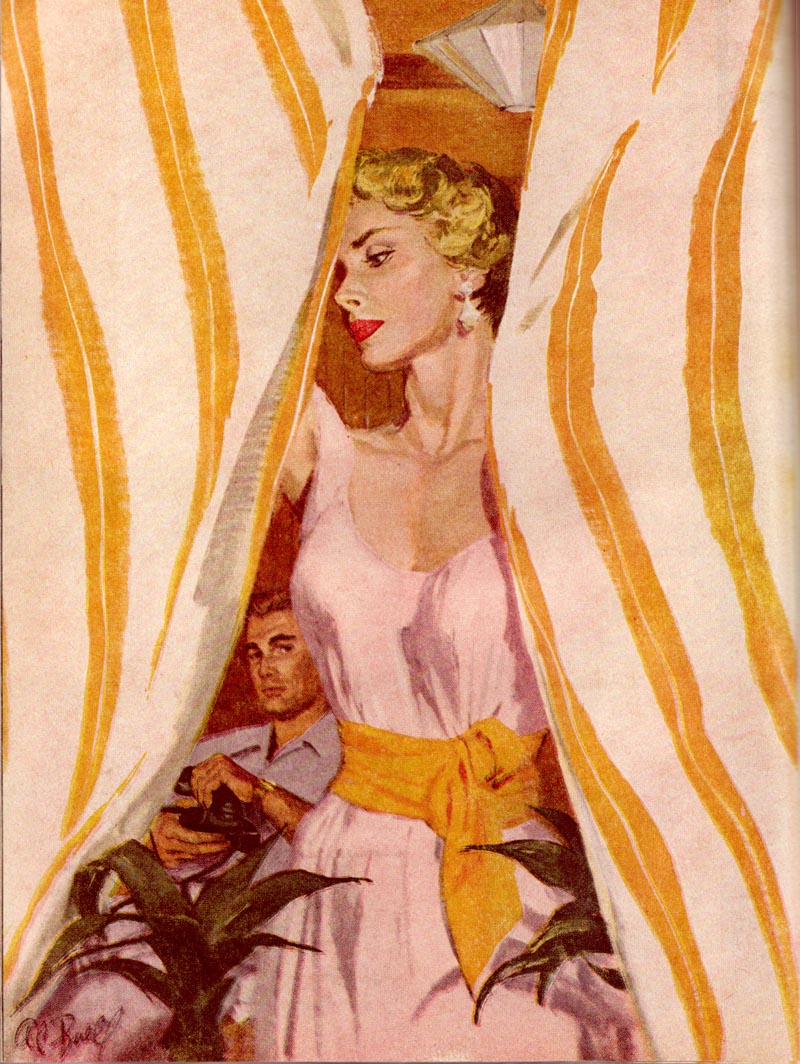
He was living in Sarasota, Florida where he had moved his family, alongside his close friend, Al Buell, who was yet another Sundblom Circle alumnus. Below, an Al Buell illustration for Cosmo.

Buell04.detail01

Sunny was said to be not much of a teacher from an academic perspective. Rather than explain the problems he saw in his protegés' efforts he more typically repainted them himself. So apprentices like Utz and Buell learned mostly by intently watching the master's every brush stroke.

When Sundblom was asked what he thought of how his Circle had migrated to New York and all across America, he said, "How does one estimate the influence of a studio whose known alumni include a goodly number of top illustrators, gallery painters and art directors, a few ad executives, copy writers, a plumbing contractor, a politician, a millinery tycoon, a policeman, a top lightweight boxer, a world champion pistol shot, two ministers of the gospel, plus three hundred or more hopefuls of whose fate we know nothing?"

Presented with a partial list of names that included Utz and Buell - and all of yesterday's artists - Sundblom said (I assume somewhat facetiously), "I could add many more names to your list, but I hesitate because, while I'm sure that most of the alumni remember us kindly, there are no doubt some who, after years of progressive mental and spiritual enlightenment, might on the basis of guilt by association, want to invoke the Fifth Amendment."

Stahl88.detail01

Among those not mentioned is Ben Stahl, another member of "The Sarasota Sundblom Circle" (A phrase I'm christening today). Stahl had arrived, portfolio in hand, at Stevens, Sundblom and Stult in 1932, a Depression year. He was put immediately on the payroll. Despite the times, the studio was said to be bustling and "thronged with talent" and, like so many before and after him, Stahl learned his trade at Sundblom's easel.

Stahl88

And just to demonstrate once again how many talents were developed in Sunny's studio, while Stahl was there painting, "Stan Ekman..."

Ekman03.jpg

"... and Ward Brackett were there, developing rapidly..."

Brackett02.jpg

"... and young Coby Whitmore was there, running errands."

Whitmore67

On Monday: even MORE Sundblom Circle apprentices.

* Many thanks to Steve Scott for the Al Buell scan in today's post.

Monday, December 06, 2010

Sunny's Santa

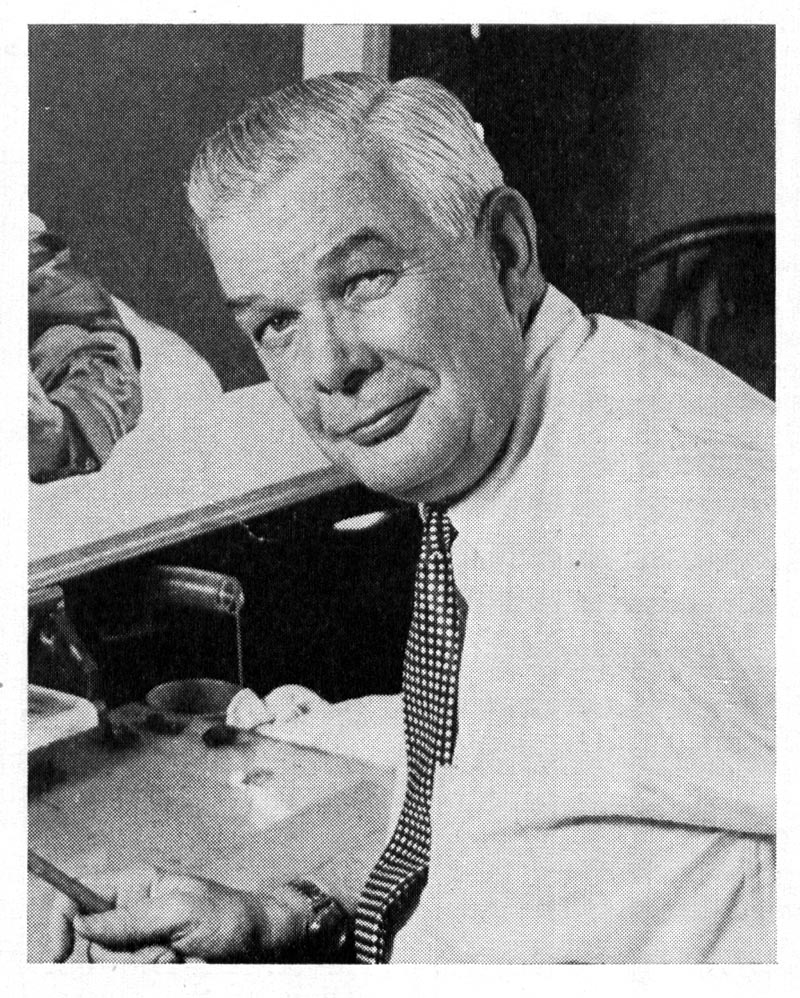
Yes Virginia, there is a man who created Santa Claus (the "modern" Santa Claus we all know and love, that is)*. His name was Haddon Sundblom and you're looking at him, circa the mid- 1950s.

Sundblom30

"Sunny", as he was known by friends, family, clients and his many, many apprentices, was a prolific, iconic Chicago illustrator with a "mercurial temperament and occasional immovability" but also "a heart of gold."

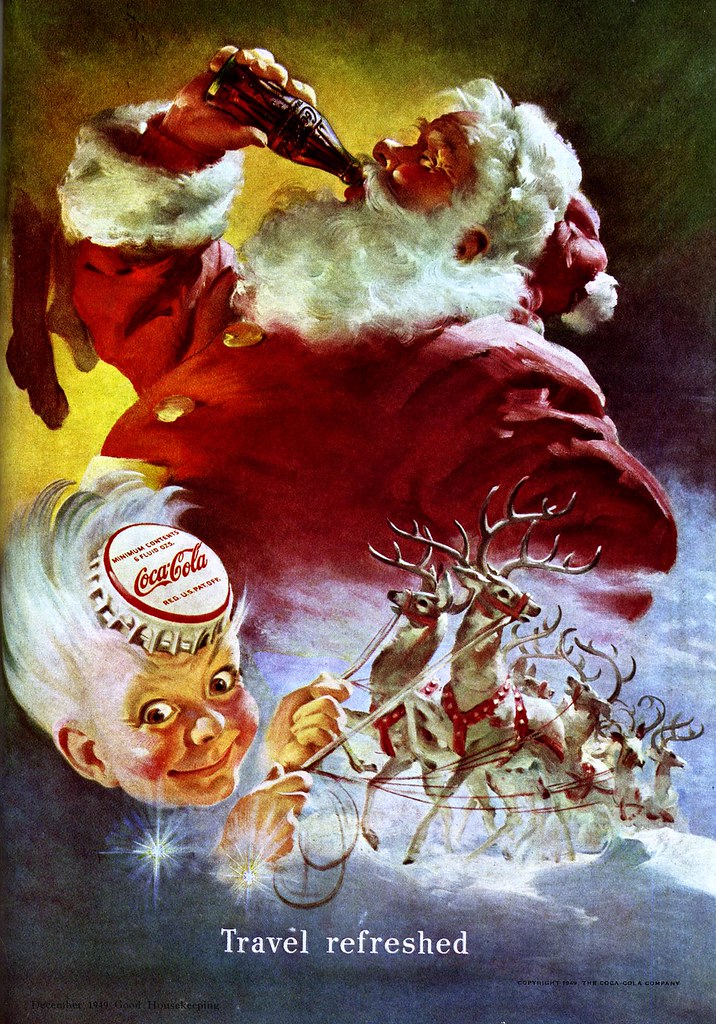
Around 1925, Sundblom painted his first Santa Claus illustration for Coca-Cola's Christmas advertising campaign. He claimed to have been partially inspired by J.C. Leyendecker's work, but over the next 40 years the image of Santa that became imprinted in the minds of one and all as the quintessential version of Saint Nicholas was one hundred percent Sundblom's version.

Sundblom15.jpg

Sundblom16.jpg

Sundblom19.jpg

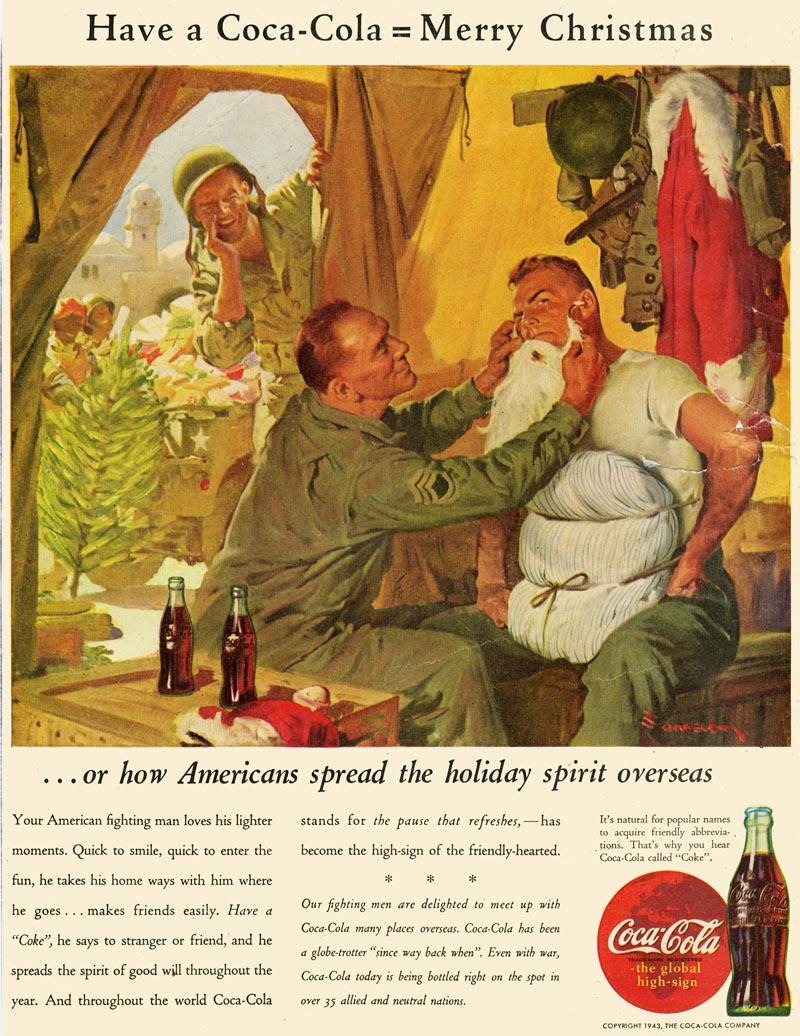
Recently, while surfing around on Flickr, I found a Sundblom Santa ad I'd never seen before - one designed specifically for the times - December 1943 - and WWII. (Thanks to Paul Malon for allowing me to use his scan here today.)

Sundblom29

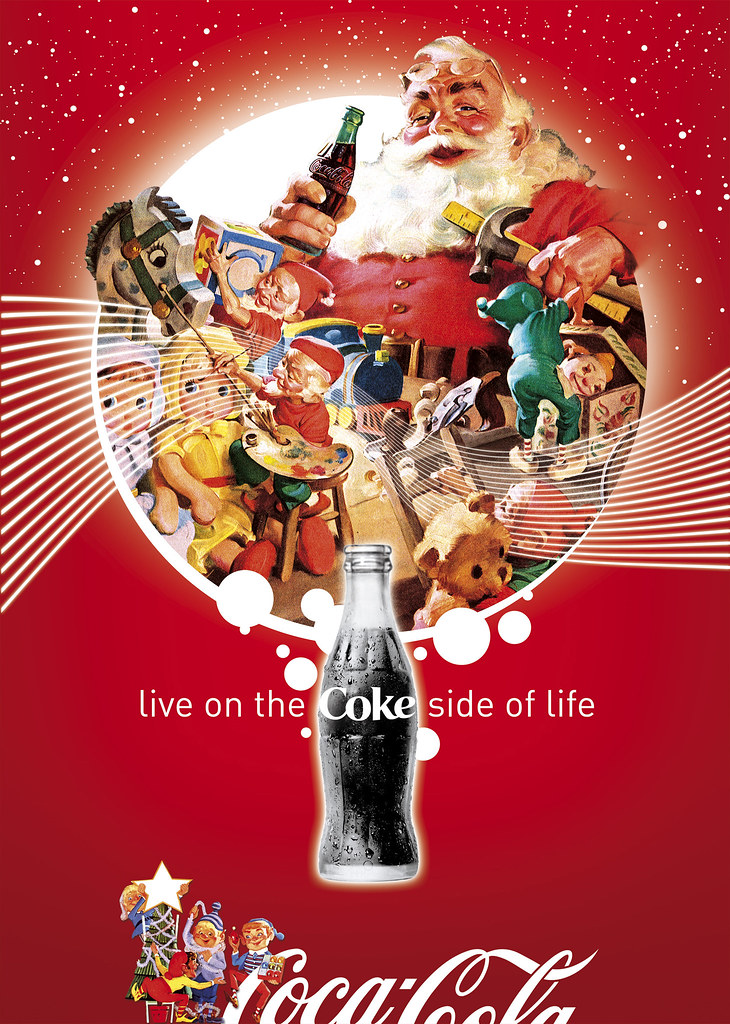
Also on Flickr, I found this interesting online advertising campaign from 2007/08 called "The Coca-Cola Art Gallery" which contains over 150 Coke ads - "a collection of images that has been designed by leading artists and designers. They have all depicted their own interpretation of ‘The Coke Side of Life’ philosophy."

Coke Side of Life: Coca-Cola Art Remix

"‘Coca-Cola’ has always had a strong artistic heritage having been famously interpreted by artists such as Haddon Sundblom, Norman Rockwell and Andy Warhol who have all reflected the social and cultural attitudes of the time," says the preamble on the campaign's profile page.

It's interesting to see how Sundblom's Santa, originally created in oil paints nearly a hundred years ago, lives on in the digital age - "remixed" by 21st century graphic artists - to great effect.

You can read the story of Haddon Sundblom's Coca-Cola Santa in greater detail at Coca-Cola Art.com

The "Countdown to Christmas" begins once again on Today's Inspiration. There'll be more from Haddon "Sunny" Sundblom... tomorrow.

* Charley Parker has an interesting post on his excellent blog, Lines and Colors, that traces the development of the 'modern' image of Santa Claus. I maintain my opinion, however, that its Sundblom's Coca-Cola Santa that became the definitive image of Santa Claus that continues to be the template for virtually all Santa imagery in popular culture today.

* My Haddon Sundblom Flickr set.

Tuesday, December 14, 2010

Haddon Sundblom and the 'First Stroke'

Along with his night school art lessons and his early days as a commercial art studio apprentice, the young Haddon Sundblom had some other extremely important influences that informed his painting technique.

Sundblom58

Among others, Howard Pyle, John Singer Sargent, Robert Henri, Anders Zorn and Joaquin Sorolla were all practitioners of a kind of painting adapted from the Impressionists called "alla prima" or "first stroke," The technique involved "laying down the fewest strokes in the quickest time to sufficiently describe moving targets," as Roger T. Reed explains in a fascinating, informative article on Sundblom at the Illustration House website.

Sundblom59

Sundblom acknowedged Zorn as his principle influence but in his June '56 article in American Artist, author Frederic Whitaker writes, "There never could have been such a Sundblom had there never been a Howard Pyle, for the Pyle concept is easily seen in the Chicago artist's work."

Sundblom55

Whitaker further credits Sorolla for "[unlocking] for Sunny the secret of the sun-lit glow that pervades all his work."

Sundblom54

Other painter/illustrators who Sundblom acknowledged as being an influence on his style include J.C. Leyendecker, Pruett Carter and Walter Biggs.

Sundblom53

* I encourage you to read the Sundblom "all prima" article by Roger T. Reed at The Illustration House website - its really explains the topic succinctly and includes a terrific gallery of early Sundblom paintings.

* Many thanks to Tom Watson, who generously provided all of today's scans!