Monday, January 29, 2007

Introducing Anita Virgil

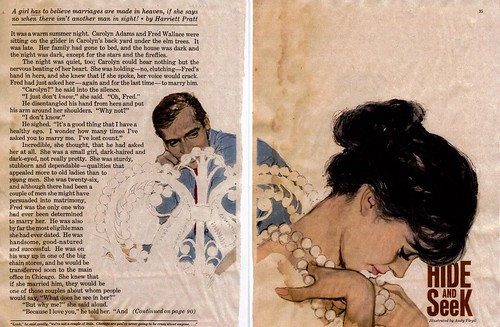
Andy Virgil was my uncle... unfortunately, he died in 1980." Andrea Luciano, Andy Virgil's niece, wrote those words to me in an email message last August 31. Just three weeks earlier, on August 09, 2006, during a week of posts about Andy Virgil, I wrote: ". . . the first piece I ever saw by Andy Virgil made me want to find more work by the artist. . . I find it so frustrating when there's no information available on the careers of illustrators like Virgil . . . " When Andrea sent me her brief note, neither of us could have imagined it would lead to the most thorough and ambitious examination of an illustrator's life my blog has ever seen.


"I have just heard from my niece, Andrea Luciano and would appreciate your contacting me. I would first of all like to see exactly what you are posting of Andy's work. All of it." With those terse words, I "met" Andy Virgil's widow, Anita. Though I suspect she was understandably suspicious and protective of her late husband's work, I dearly hoped I could prove to her that I had only the best intentions of honoring him by posting my small collection of his work. Happily, our correspondences lead to a collaborative effort beyond my wildest dreams. Anita is both an artist and an internationally anthologized haiku poet and I was thrilled when she agreed to write Andy Virgil's story so that we could at last learn more about a great talent who lived too short a life and has gone, sadly, unrecognized.

I've had guest authors before but none has ever brought such passion and sensitivity, such thoroughness and detail, such generosity and such willingness to share the intimate moments, both high and low, of her life as has Anita Virgil.

The journey of telling Andy Virgil's story took many months, and involved several delays and set-backs, but along the way a tentative acquaintance became a real friendship and a lasting affection. Putting together Today's Inspiration, I've made many friends and enjoyed the kindness and generousity of many people. I am especially grateful to my friend, Anita Virgil, for everything she has shared with me and will now share with you.

Leif Peng

Andy Virgil - Part 1: Autumn in New York

When Anita Dorne first laid eyes on a young man who came looking for a rep at Phil Rahl Studios, she had no idea that she was looking at love. The talented, determined young man before her was Andy Virgil, and this is his story.
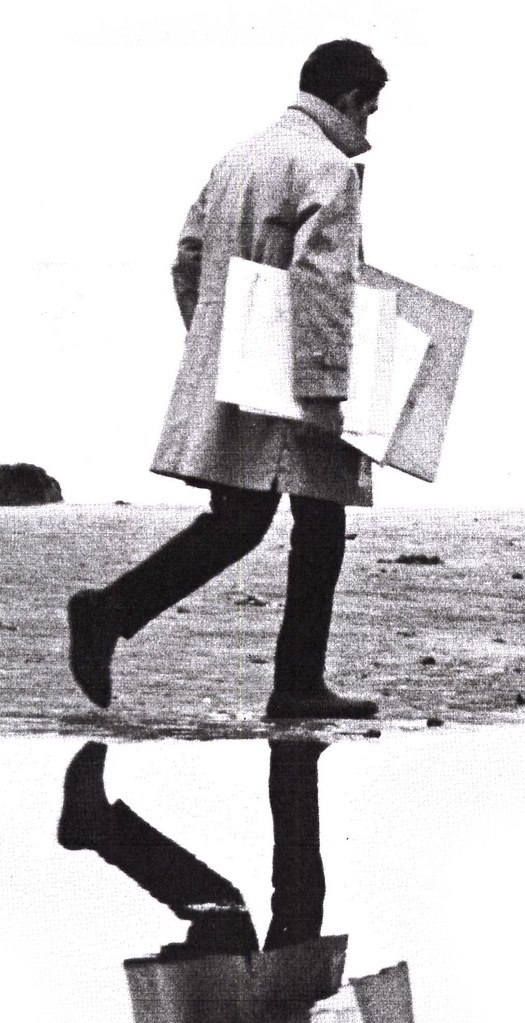

"I still remember him that rainy autumn day in New York City," she writes today, "looking like a skinny drowned rat with a black portfolio almost as heavy as he was."

Anita continues:

The year was 1952 and, though I was the Costume Researcher at Rahl Studios, I was manning the lunchtime reception desk when Andy walked in.
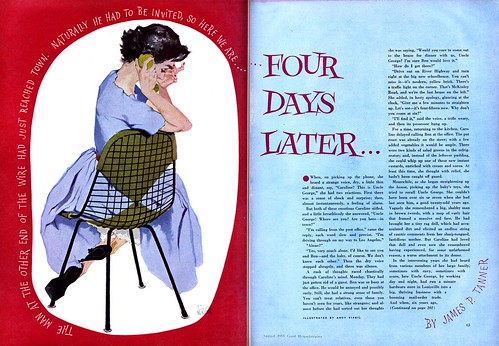

I was 21 at the time, a graduate with honors from New York's High School of Music & Art, and recipient of a scholarship to The Art Students’ League. I had already worked right out of high school as an assistant to the Art Director of Town & Country Magazine. That was Souren Ermoyan, but in a couple of months, he left to become Art Director for Good Housekeeping Magazine. His assistant, Tony Mazzola, took over. (Tony later became Editor of T&C and then moved on to become Editor of Harper’s Bazaar for decades.) So it was that the two of us became the Art Department. I worked alone with Tony the rest of my time there before taking the job later on at Rahl Studios, New York's second largest art studio. Cooper Studios being top dog.

This soft-spoken shy individual gave me his name, Andy Calafatello, and said he had an appointment and I announced him by phone to Rahl. Patiently, he sat and waited opposite me on the couch at 551 Fifth Avenue (which was the Fred French Building, memorable for its huge and ornate double brass doors).

The door to Rahl’s office was shut. All was quiet. And when it finally opened, a burly attractive dark-haired man with a crew cut and the Madison Avenue Brooks Brothers attire, came out and ushered Andy and his huge wet portfolio into his office. A little later, Rahl’s right-hand man, Willard Seymour, joined them.

A long time ensued behind the closed door. The life of the studio picked up as the illustrators trickled back in from lunch. When the young man emerged from the meeting with Phil Rahl and Willard Seymour, he was a member of that studio. It was at that time they suggested he use his middle name, Virgil, as his professional name.

Once he had settled into a cubicle at Rahl, Andy kept pretty much to himself, working always with the same intensity, listening to his music, mostly classical, and staying on late at night in the often cold empty studio. He was pretty solitary -- except for me. Early on, we became good friends. I’d bring my lunch back to his cubicle and we’d talk about everything and listen to music together. He adored Mendelssohn’s "Violin Concerto in E Minor" and played it over and over. Its quietest moments will always remind me of him -- those first opening notes and the incredible plaintive phrases within it later. How they presaged our life together!

Later, since I was taking night classes in Fine Art at New York University, and since he nearly always stayed working late into the night, he would ask me to join him for dinner. Big mistake! I accepted -- and was often late for class since we so enjoyed each other’s company and forgot the time.


I recall breathlessly rushing into the city night to catch the Fifth Avenue bus with Andy waving goodbye as I climbed up the bus steps.

It wasn’t love at first sight on my part: I was already "a goner" and obliviously dumped my sad tale of woe on Andy who patiently listened and listened. But his feelings for me were different.
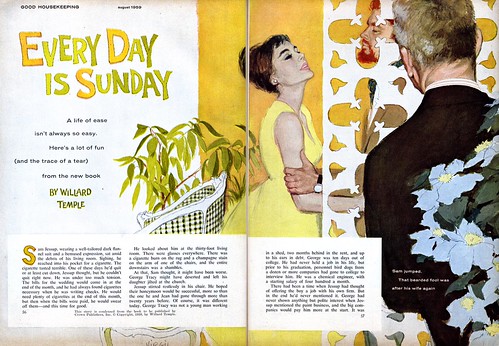

And he kept them to himself. Except maybe for those large soft sad eyes I caught often looking at me, a bit too long. Or for an occasional single rose he would leave on my desk . . . .

At one point, he wanted me to help him decorate his apartment when he obtained one. I think it was just a ploy to engage me more in his life, but that never happened and events by the new year took a dreadful turn. He had invited me to go to Carnegie Hall to a Brahms concert.


It was a cold January day. When I met him, he was in an elegant thin grey Chesterfield coat and I remember fussing at him for not being dressed warmly enough. Especially as he had a cold. Somehow, during that concert -- maybe it was the music -- he took my little dry hand with his beautiful soft long fingers, and I realized I might be beginning to fall in love with this sensitive, genteel man! Luckily, he was too polite and respectful of my ‘distraction’ with someone else, and I had only just begun to realize how I felt, so nothing transpired between us.

It was not long after, when I’d not seen him at the studio for a while, that another meeting behind closed doors in the office of Phil Rahl occurred with Andy and Willard. When they came out, there was a grimness on their faces. Andy had developed tuberculosis! He would promptly be hospitalized.

Tomorrow: The Dreamer

Anita Virgil is an internationally anthologized haiku poet. She lives in Forest, Virginia.

Entire contents of these posts on Andy Virgil (both text and pictures) © 2007 Anita Virgil. Nothing may be reproduced without permission of the author.

* A selection of Andy Virgil's original art is available from Graphic Collectibles.
Friday, January 26, 2007

2007 NCS Division Awards

My pal Mike Lynch, cartoonist extraordinaire and all around good guy (and he's handsome, too) asked me to alert everyone to the upcoming 2007 National Cartoonist Society Division Awards.


If you're an illustrator, animator or cartoonist, this is your chance to win fame and fortune - ok, a really nice plaque - from a great organization of fabulous folks. Just think how you'll be envied by your peers and admired by the ladies when you step onto the stage on awards night next May 26th in Orlando, FL and say those magic words, "I'd just like to thank my parents, without whom none of this would have been possible..."

So run - don't walk - right over to Mike's blog for all the details and a link to the NCS Division Awards Entry Form!

Stop reading and go already!

Aurelius Battaglia and the Illustration Revolution

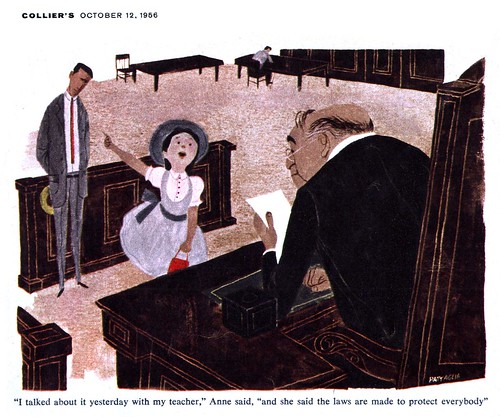
For the first half of the 1950's, magazines presented their readers with a steady diet of traditional, "realistic" illustration. With the arrival of art director Leonard Jossel at Collier's in 1956, that began to change. Jossel hired the likes of James Flora and David Stone Martin, both of whom had already revolutionized album cover art, to do large, full colour double page spreads for the magazine.


For the Colliers Short Story in the front of the magazine, Jossel called on Aurelius Battaglia...


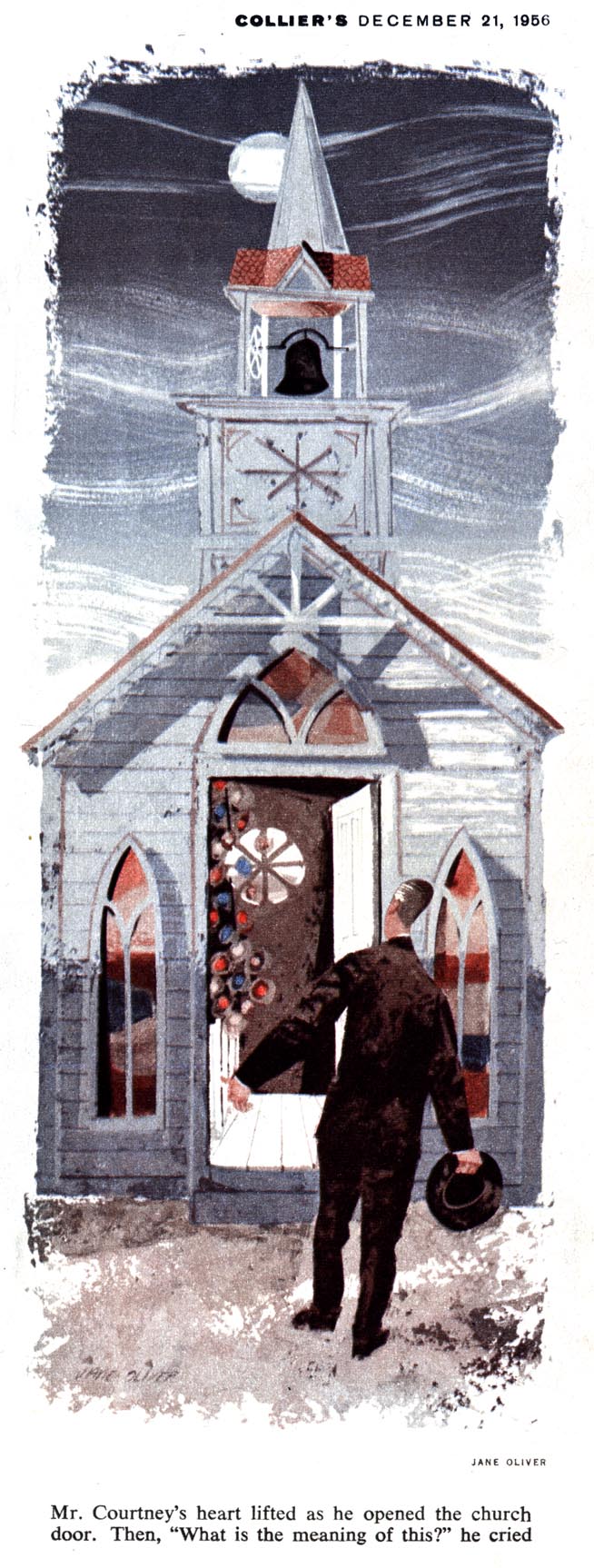
Jane Oliver...


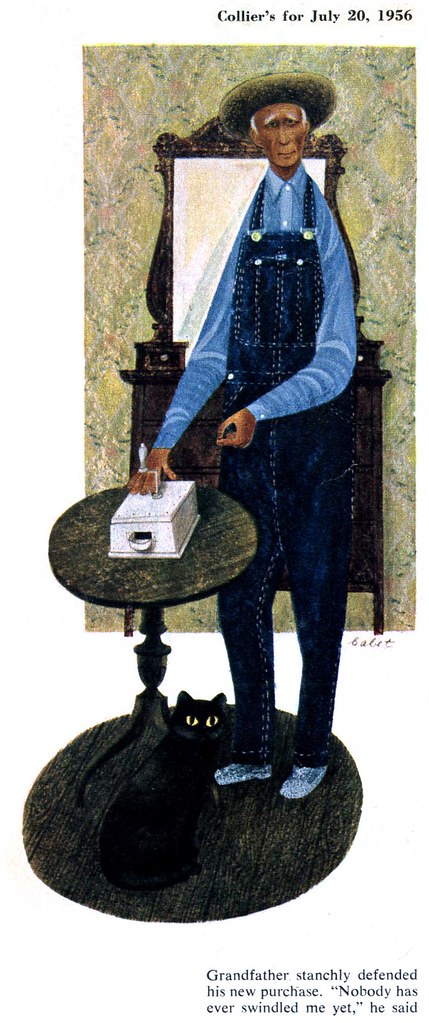
Jan Balet (who had been pioneering the art of stylized magazine illustration for some time already, pretty much on his own)...


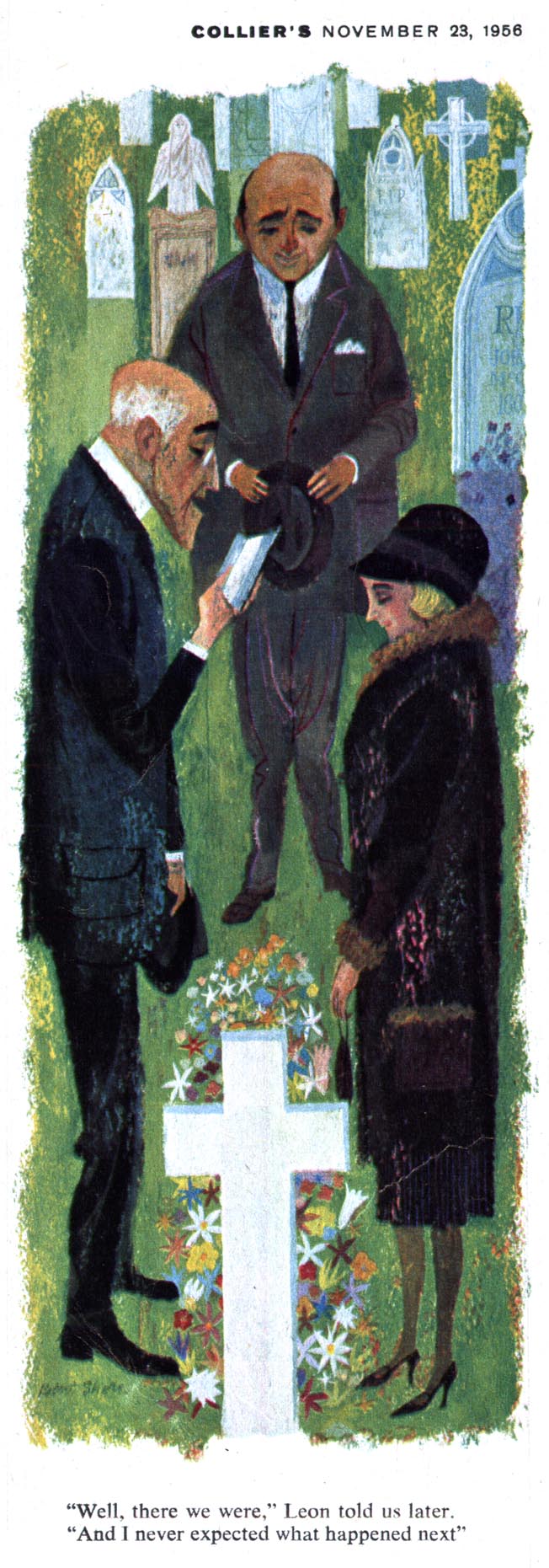
and Robert Shore, among others.


Jossel's foray into stylized illustration was only the first tremor in what would soon become a seismic shift in commercial art. Television was impacting advertising revenues and circulation numbers for all the major mainstream magazines and perhaps Jossel and the managers at Collier's felt they needed to give readers something visually different and compelling to draw them in.

As well, the magazine had been struggling for years against its main competitor, the juggernaut Saturday Evening Post. Perhaps Collier's managers felt their avant garde approach would distinguish them from the still traditional appearing Post.

Whatever the case, the magazine was already in its death-throes. Collier's ceased publication in December 1956. But Jossel's experimentation with stylized illustration had caught on. Soon, other publications were using more and more non-traditional, decorative styles of art. And even those illustrators one would label as "realistic" were experimenting more and more with interesting new techniques and avant garde approaches.

A quake of massive proportions had begun rumbling across the illustration landscape; its aftershock is still being felt to this day.

Tuesday, January 23, 2007

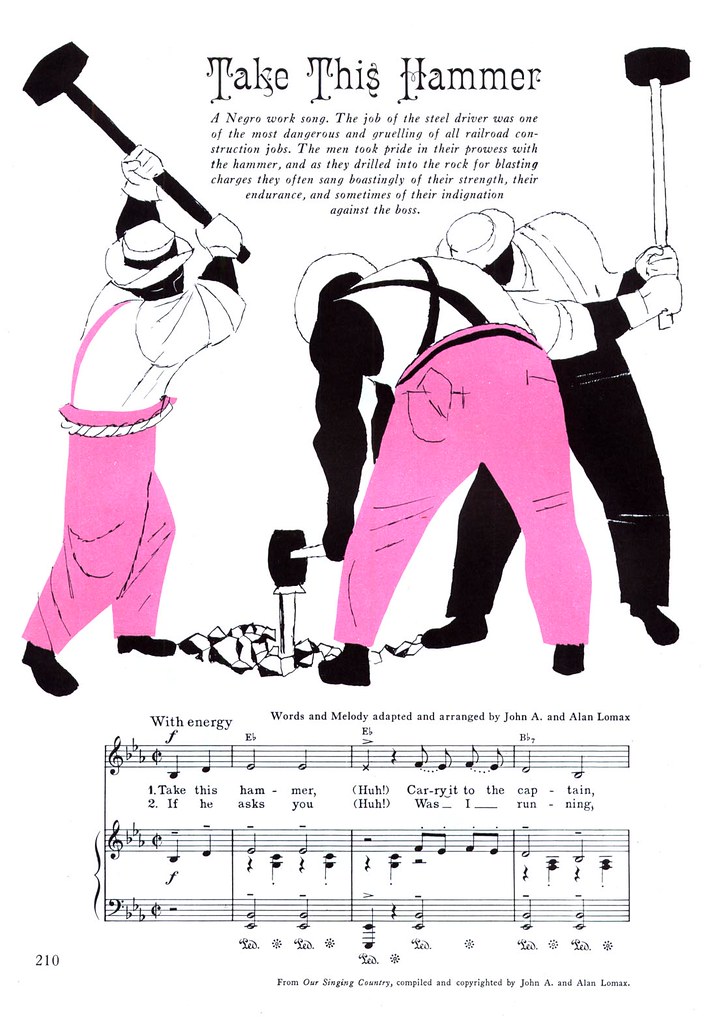
Battaglia's Portrayal of African American Heritage


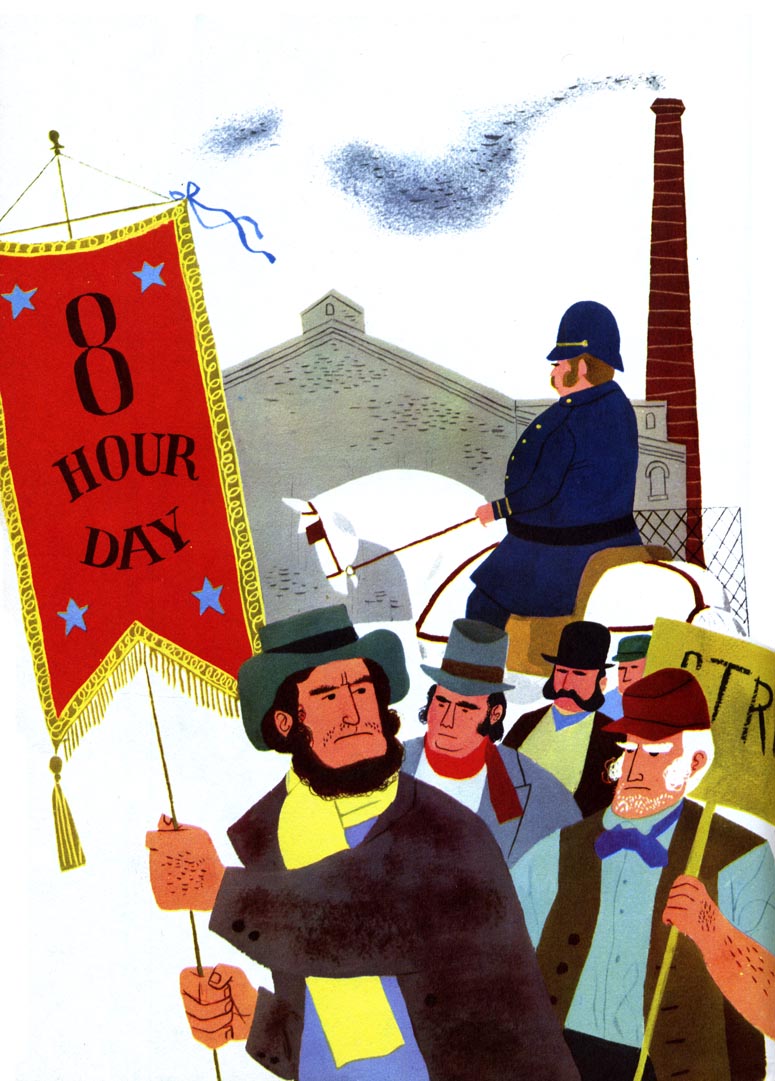
You get a break from my blather this week! I previously posted all the information I could find about Aurelius Battaglia. There is a tribute website created by his niece, Marzia, and a photo of the young Battaglia in Amid Amidi's Flickr set. Beyond that, I have no new information on the artist. So let's sit back this week and just enjoy the pictures...


All of these images are now in my Aurelius Battaglia Flickr set.

Monday, January 22, 2007

Singing the Praises of Aurelius Battaglia


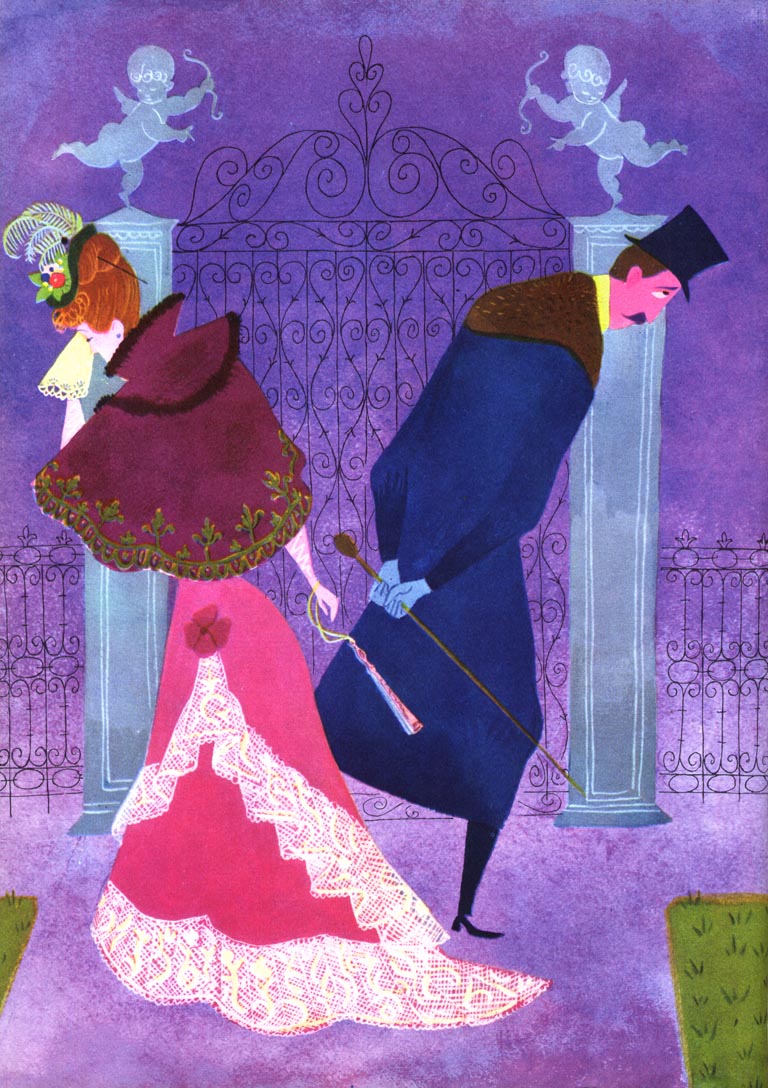
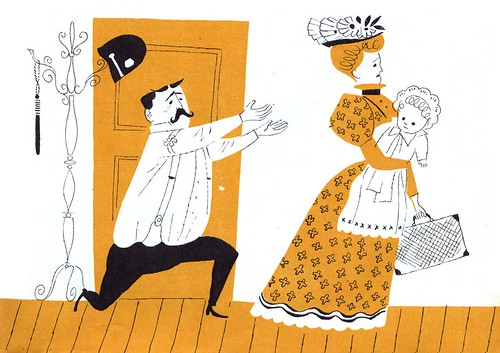
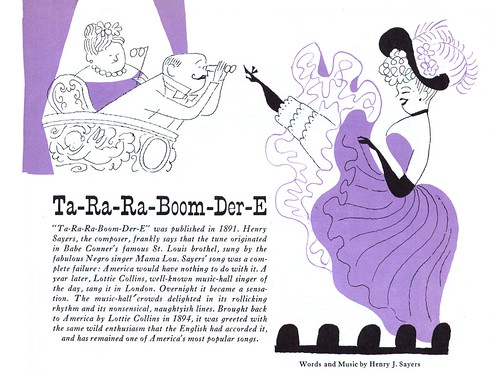
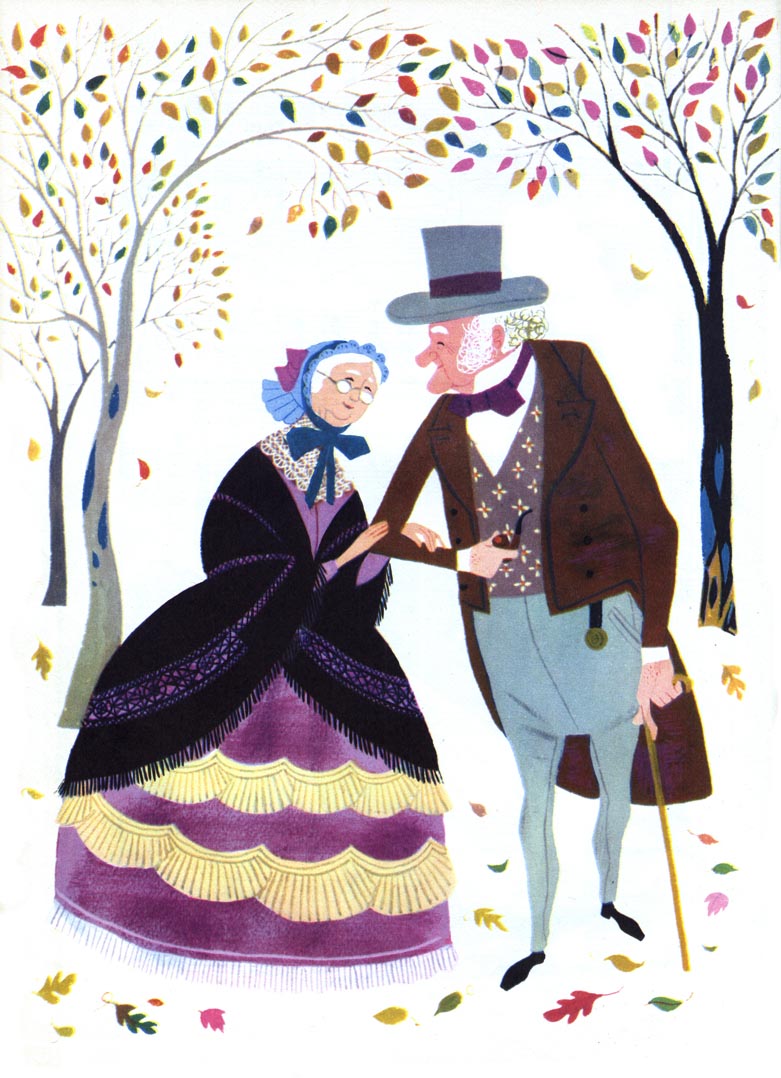
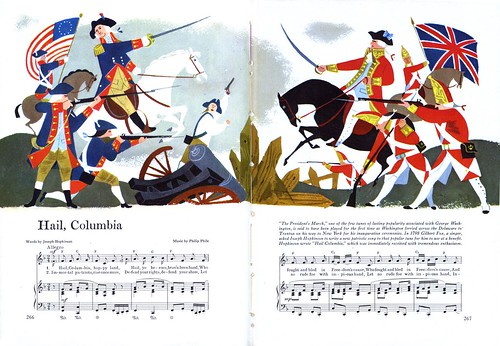
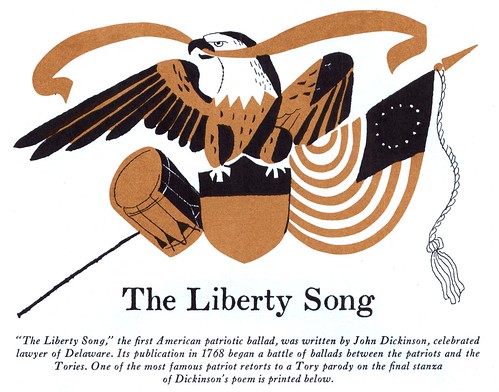
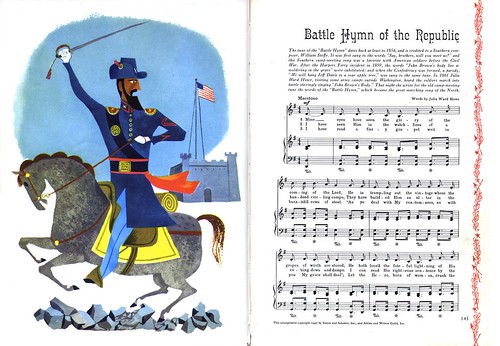
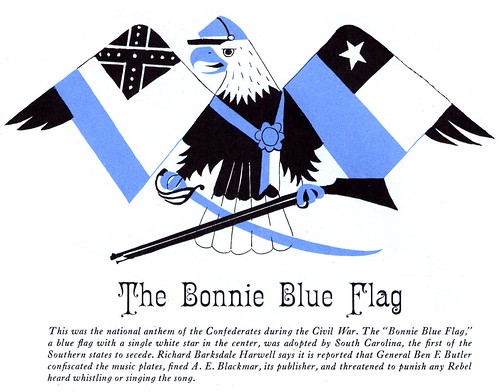
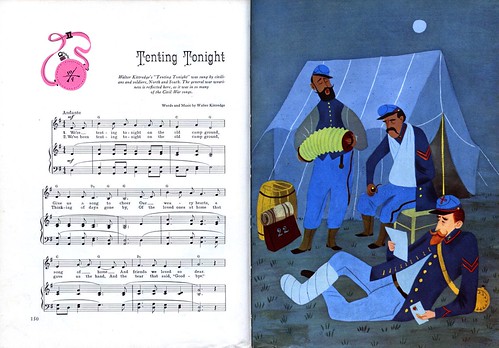
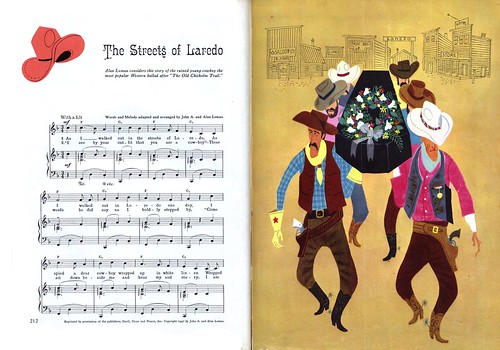
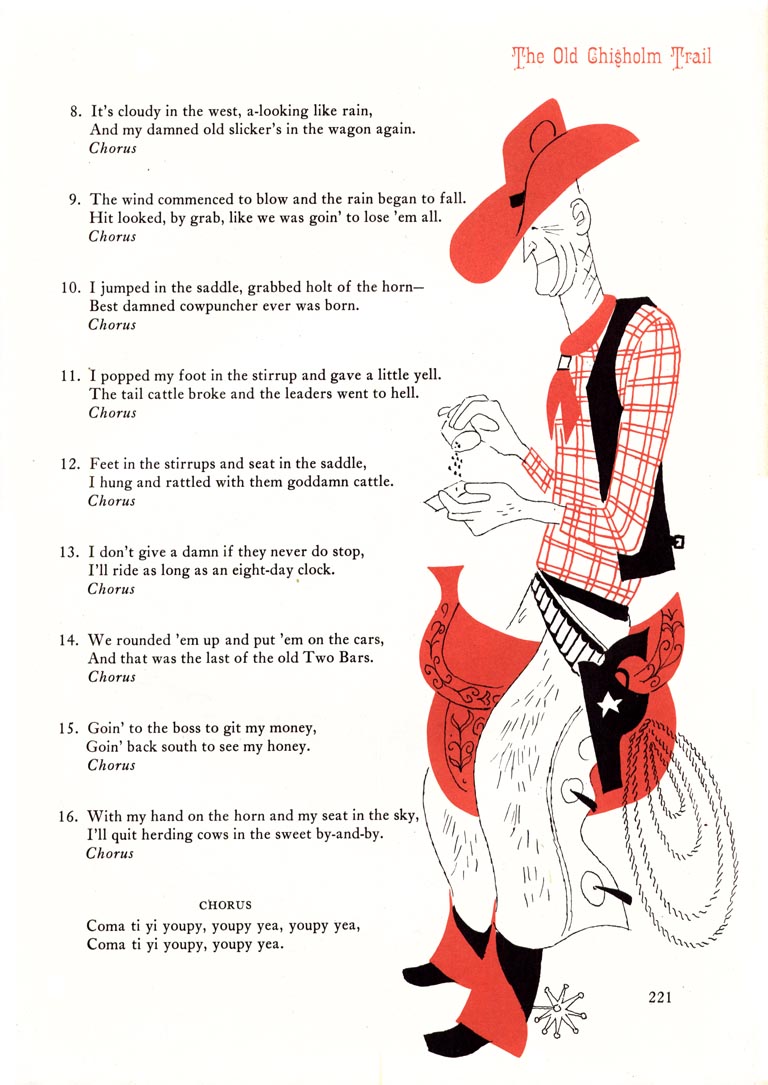
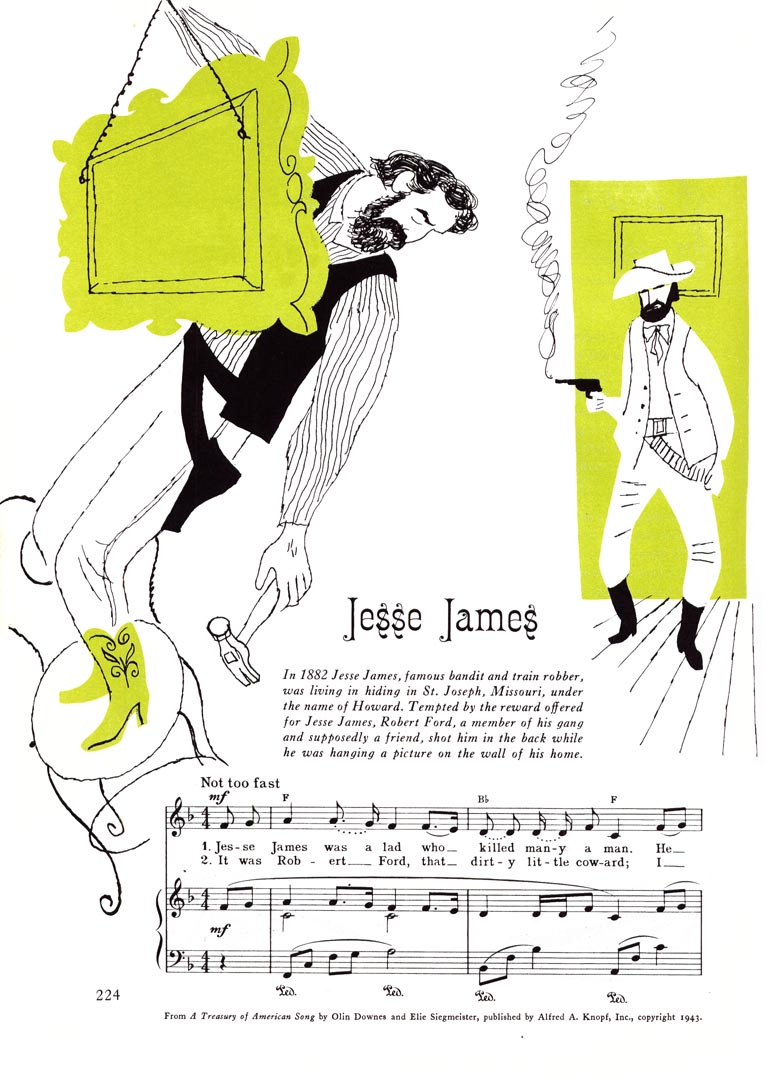
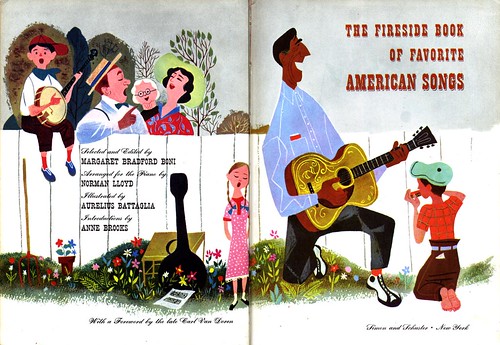
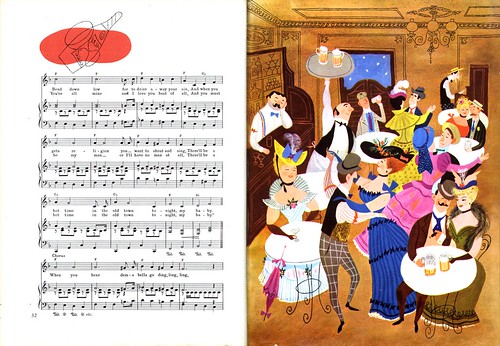
It was while working on the profile of another illustrator that I became aware of Aurelius Battaglia's spectacular Fireside Book of Favorite American Songs.


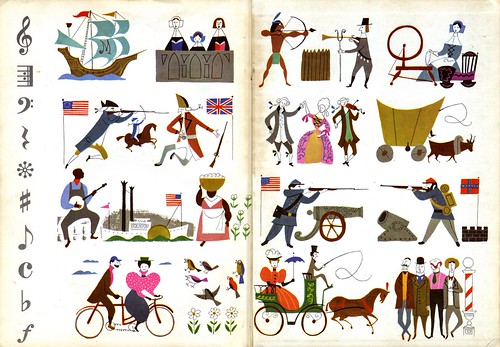
What a revelation! This thick hardcover book is bursting with page after page of Battaglia's beautifully designed and stylized illustrations. The small sample you'll be seeing this week won't begin to give you the scope of this masterful volume.


If this is not Battaglia's magnum opus, I can't imagine what is. It made me realize how influential artists like Battaglia were on the evolving look and style of illustration in the 50's - not just on children's book illustration, but on the entire field - even to this day.


You can take a closer look at these images in my Aurelius Battaglia Flickr set.

Saturday, January 20, 2007

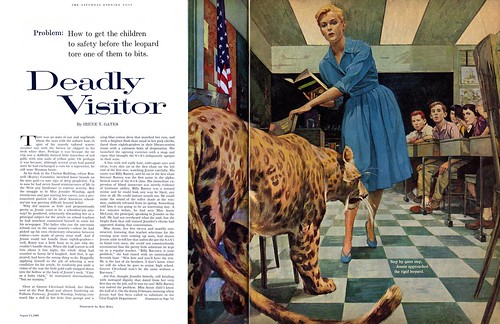
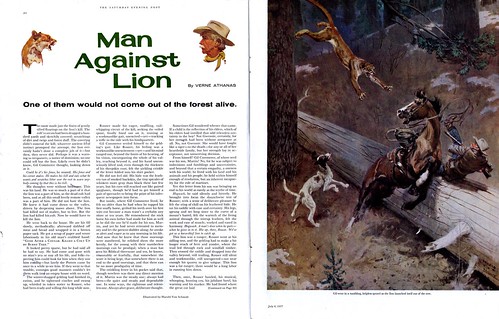
Big Cats or Little Dust Bunnies?

Each week's theme on Today's Inspiration begins with me gathering topic-appropriate material to scan from my collection of old magazines. I usually do this over the weekend, usually ending up with more than enough images to fill out the week.


Come the following weekend, I am faced with a folder on my desktop filled with unused scans. These digital dust bunnies deserve to be seen - and some will fit into upcoming topics - but inveriably I find myself filing away some wonderful images until who-knows-when because that week's topic is over and likely won't be revisited for a long time.


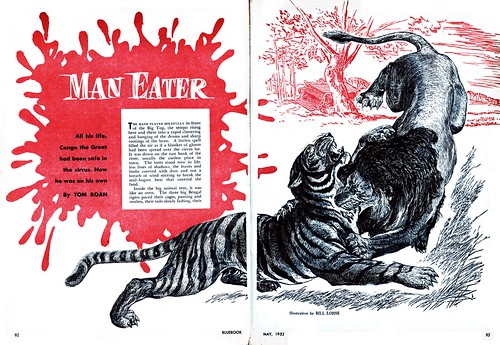
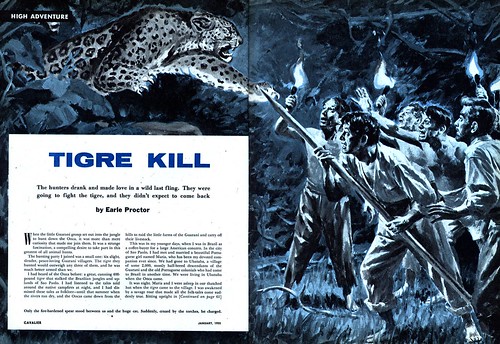
Well, why don't we just do a little house cleaning and sweep those dust bunnies out of my hard drive? So here you go: just a few more big cat attacks to inspire you while you sip your Saturday morning coffee.


Of special interest are these two below... the first, courtesy of my pal Ken Steacy, comes with this note from Ken:

I'm really enjoying the Big Cats Attack motif of this week's inspiration - here's one more from Frank McCarthy, with a twist:
Man Attacks Big Cat! Enjoy!


Thanks, Ken! And finally, an email from Jared Shear arrived at the end of this week with a batch of incredible Italian illustrations (like the one below) of big cat attacks and a link to a most fantastic illustration archive. Writes Jared:

This site is a treasure that I found from BibliOdysey, but it was far more vast than the post led on to be. It is full of illustrations from The Sunday Courier mainly by Achille Beltrame and Walter Molino who from what I can gather were the Normon Rockwells of Italy. I was unaware of both of these artists before I saw this site, but I am blown away by their mastery of technique, compostion, and pretty much the ability to illustrate a whole variety of exciting illustrations.

Thanks a million, Jared! I encourage everyone to go explore this wonderful repository of European illustration from the first half of the 20th century.


All of these images have been added to my Big Cat Attack! Flickr set.

Friday, January 19, 2007

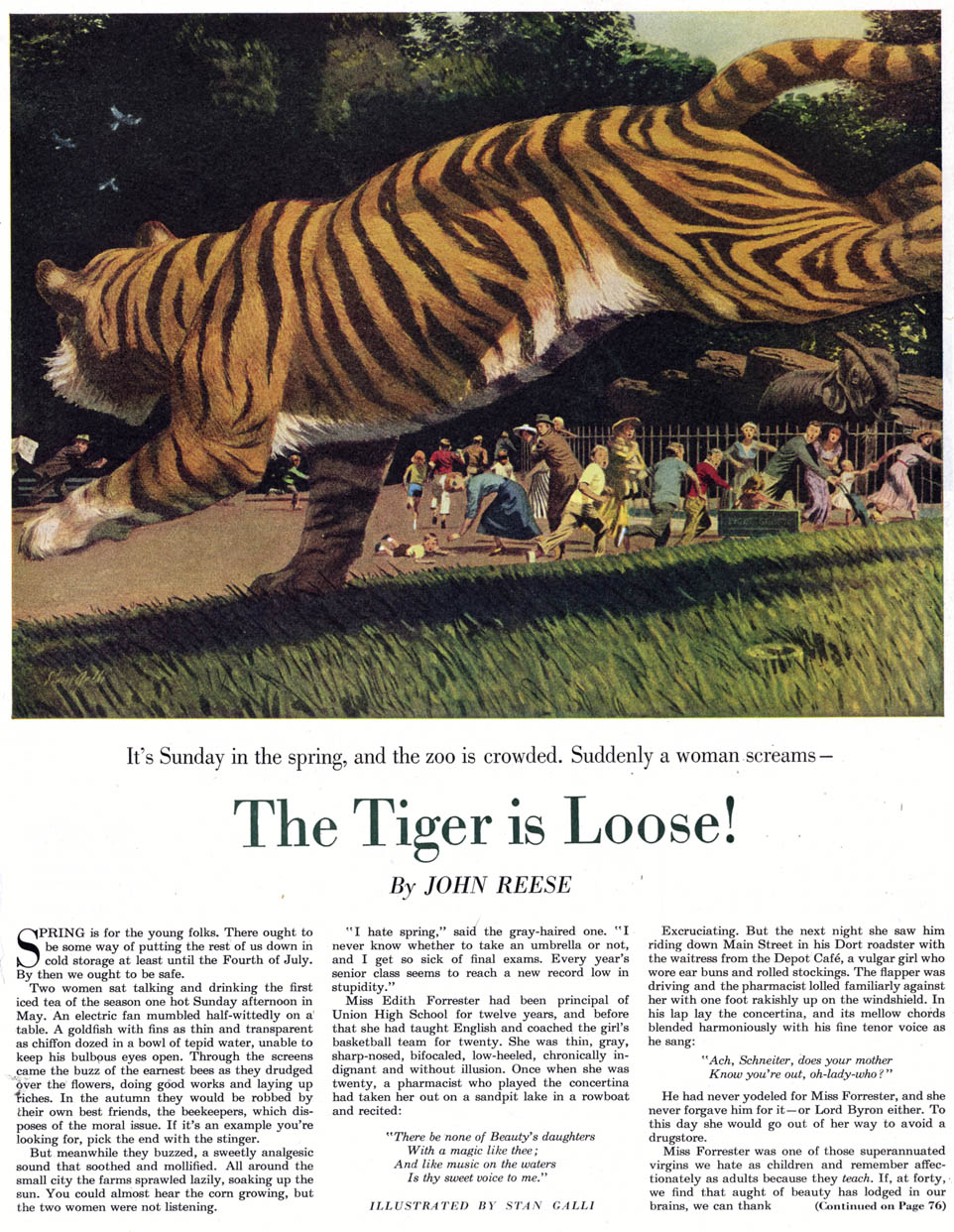
Big Cat in the City

Not too far from where I live is a locally famous tourist attraction called African Lion Safari. The gimmick there is; the wild animals are free to roam around while the human visitors drive through the park, "caged" inside their cars. ALS has been around for decades - my parents took me when I was a kid. As far as I can recall, no big cats have ever escaped from ALS and roamed the countryside terrifying the locals.


That doesn't mean ALS has operated without incident. Dopey people regularly roll down their car windows to fling french fries and popcorn at the kitty cats. Because these huge, deadly carnivores spend most of their time laying around in the shade I guess visitors assume they are overwhelmed by the summer heat and the ever-present haze of automobile exhaust. Well, no, it turns out Simba is more than ready to jump into your lap for a quick bite.

The most famous incident, from 1996, involved a couple who lowered their windows only to find the cab of their vehicle suddenly overflowing with fur, teeth and claws. Four female Bengal tigers took the opportunity to enjoy a girls luncheon of dumb and dumber. Somehow, these two candidates for a Darwin Award survived and actually had the audacity to sue the park. Amazingly, they were awarded $2.5 million dollars proving that it pays to be stupid.


Personally, I say, "let sleeping tigers lay - preferably back in India." I would rather not have them anywhere near me. And I definitely wouldn't want the lady in the apartment next door keeping one as a pet! Big cats do not make good pets! Just ask Zigfried and Roy.


These three images have been added to my Big Cat Attack! Flickr set.

Thursday, January 18, 2007

Good Advice for Wild Cat Attacks

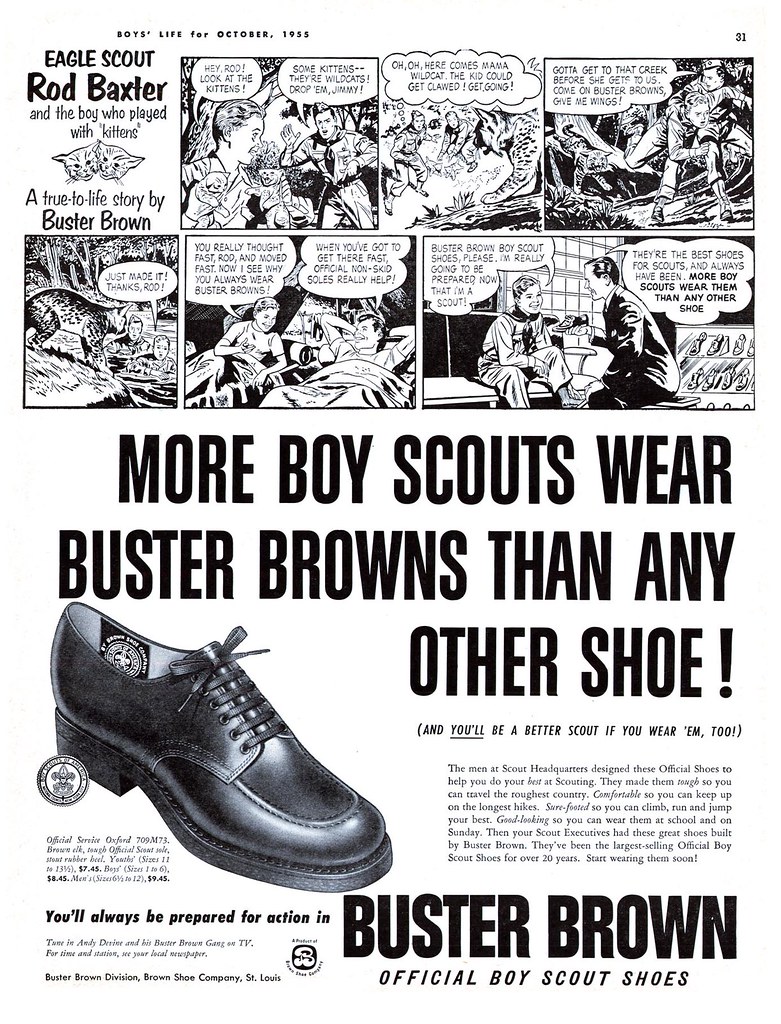
Boys' Life advertisers of the 50's had a couple of suggestions for readers dealing with a wild cat attack. The first, brought to you by the good folks at Buster Brown Shoes, was a two-stage method:

Step 1: Put down the kittens!
Step 2: Go jump in the lake!


This method should work if the wild cat is relatively small (but could still give you a nasty scratch on the leg). Apparently these diminutive feral felines are not that different from your next door neighbour, Mrs. Hassenpfeffer's pampered cat, Julius. Even a really pissed off mama wildcat would rather go hungry than get her dainty paws damp.

(Call me cynical but I think this method may have been motivated out of self-interest. Those soaking wet Buster Browns are almost certainly going to be ruined, requiring expensive replacements and increased sales for the smiling fellow in frame six.)

However, "Doc" Peters (and by the way, I have doubts about his status as an actual physician) had a rather more abbreviated prescription for dealing with a bobcat: Blast him with both barrels.


Gun enthusiasts who occassion this blog may be surprised to hear that I'm with the Doc. I do a fair amount of hiking in remote wooded areas and have seen my share of chewed up deer carcasses. Quite frankly, there's been the odd time when I wished I had a little firepower handy - just in case.

Ideally, it would be one of those portable Gatling guns with the shoulder strap like the one Jesse "The Body" Ventura used in the first Predator movie, complete with a giant bandoleer of really big bullets!

That way I could just hose down the entire area at the first snap of a twig - you know, essentially clearcutting that section of the forest and vaporizing any potential threat. What's that you say? It was just old Mrs. Hassenpfeffer bringing me a thermos of warm soup? Oh. Nevermind.

You can check out more comicstrip ads in my Comicstrip Advertising set.

Wednesday, January 17, 2007

Mountain Lions: 21 Mountain Bikers: 0

If you're a hiker, biker, jogger or bird watcher living in North America and getting your fresh air anywhere outside of a seriously paved-over piece of real estate, you're at risk of becoming an entrée.

I would have thought your chances of being knawed on were more likely in Davy Crockett's time, but no, apparently that's not the case.


Once thought to be endangered, even extinct in many areas, writes Linda Lewis on her website cougarinfo.org, mountain lions have made a strong comeback throughout the United States and Canada after bountied hunting was banned in the 1960's. As a result of additional policies to protect and manage lion populations, increases in the numbers of these predators have resulted in more damage complaints and human encounters. A recent estimate by wildlife ecologists puts lion numbers at more than 31,000 in 12 Western states. This number [suggests there] may be more mountain lions in the West than there were before European settlement according to Maurice Hornocker, a senior scientist at the Wildlife Conservation Society. States such as California estimate lion populations which were as low as 600 are now closer to 6,000. Though scientific studies are difficult and expensive, Oregon is another state with similar estimates (about 5,000 currently). Recently, the presence of mountain lions has been confirmed in Manitoba, Canada. My e-mails report sightings in regions where they were considered extinct, including Nebraska, Minnesota, New York, Indiana, Arkansas, Virginia, Pennsylvania, North Carolina, and Ontario.


Reading through the harrowing accounts on her page of Confirmed Attacks (2001-now) will have you thinking twice about lacing up your running shoes for a brisk walk at the local golf course. And if a camping trip is your idea of a great way to help your couch-potatoe kids discover the wonders of nature, I have two words for you: Discovery Channel.


"Of the 19 confirmed deaths, 12 were children," writes Lewis. "Lions can sprint approximately 40 miles per hour, leap up 15 feet in one bound, spring forward almost 45 feet, and drop silently 60 feet and land running." Against those odds I say lock little Timmy and Suzy in the RV for the weekend. They can enjoy nature through the windows when they take a break from the Playstation!
These three images have been added to my Big Cat Attack! Flickr set.