Showing posts with label Alex Ross. Show all posts

Friday, April 11, 2014

Murray Tinkelman on Alex Ross: "He was vastly underrated."

In May of 2009, I interviewed Murray Tinkelman about his career. Our far-ranging discussion included many sidebars; one in particular, about Alex Ross, provides a fitting conclusion to this week's series on the artist... ~ Leif


LP: There was a guy at Cooper's who left before you got there... a guy named Alex Ross.

Ross103

MT: Yeah, I knew Alex.

LP: Oh really?

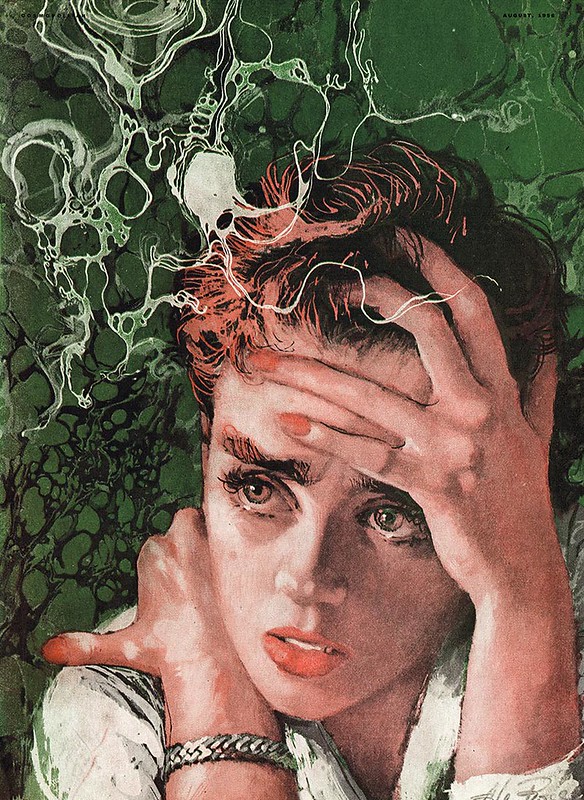
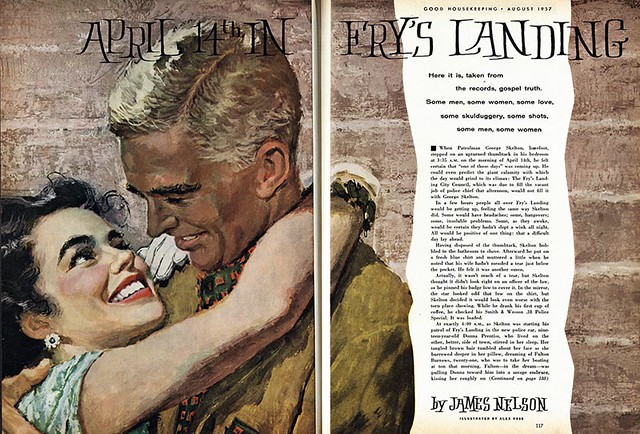
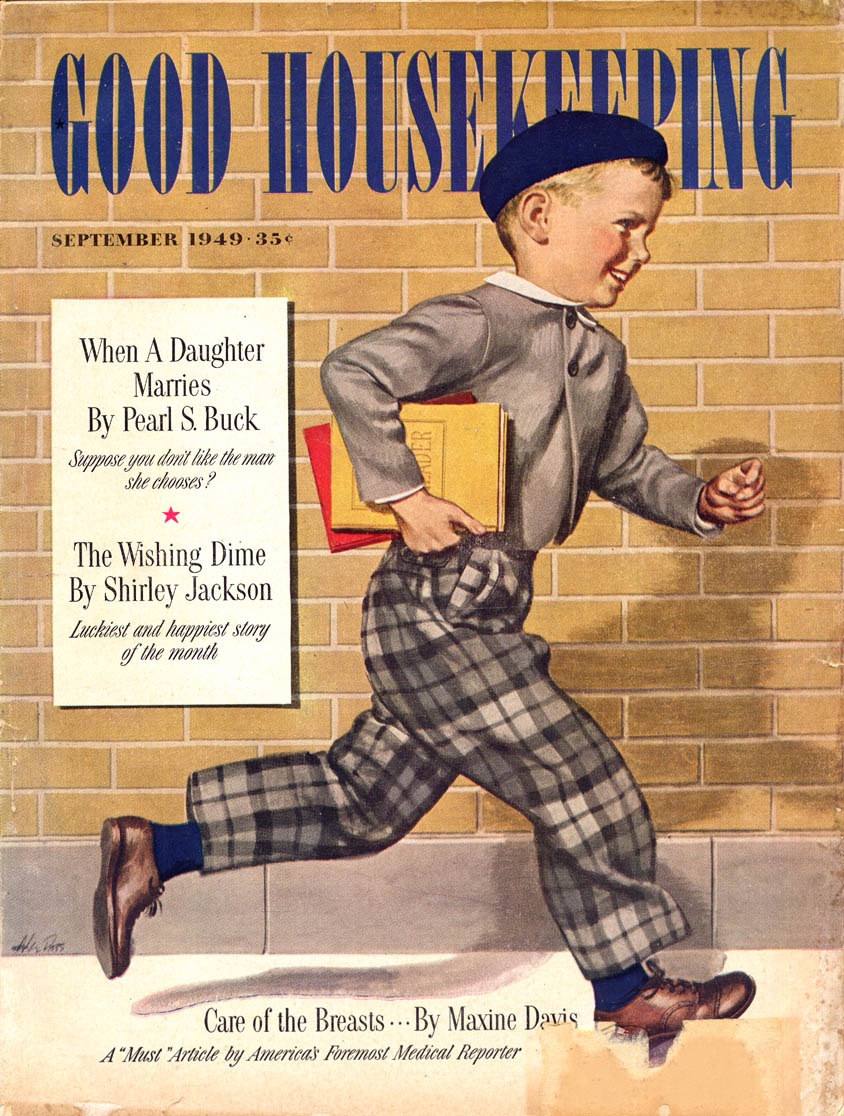
MT: Yeah. He did leave before I got there. The covers he did for Good Housekeeping were wonderful.
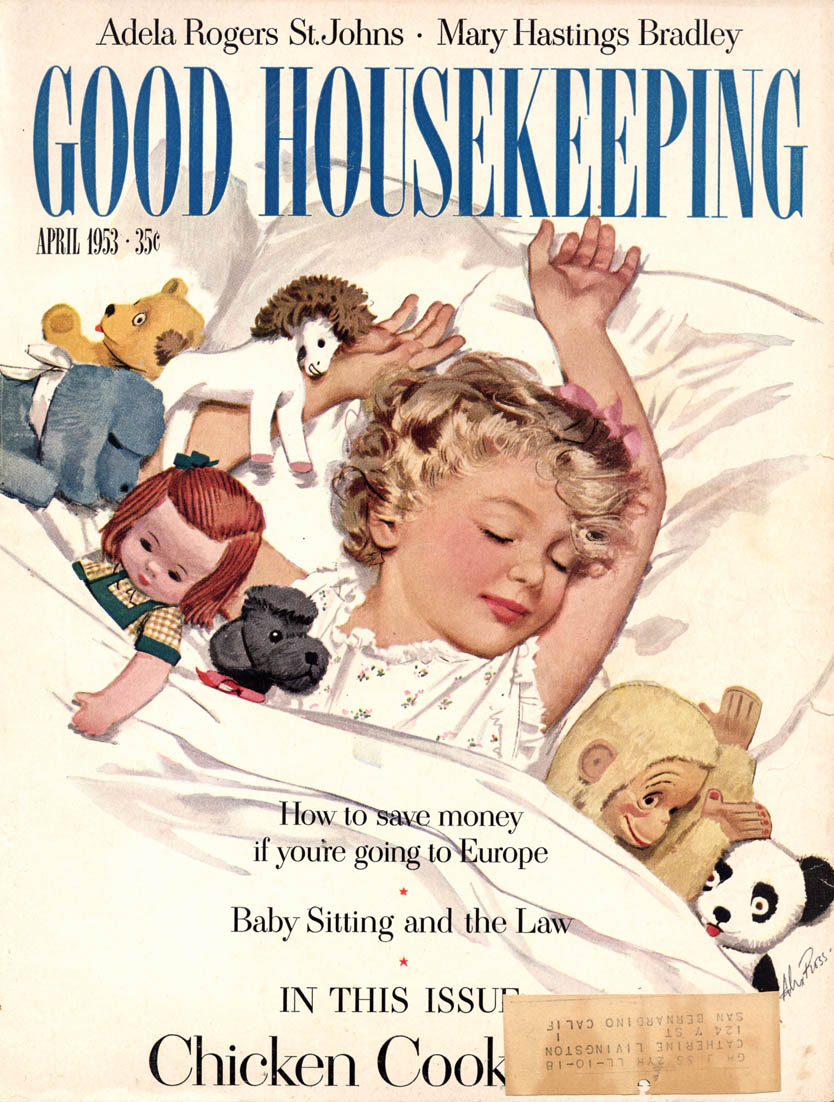
Ross03

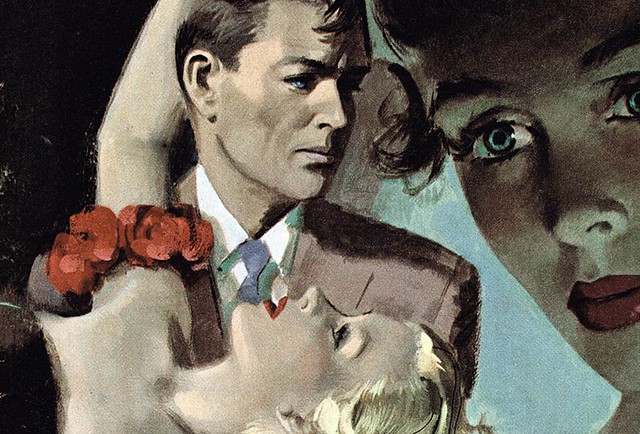
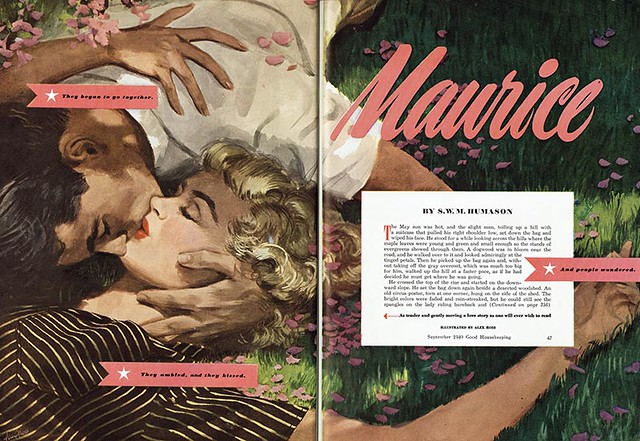
MT: But he could also do a sexy woman...
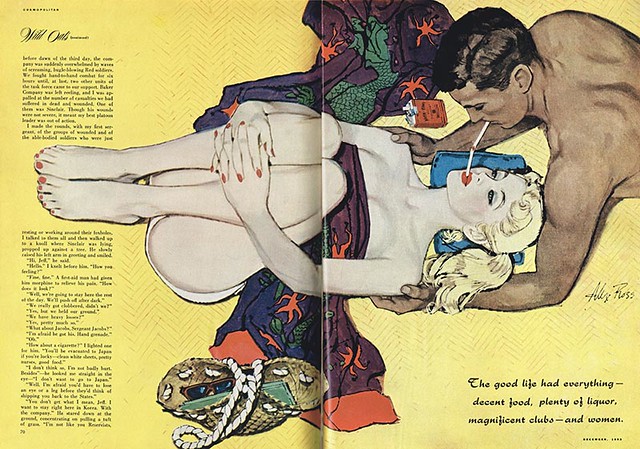
Ross83

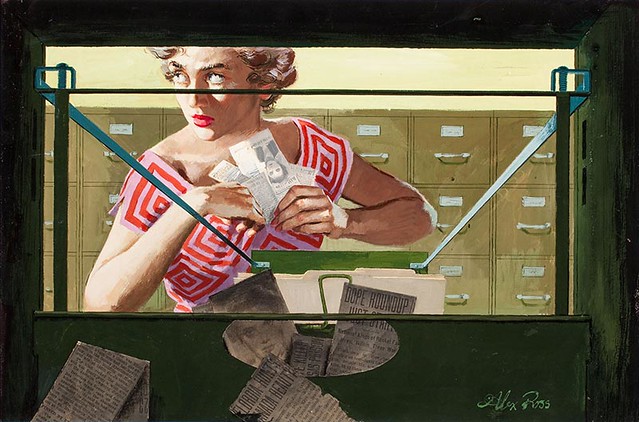
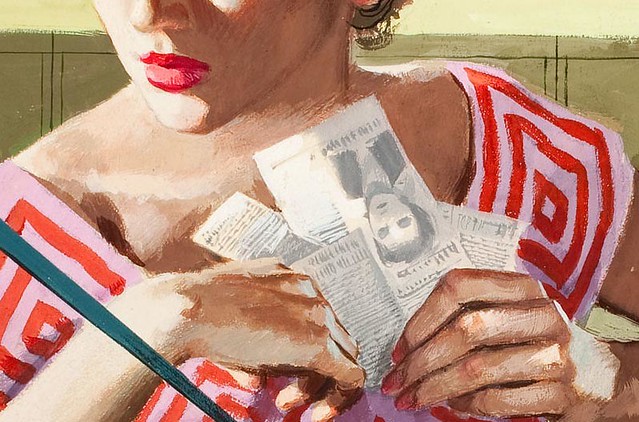
... he was also very innovative. 

Ross62detail01

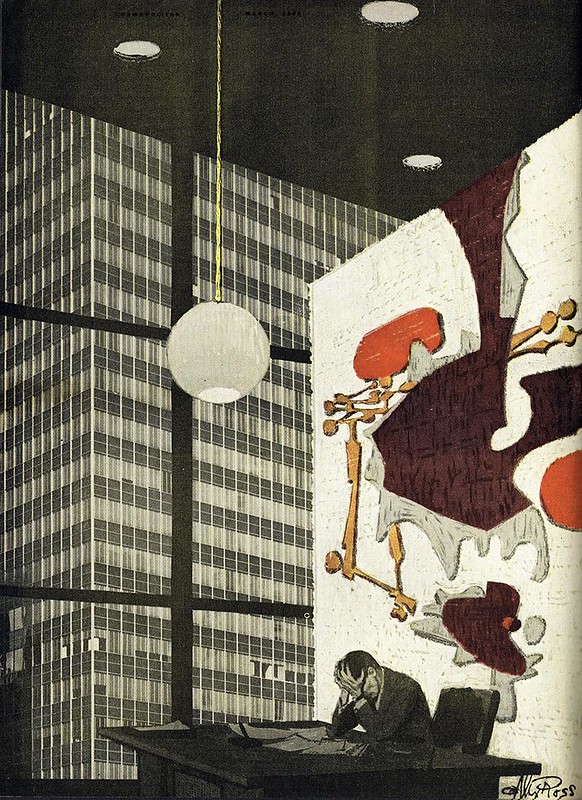
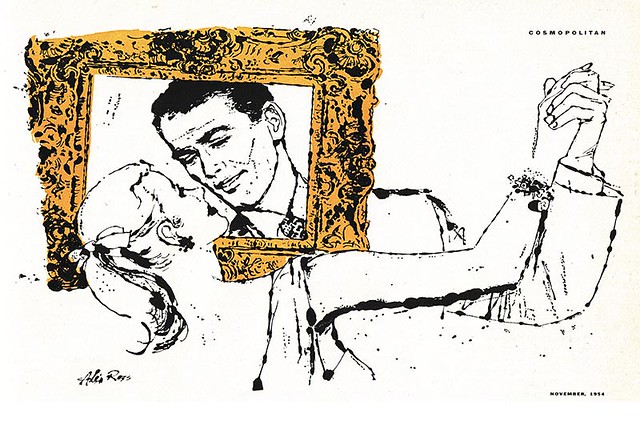
MT: He's second only to Al Parker in his innovation and experimentation.
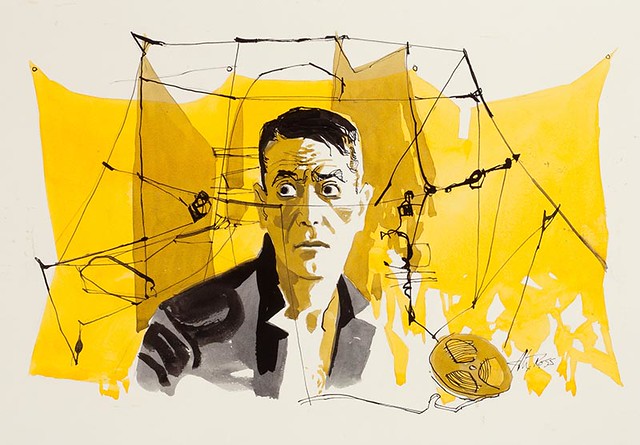
Ross100
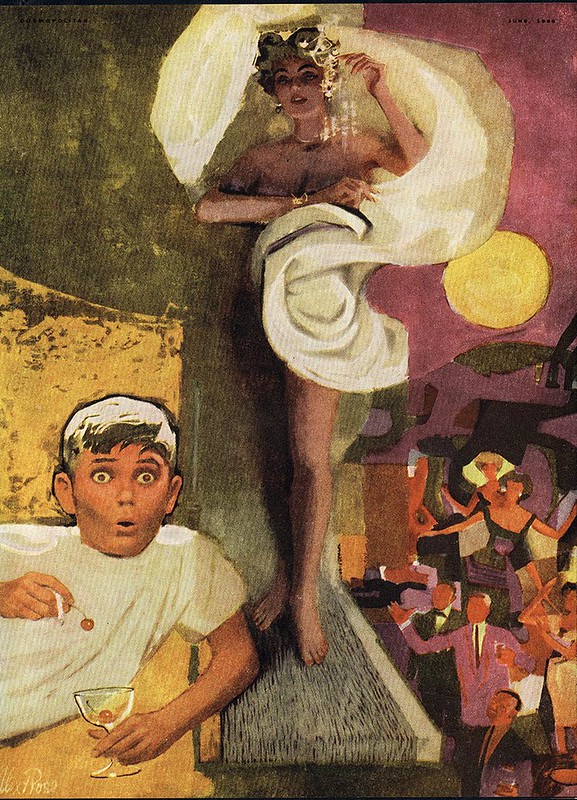
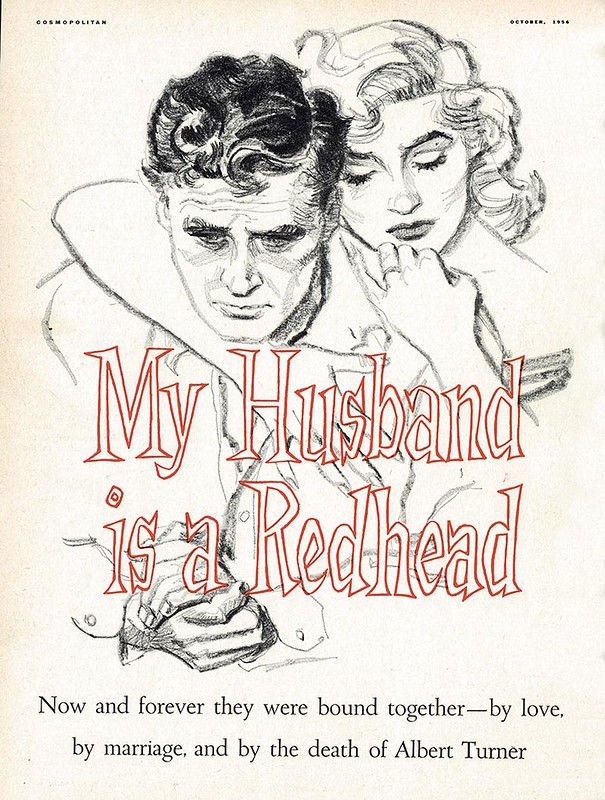
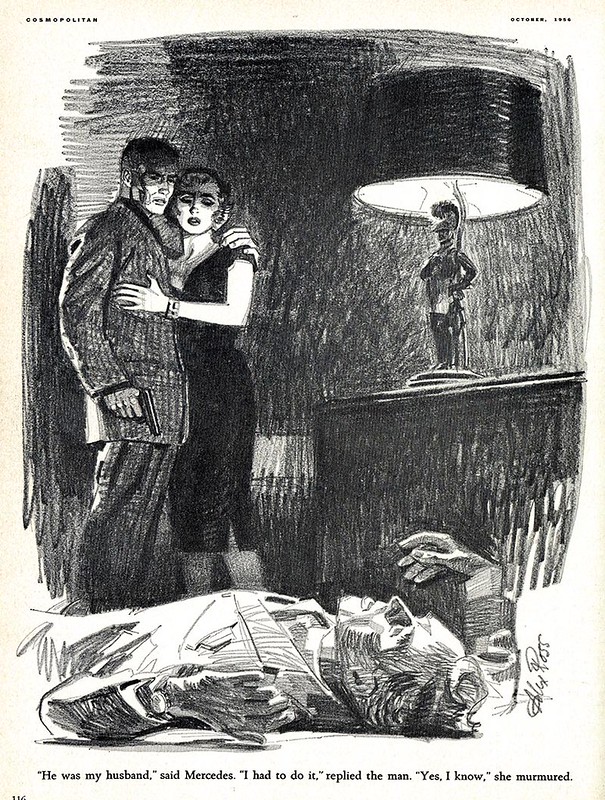
(Above: one of eight Alex Ross illustrations from Cosmopolitan magazine, June 1956. Ross did each illustration for each story in a different style - repeating a feat previously accomplished only by Al Parker, to the best of my knowledge)

LP: I'm so happy to hear you say that, Murray - especially you - because when I look at Ross' work, I see a lot of departure from the traditional look of that period.

MT: Absolutely.
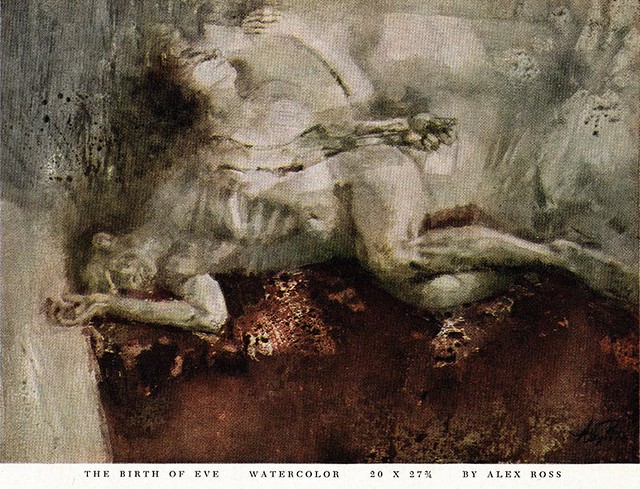
Ross102

LP: And I look at that stuff and I wonder: "How come this guy isn't getting more attention?"
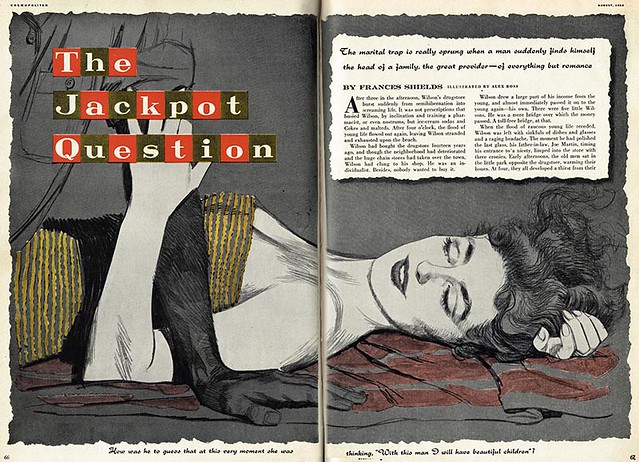
Ross98

MT: I haven't got the slightest idea.
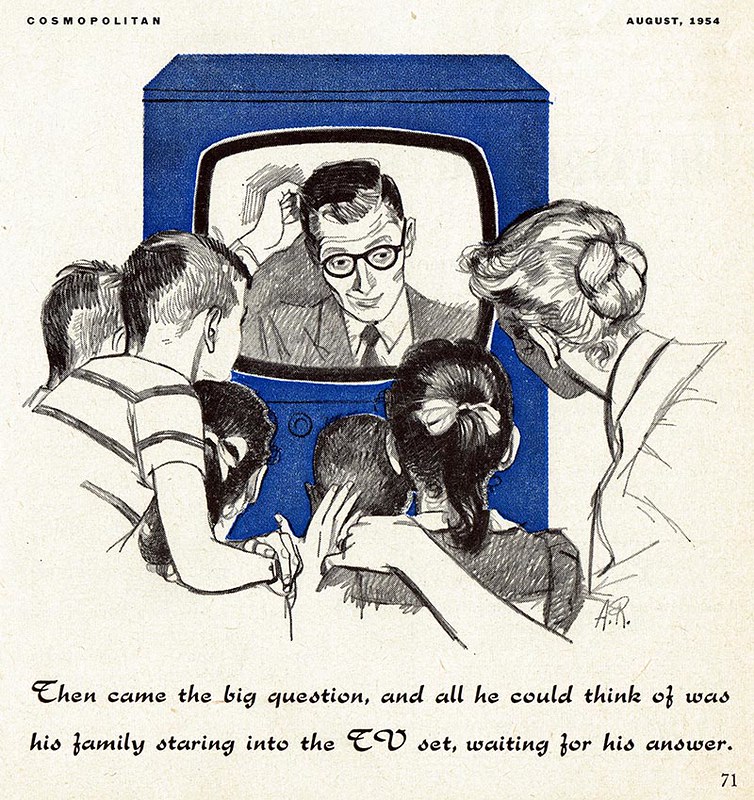
Ross99

MT: I'm still trying to get Alex into the [Society of Illustrators] Hall of Fame. I showed a about half a dozen of his slides at our last Hall of Fame meeting.*
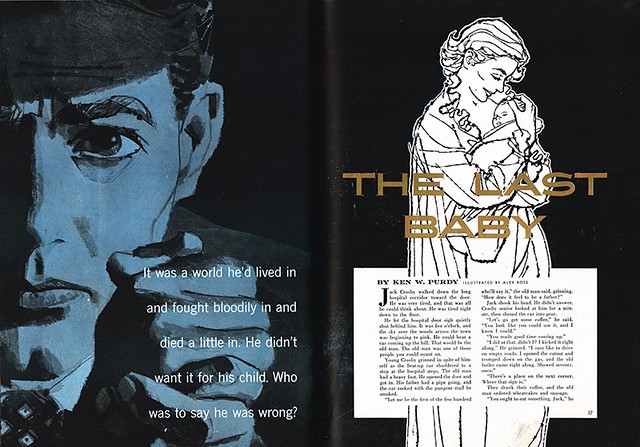
Ross82

MT: Y'know, I was boarding an airplane in a small commuter airport about seventeen, twenty years ago... and we're on the tarmac. (There was no jetway, you just went out onto the tarmac and up two steps into the plane). And there was a guy in front of me - a very handsome guy - and he was carrying a package under his arm.
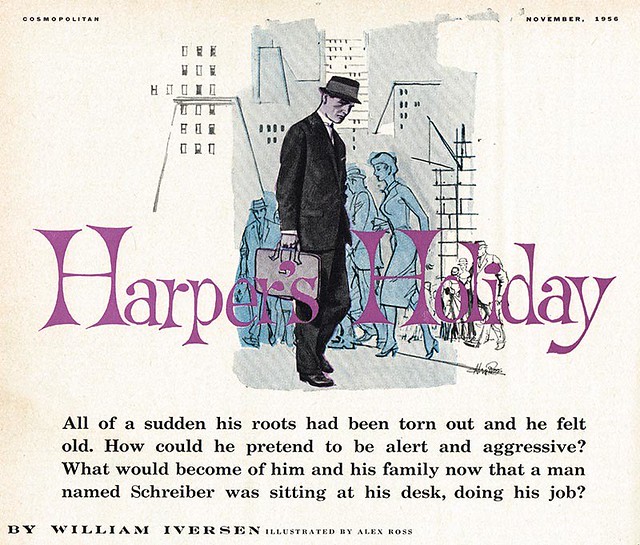
Ross89

MT: ... and it looked like an illustrator's package because it was neatly taped and so on. And I kinda strained my neck and bent way over and I see a return address... and it's Alex Ross.

LP: Wow!
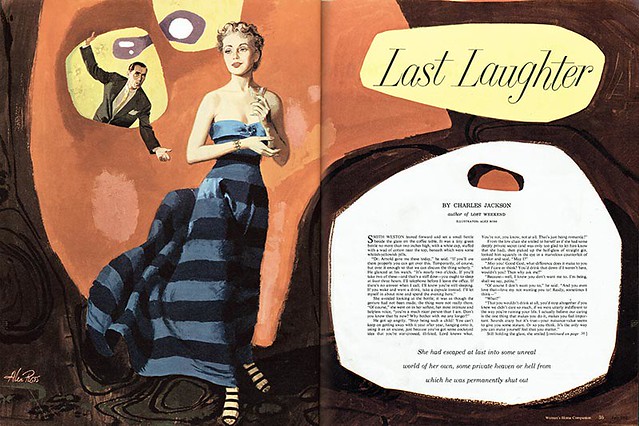
Ross105

MT: So I tapped him on the shoulder and I said, "Mr. Ross, I'm a huge fan of yours. I've admired your work for years!" "Oh really," he says, "and what's your name?" "Murray Tinkelman," I says. "Oh, I've admired your work, too!"

LP: Very cool.

MT: Yeah. Y'know, when his illustration career ended, Alex Ross turned to painting.

Ross108

MT: And he painted untold numbers of absolutely gorgeous semi-abstract floral paintings - maybe 20" x 30" acrylic - very bright, very cheerful... joyous paintings. 

Ross107

MT: I don't think they were really heavyweight, but they were incredibly sellable. He'd have an annual one-man show every year for maybe six or eight years at Joe DeMers' gallery on Hiltonhead Island. He was a terrific artist, vastly underrated.
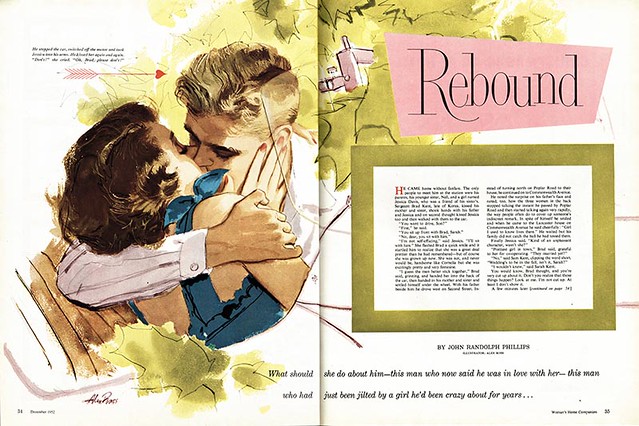
Ross106

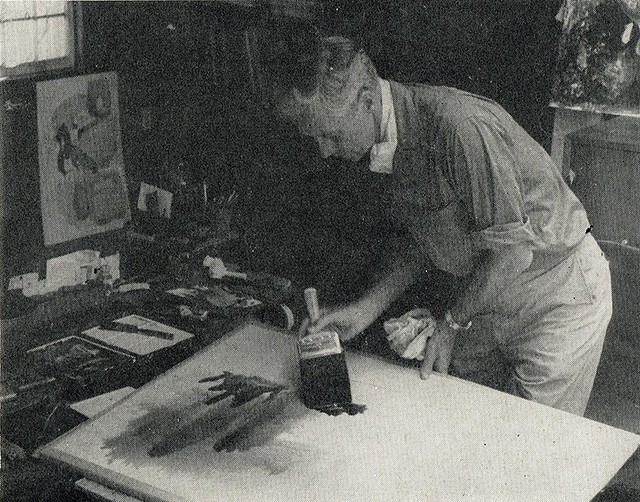
Addendum: In a 1980 speech about Ross’s achievements as an illustrator, Fred Whitaker, long-time American Artist writer and celebrated water colour painter, likening his work to such famous American illustrators as Remington, Homer and Hopper.

Whitaker said, “When the story of today’s art epoch is written, there may well be general agreement that the real art contribution of the mid-twentieth century was that of the illustrators and commercial artists. I know of no artist who experiments more than Ross in approach to the mode of presentation; in color, in the manner of applying paint, in his brushing, in the use of new angles of compositional arrangement. His one great fear is that he may become static, even afraid of copying himself.”
Ross101

* To date, Alex Ross has not been inducted into the Society of Illustrators Hall of Fame.

The Norman Rockwell Museum Presents: Baseball, Rodeos, and Automobiles: The Art of Murray Tinkelman - on view through June 15, 2014

“Baseball, Rodeos, and Automobiles” celebrates over 60 years of artistic creation by Murray Tinkelman, one of the nation’s most prominent illustrators, educators, and illustration historians. The exhibition explores the artist’s interests, imagination and evolving technique, including elaborate pen-and-ink drawings that have become his trademark.

Thursday, April 03, 2014

Alex Ross: "... a mind unencumbered by academic regulation..."

Below is the first Alex Ross illustration I ever saw. It was more than ten years ago and I was just getting seriously interested in mid-20th century illustration. This piece intrigued me. Such a lovely girl... such a knowing look... such nerdy glasses... and such an orange sofa.

Ross02

That slightly unsavory looking fellow making entreaties... I don't think he knows who he's dealing with. Neither did I...

Ross91

... but I had a feeling I'd stumbled on someone worth investigating further. This Alex Ross was different somehow.

Ross91detail01

Alex Ross once said, "As one who has experimented with practically all known mediums, materials, and tools, and has, I hope, a mind unencumbered by academic regulations, I am disappointed that I have not yet come up with that secret technique to mystify all the experts."

Ross84

"I am convinced, however, that my experiments are not wasted."

Ross85

Alex Ross was indeed tirelessly experimental in the art of picture-making. He wrote the words above in 1962, but it was already evident to Norman Kent when he interviewed Ross 15 years earlier in 1947: "Your newest work is losing its slickness," said Kent, "and I attribute this in large measure to your experimenting with mixed methods."

Ross90

"One of these days an art director will call you up and tell you not to bother with making a finish - that he is going to make color plates right from your sketch."

Ross87
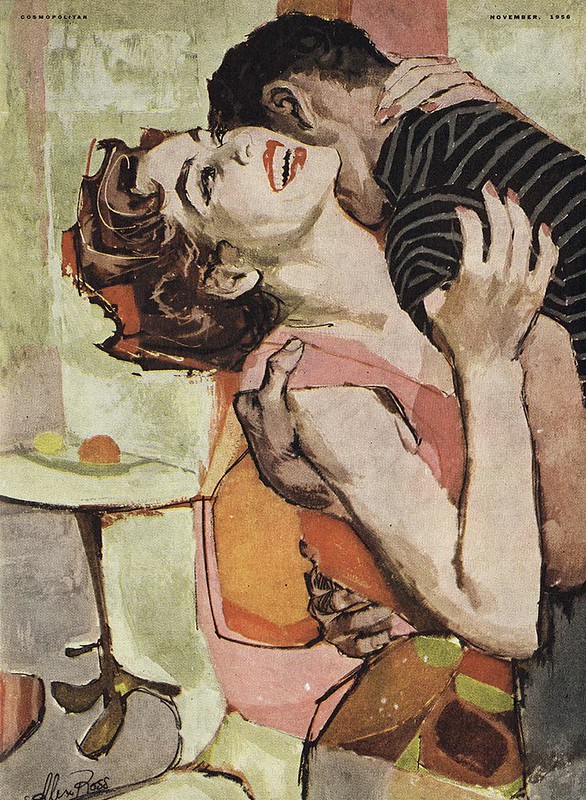
(It happened in Cosmopolitan magazine, 1956 ~ L)
Ross88

Ross' experiments with media and style - and with subject matter - only accelerated during his busy 1950s period. "I believe I spend more time planning a picture than in the actual painting," said Ross. "The subject is my first consideration. At this point I face a crucial decision. I am one of those odd people who have a genuine liking for both modern and traditional painting."

Ross81

"Where this paradox will lead me is anyone's guess."

Ross86

Continued tomorrow

Wednesday, April 02, 2014

Alex Ross: More Than Just a "Boy-Girl" Illustrator

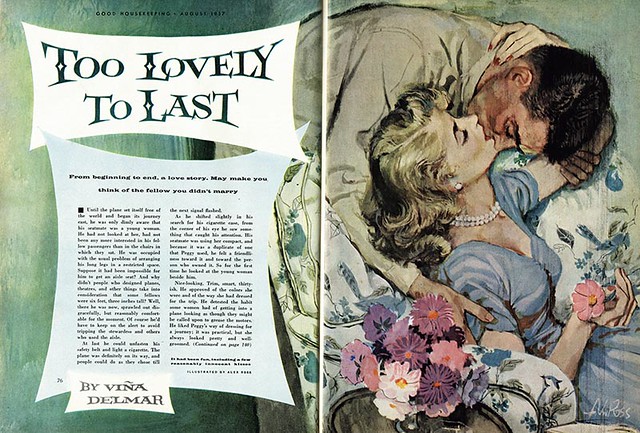
In the years before the paperback industry won the hearts and wallets of the fiction-reading public, writers told their stories in the pages of the nation's magazines. At least one fiction story - usually several, usually serialized - was the norm in the pages of any weekly or monthly publications aimed at the broader public. Fiction stories in magazines (more often than not propelled by a romantic theme) always began with a beautiful illustration.

Ross70

For artists like Alex Ross, this was fertile soil in which to plant the seeds of a successful illustration career.

Ross68

After his first assignments for Good Housekeeping many more followed from the Saturday Evening Post, Collier's, Cosmopolitan, Redbook, Ladies Home Journal and all the rest. Ross had fairly burst onto the scene, handily proving he could paint compelling scenes of sweetness and light.

Ross71

So it's not surprising that art directors quickly pigeon-holed him as a "boy-girl" romance artist. The money was good and the assignments plentiful...

Ross72

... but Ross had other ambitions.

Ross57.detail01

It took five years of accepting assignments from the Saturday Evening Post before the editors finally gave in to his pleas for something 'a little darker.'

Ross57

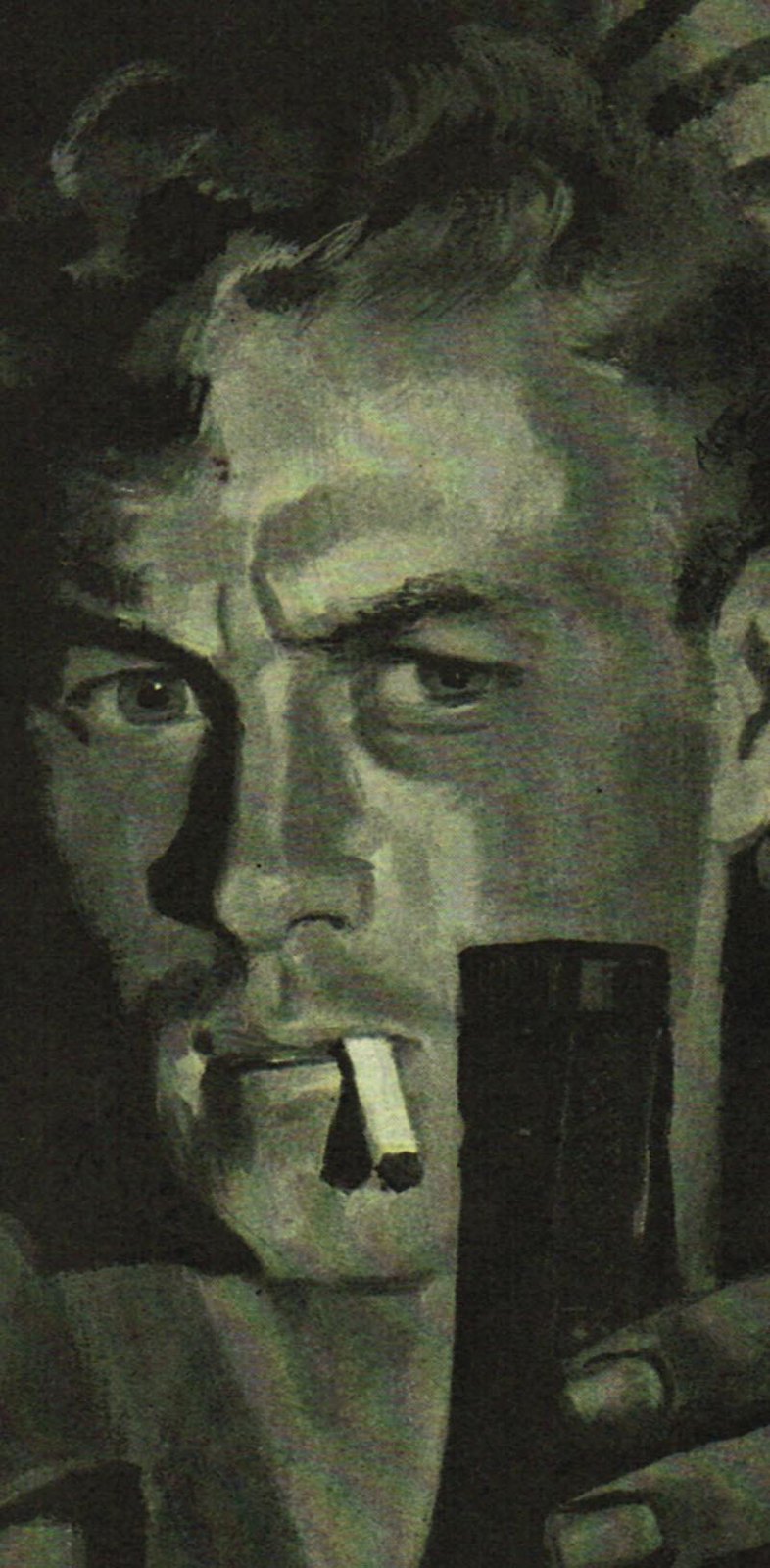
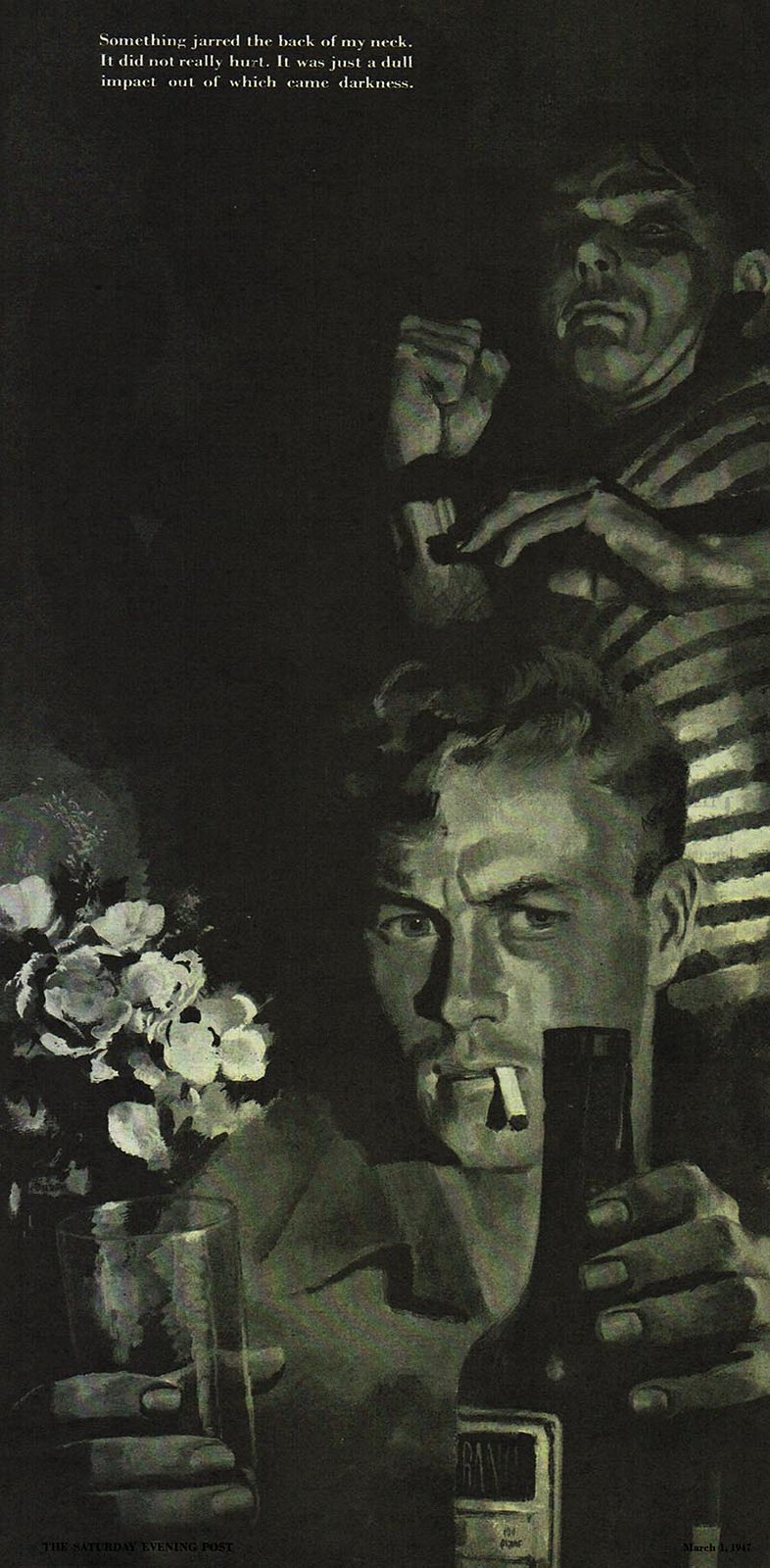
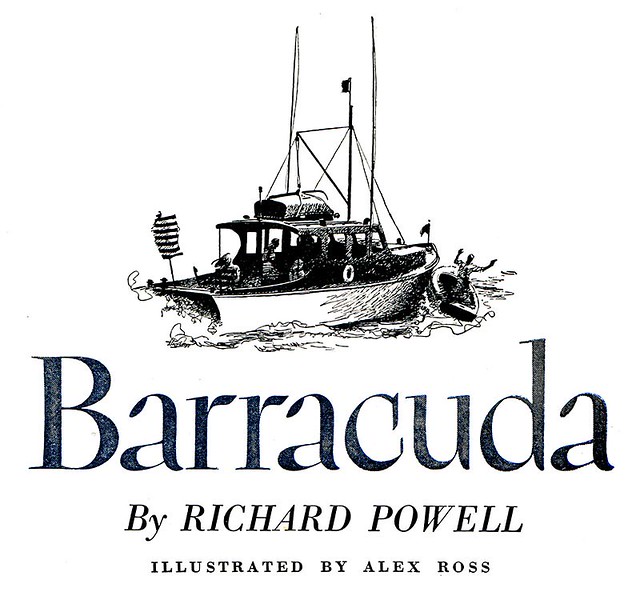
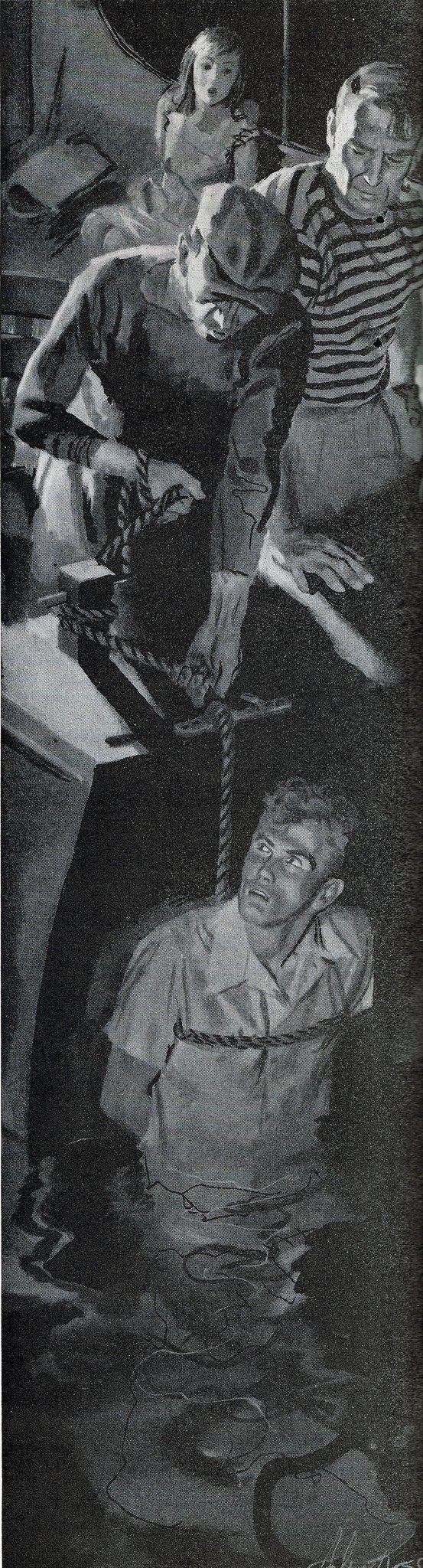
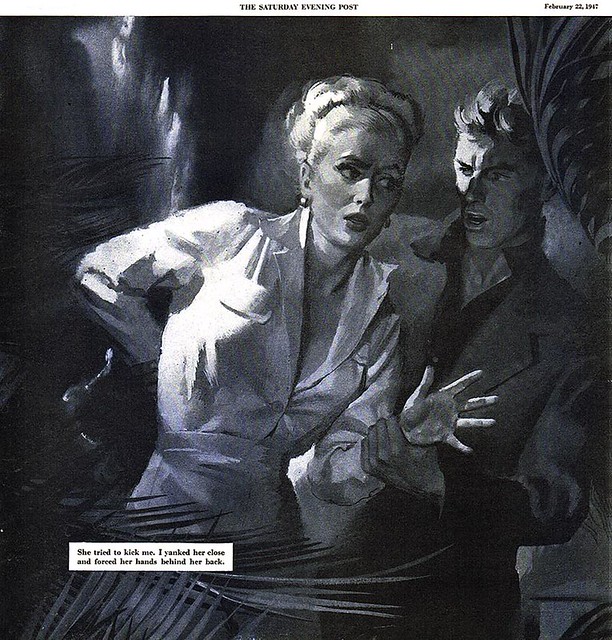
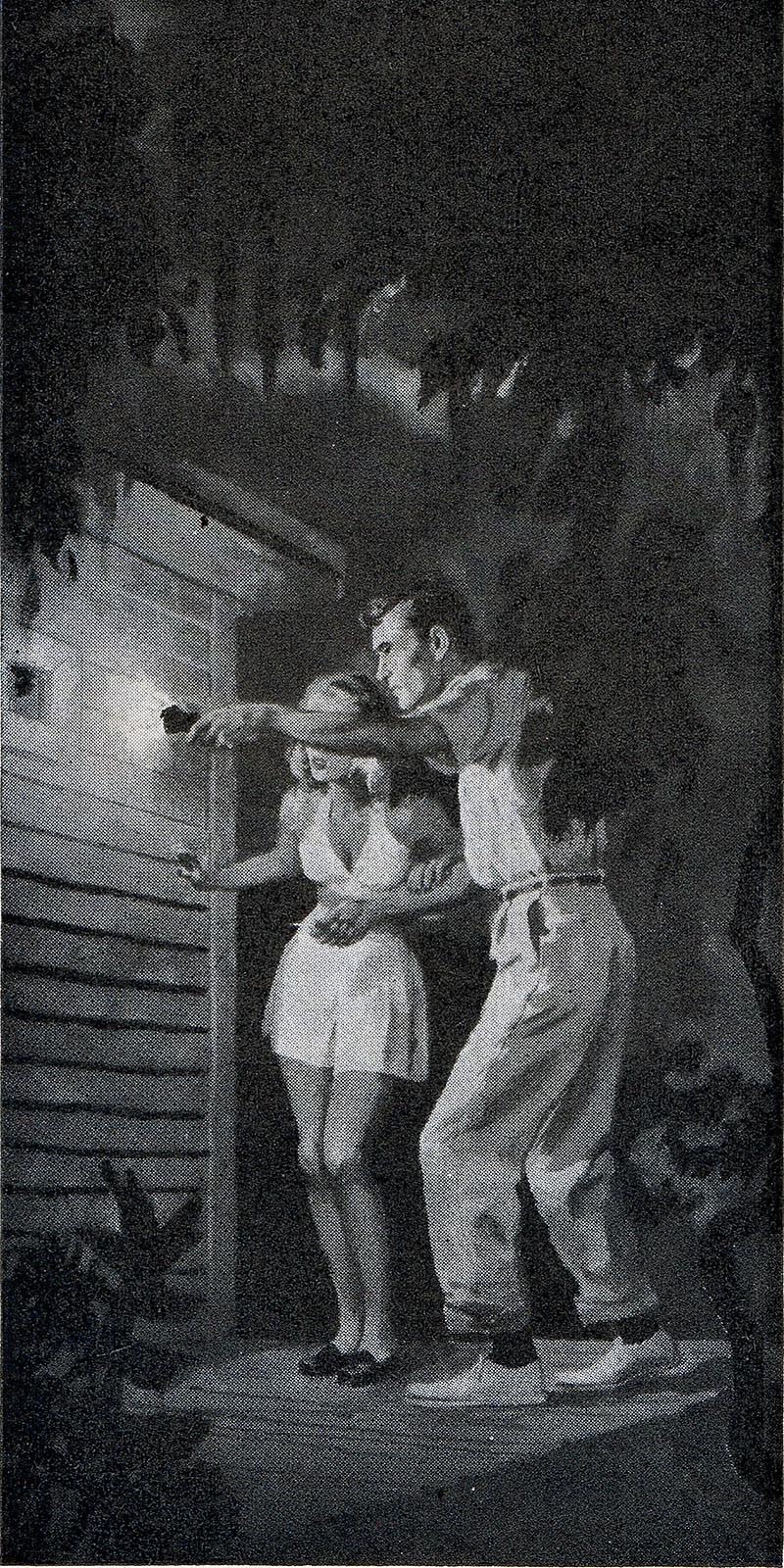
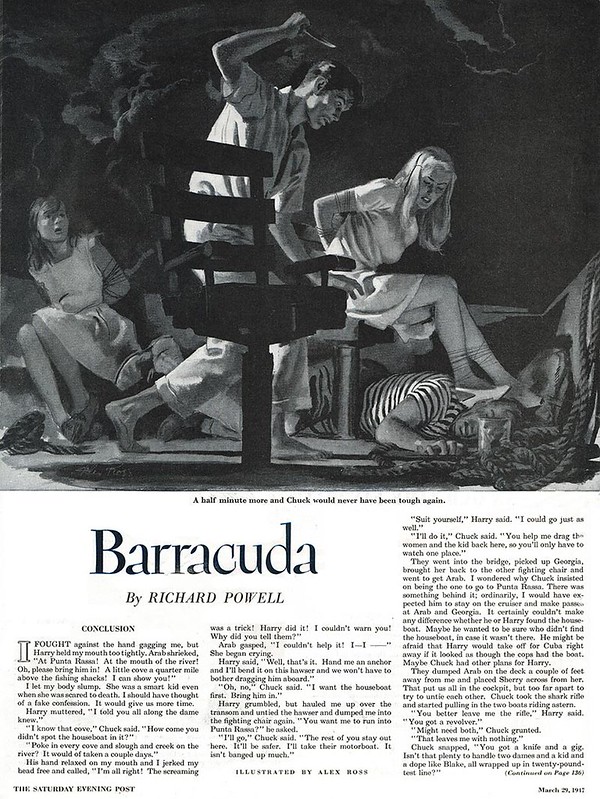
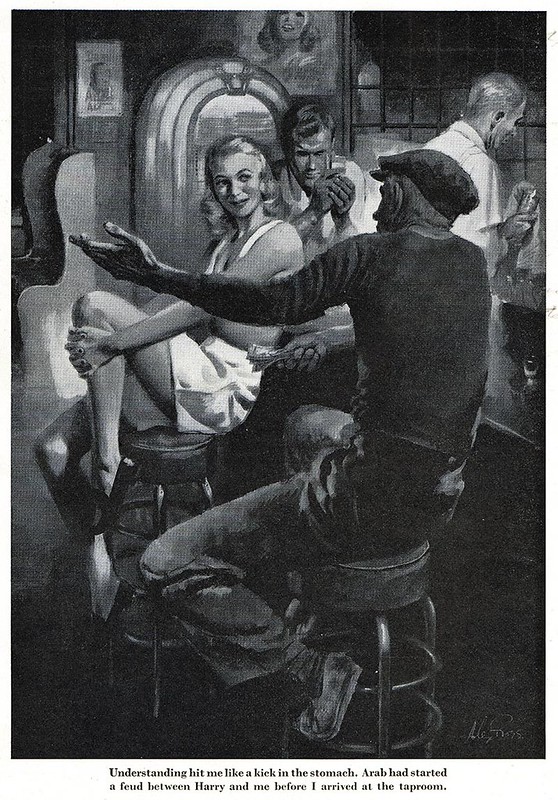
Finally, in 1947, Ross was given his first mystery story to illustrate: Richard Powell's "Barracuda."

Ross77a

Ross said at the time, "I enjoyed it so much that the farther I got into the plot, the more nearly I forgot all about illustrating it."
Ross77b

"It took an effort to put down the manuscript and get busy painting."

Ross59

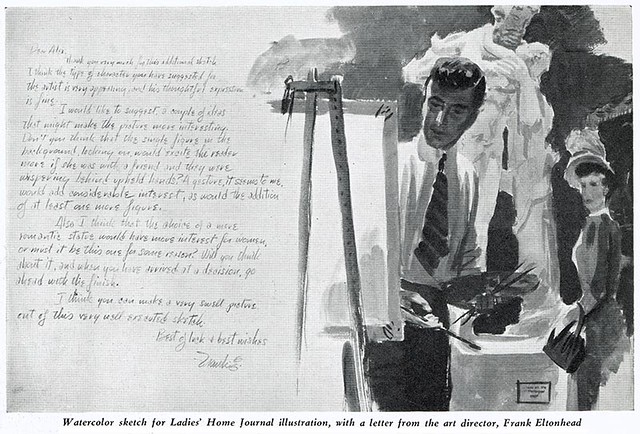
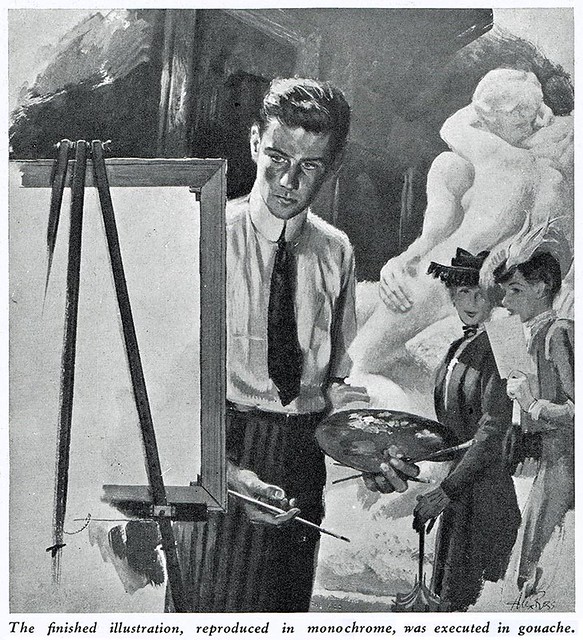
Like most story and advertising illustrators of the day, Alex Ross would paint a 'rough sketch' version of his proposed artwork for client feedback...

Ross73

Once approved, he'd organize a photo shoot so he'd have accurate reference to work from while rendering the finished artwork. Ross was an adherent of Robert Fawcett's philosophy that "intelligent friends are usually much better for modelling. They haven't been spoiled by acquiring that model's habit of mugging and grinning under all circumstances."

Ross74

For the "Barracuda" series, Ross's younger brother, Clyde, posed as the hero.

Ross76

His older daughter, Arlene (who, remember, was the model for her dad's first Good Housekeeping cover five years earlier) played the role of a girl in the story named Sherry. And Ross' friend and fellow illustrator, Wesley Snyder, portrayed the villain of the story.

Ross78

Even as early as 1947, when he worked on the "Barracuda" series, Ross was becoming less reliant on photo reference. He made a habit of taking only a few shots to capture nuances of poses already worked out in his preliminary sketches. He was not yet ready to work entirely from imagination... but that day would come.

Ross79

Because just as Alex Ross refused to be typecast by genre, he also would not be trapped by style, technique or medium. All were fair game to the restless artist, as we shall see... tomorrow.

Continued tomorrow

Monday, March 31, 2014

Alex Sharpe Ross: from Sign Painter to Celebrity Cover Artist

Alexander Sharpe Ross was born October 28,1908 in the town of Dunfermline, Scotland. The family moved to the United States while Ross was still a child. They settled in Pittsburgh.

Ross25

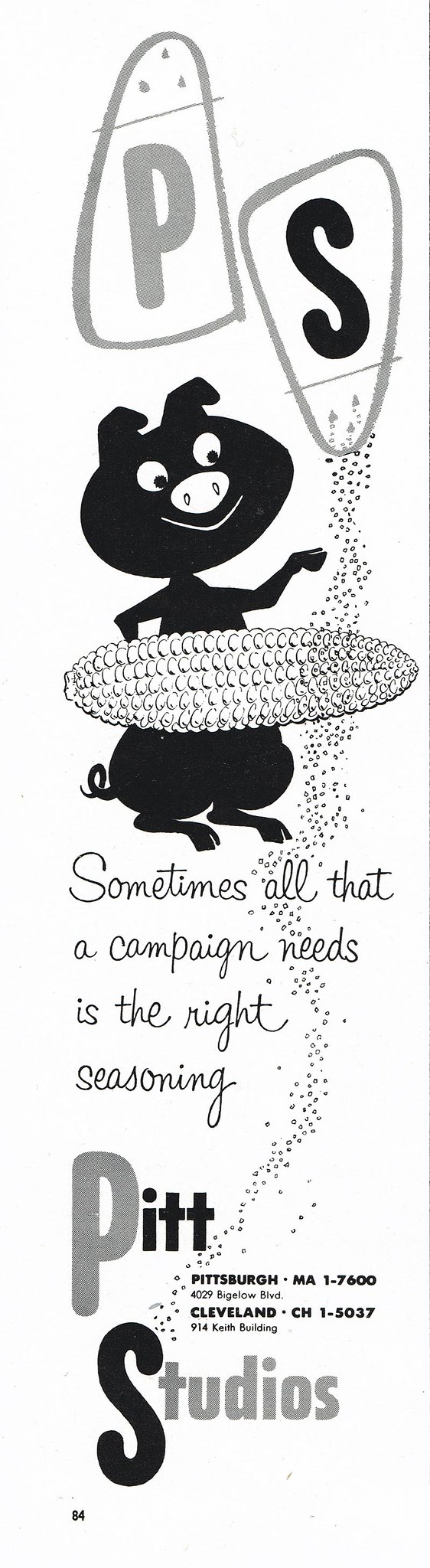
After completing high school, Ross took two years of night classes, studying Industrial Design at Carnegie Tech. He began working as a lettering man at Rayart Studios in Pittsburgh, a job that lasted three years. Perhaps his exposure to the commercial art business at Rayart opened his eyes to other possibilities, for he lost interest in becoming an industrial designer and focused instead on illustration. His first art assignment was a litho-crayon cover for the in-house publication of a Pennsylvania telephone company. In 1930 he entered a national peace poster contest on the theme; "There Shall be No More War." He won first prize. His next staff position was at Pitt Studios, where he was given choice advertising assignments to illustrate.

Pitt01

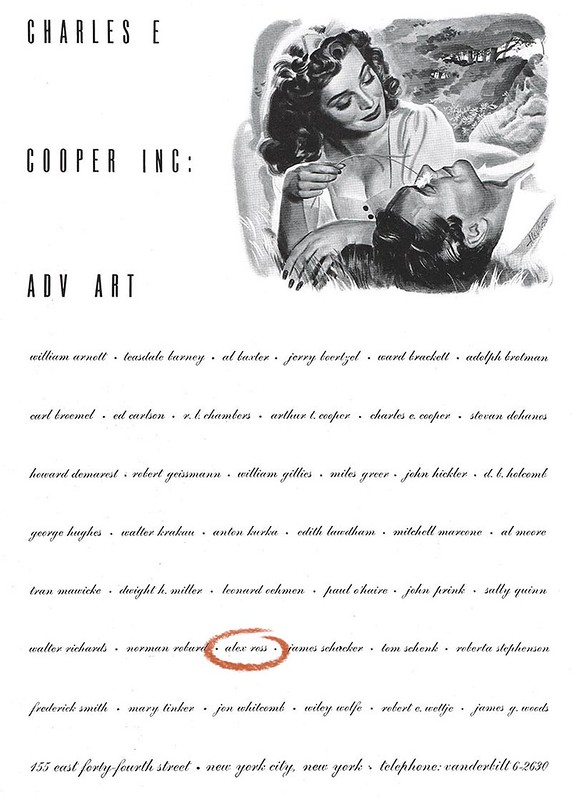
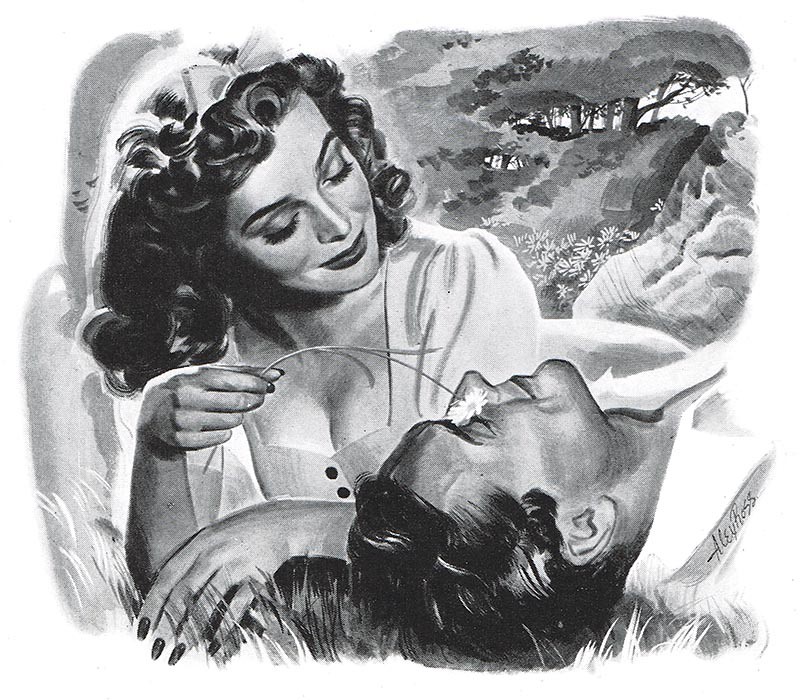
In January 1940 Alex Ross decided he was ready for the big time and moved to New York. He had tested the waters with a visit the previous summer when he'd made the rounds of various studios and secured some freelance work. Ross really did make the big time; he joined the prestigious Charles E. Cooper studio and began illustrating for a wide variety of national advertising accounts.

(Cooper Studio ad from the 1942 NYAD Annual)
Ross64

Still not satisfied, the ambitious Ross spent his evenings working on samples of magazine story illustration. As was always the policy at Cooper's, any fees the artist earned from story art were his to keep - no studio split.

Ross64detail01

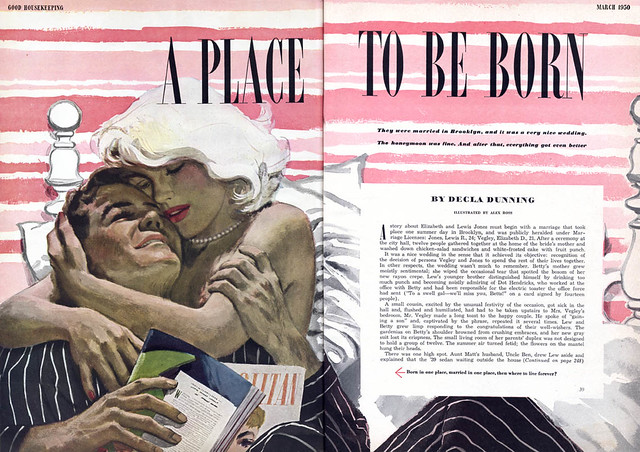
Ross took his time, spending six months to complete six samples. He showed these to the art director at Good Housekeeping and was rewarded with the first of many assignment for the magazine.

Ross10

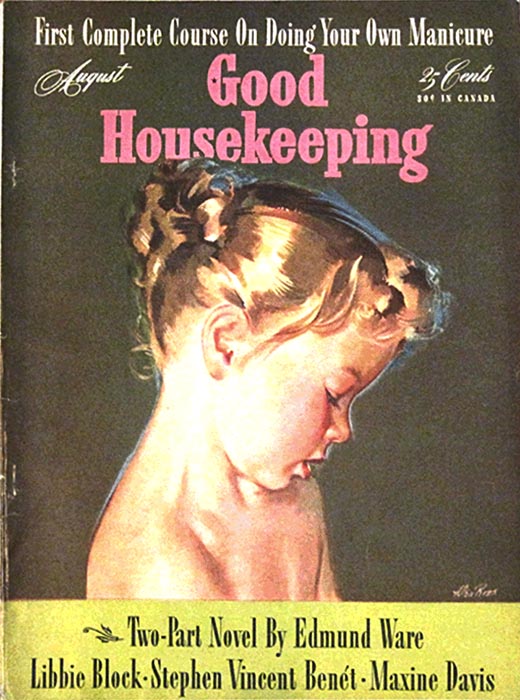
August 1942 marked an important next step up in Alex Ross' career: his first cover assignment for Good Housekeeping... and his departure from Cooper's. Ross was ready to go it alone.

Ross63
(Good Housekeeping, August 1942 - Ross' young daughter Arlene was the model for this first cover)

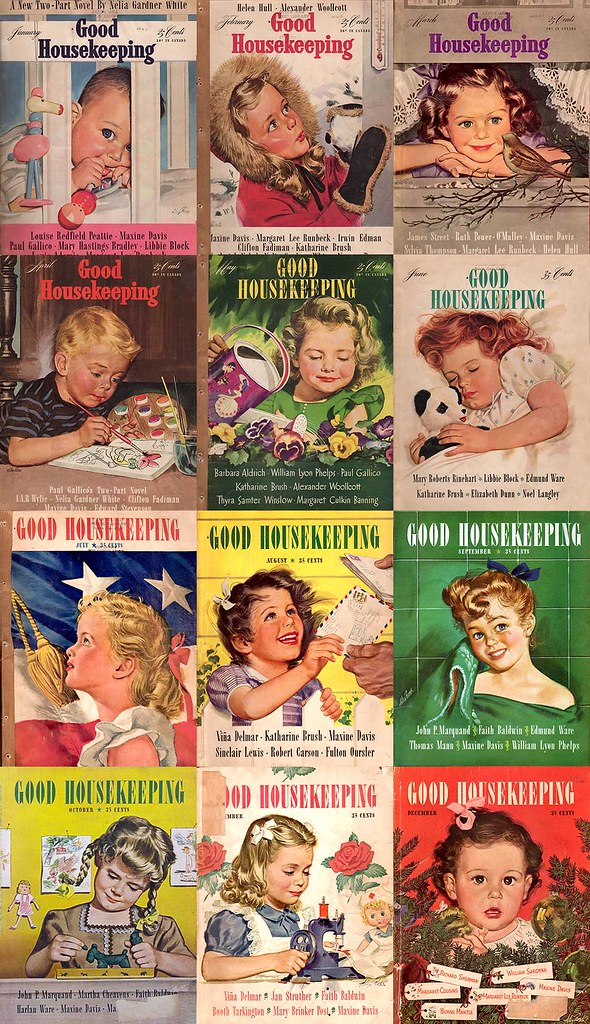
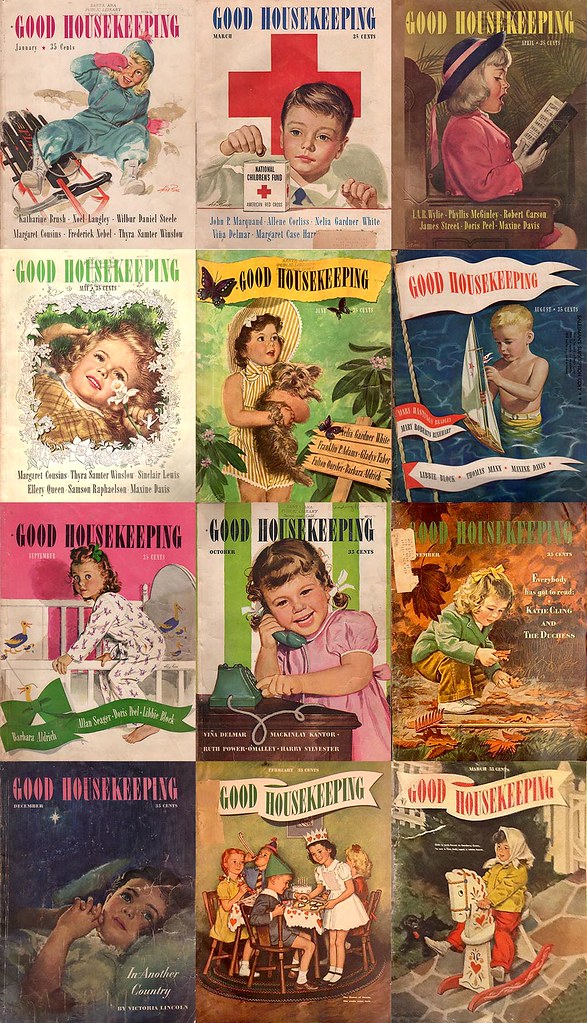
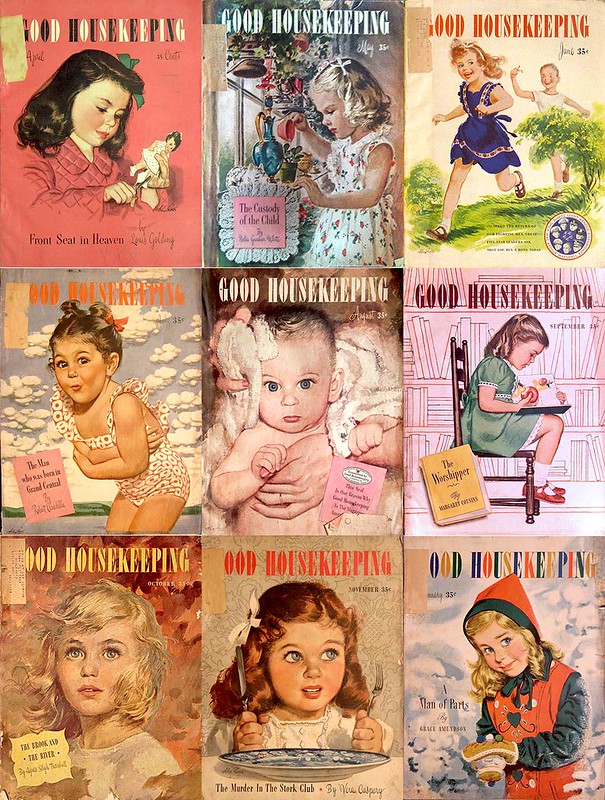
Over the next twelve years he painted nearly every cover of Good Housekeeping - 130 in all - which must surely be a record unparalleled in the history of the business. To give you some idea of this remarkable accomplishment, here's just a small selection of his run on Good Housekeeping, comprising most of the covers from 1943 to early '46...

RossGHCovers1943
RossGHCovers1944
RossGHCovers1945

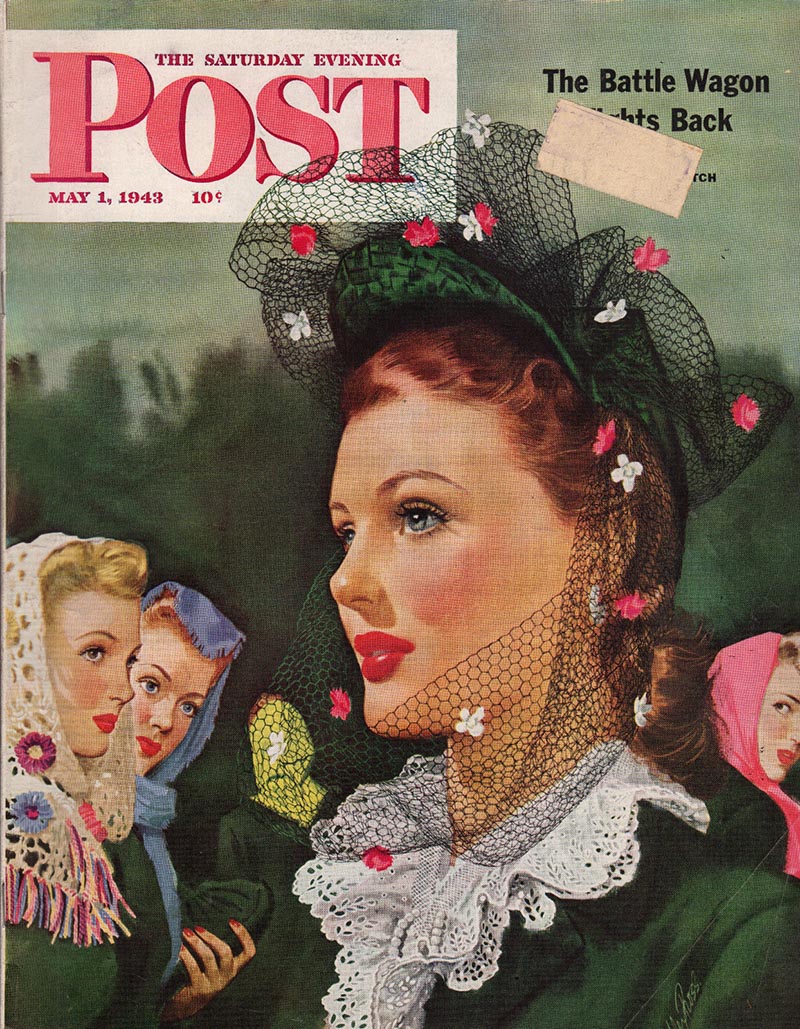
Less than a year after he'd begun working for Good Housekeeping Ross landed his first assignment for the Saturday Evening Post.

SEPcvr05:01:43

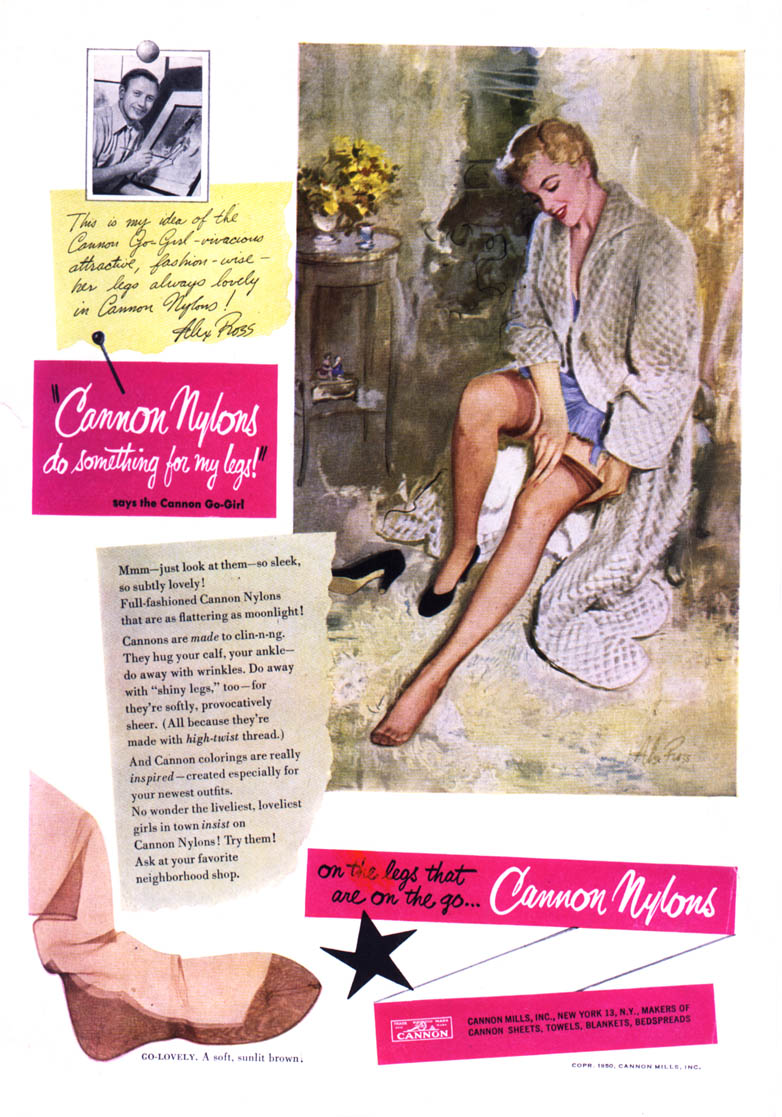
He soon became a prolific regular in the pages of all the leading magazines, painting hundreds of story art and advertising illustrations. In the commercial art industry of the day, you knew you'd arrived when you were hired not just for your illustration skills, but also as a celebrity endorser...

Ross01

From sign painter to celebrity cover artist; it might have been enough for another artist... but not for Alex Ross. Tomorrow we'll find out why.

Continued tomorrow