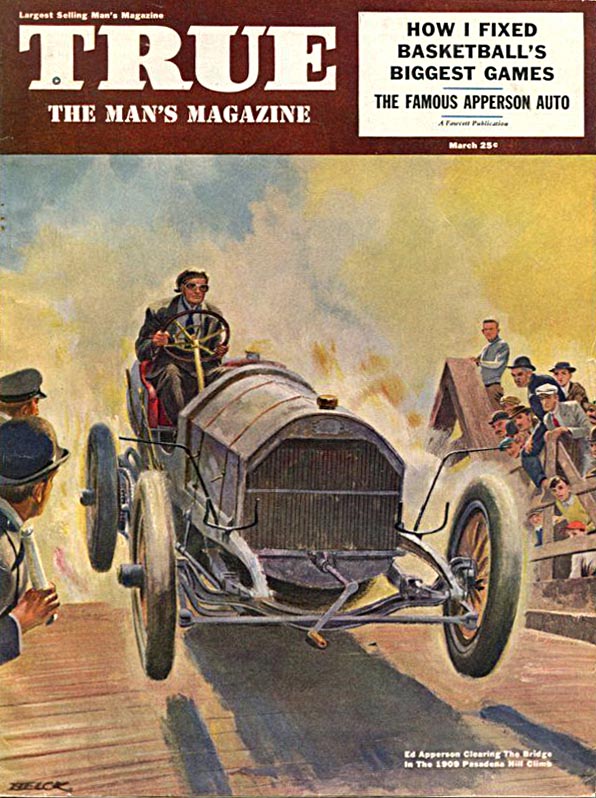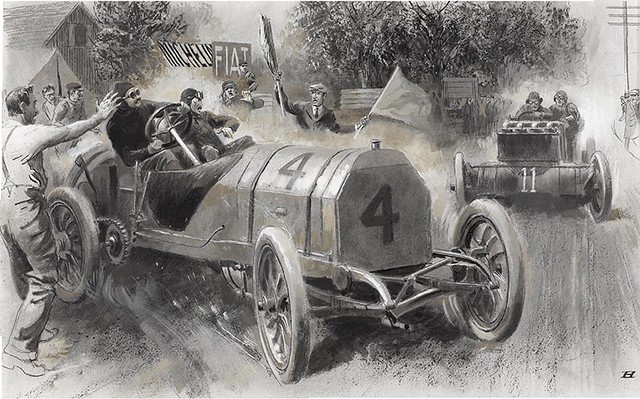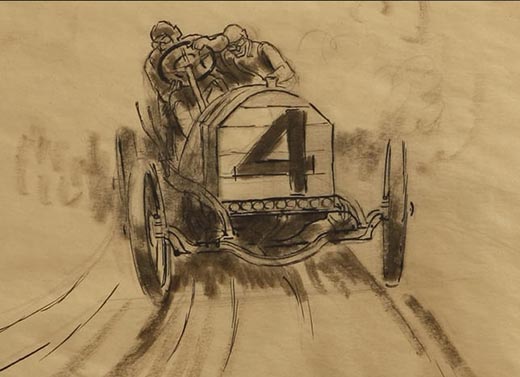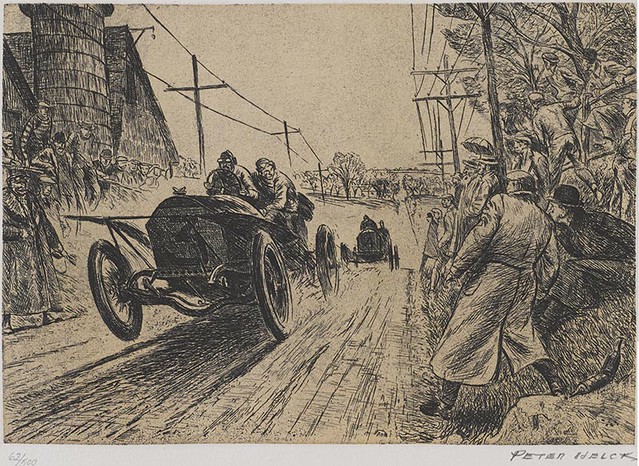
Showing posts with label Peter Helck. Show all posts

Saturday, March 15, 2014

Peter Helck: "Like a piece of music, some pictures just give you an enormous thrill."

Over the years I've showcase the work of quite a few members of the Famous Artists School 'Founding Faculty.' Albert Dorne, Al Parker, Robert Fawcett, Austin Briggs, Jon Whitcomb, Fred Ludekens, Ben Stahl and of course Norman Rockwell have all had their turn on Today's Inspiration. I'm happy to at last present one more member of that most distinguished group; Peter Helck, in his own words, excerpted from various early '60s issues of FAS magazine... ~ Leif

Helck30
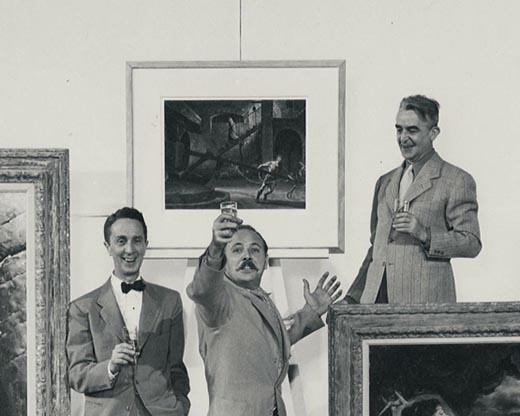
(L-R: Norman Rockwell, Ben Stahl, Peter Helck. See the full photo of the the entire FAS founding faculty at the end of this post)

"The first thing I think of [when making a picture] is an agreeable composition. I arrange the elements in such a way that they relate directly and agreeably."
Helck39

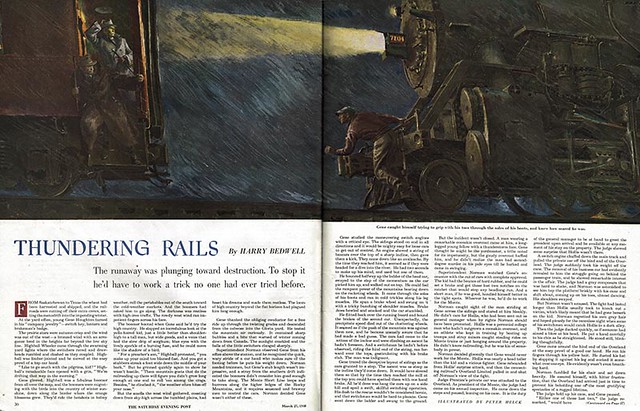
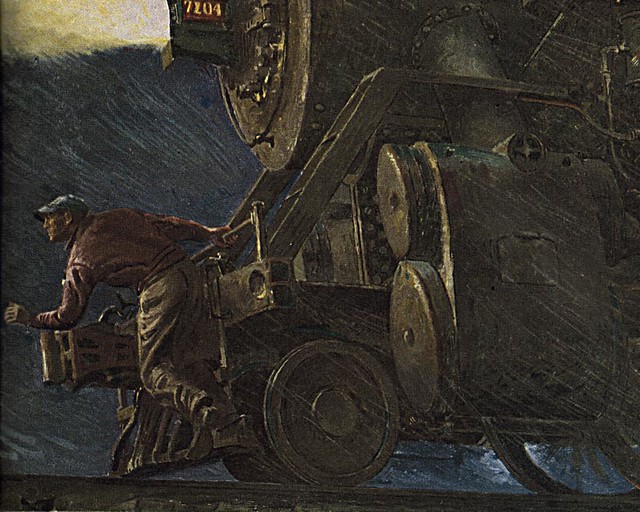
"I try always to use the minor elements to supplement the major ones. This takes patience and care. In composing pictorial elements you are emotionally absorbed in the creative process."
Helck39.detail

"I think a work of art can be made of anything at all. It's the way you approach it. Anything that excites me, that creates a terrific drive to set the subject down on paper, is worth painting. We have all had the experience of seeing something which arrests us completely."
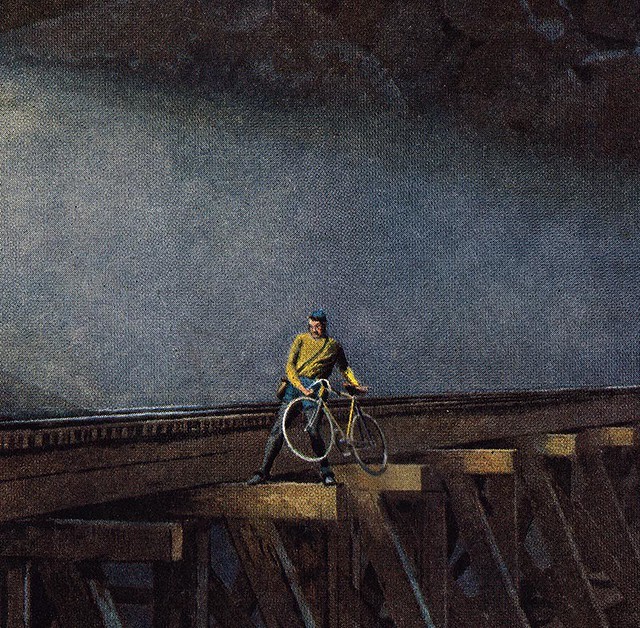
Helck38detail

"The painter should analyze for himself precisely what it is that causes him to feast his eyes. This will probably make a picture."
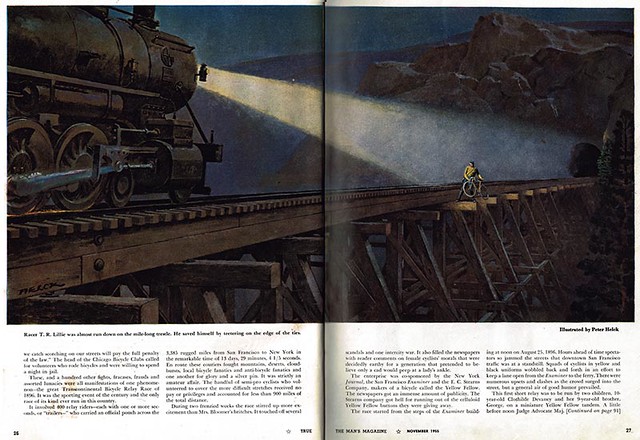
Helck38

"I'll never stop being amazed by what seems sheer magic, how the solving of one troublesome color area invariably indicates the solution of a neighboring area. Like most artists I work rapidly at the outset to cover the entire picture area to be rid of the disturbing whites of the raw illustration board or canvas. Only then do I feel the picture is under way."
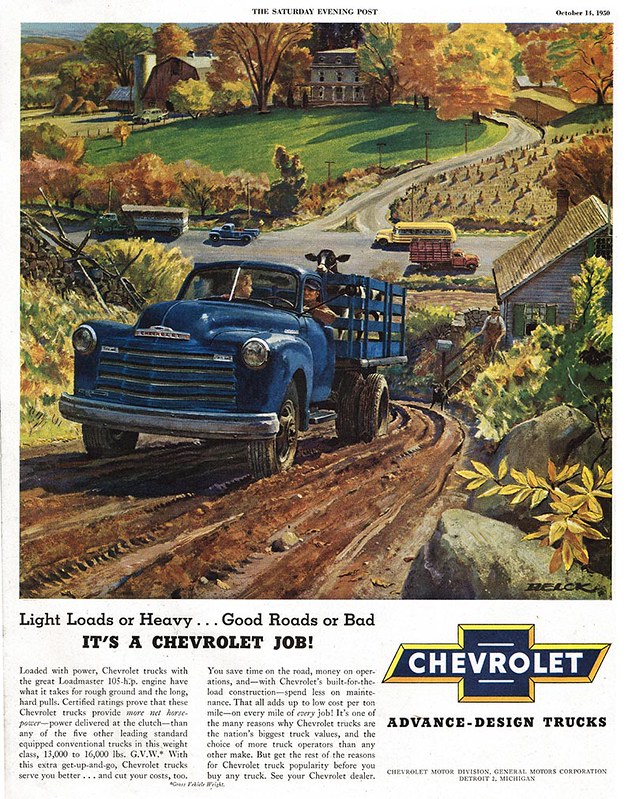
Helck41

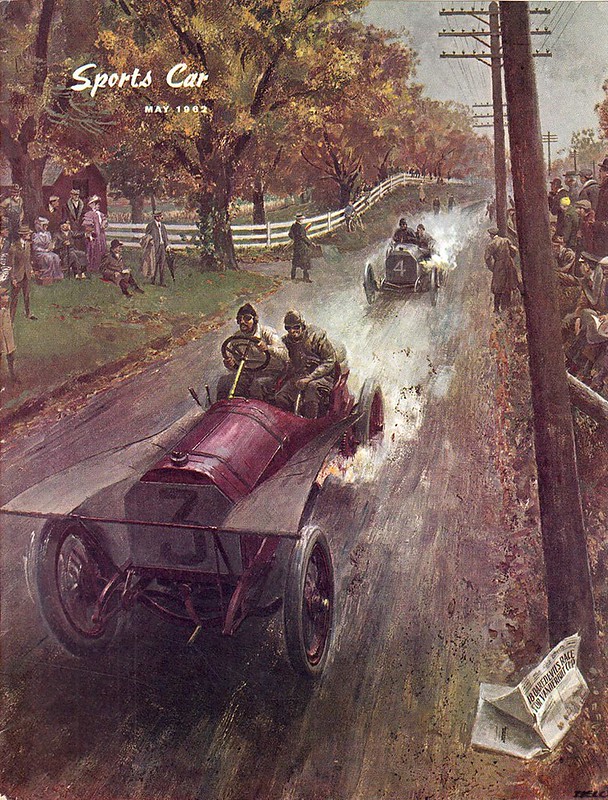
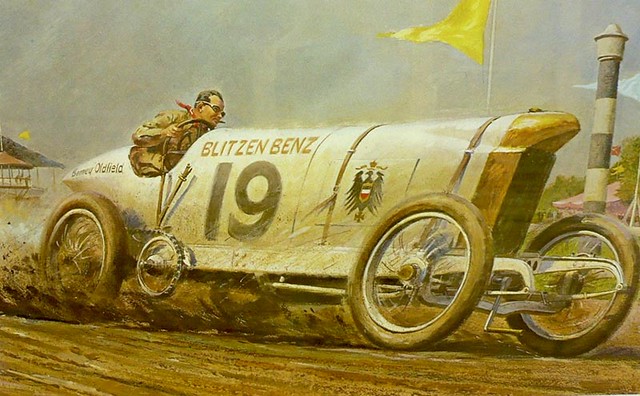
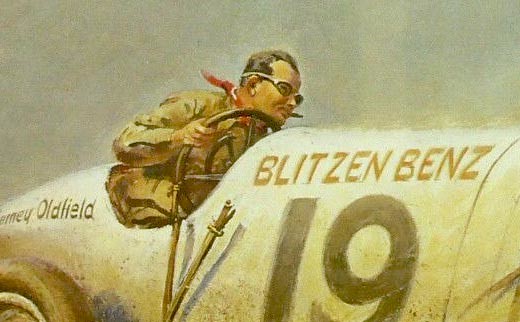
"Since the client is paying the bill I think he should be given a lot of consideration. But some artists will surrender at the first sign that the client isn't pleased. Right now I am doing four race pictures. In one I have a pole placed in a position which contributes to the composition. The client said he didn't like the pole there. I'll think about it but I still believe it belongs there. If he makes an issue of it I may surrender or I may not."

Helck43

"You have to try new things or you'll get stale. At least I have to. In my book The Checkered Flag there are about 120 Peter Helck illustrations. I tried various ways of doing them. Of course, in many there is a tendency to work in a familiar medium."
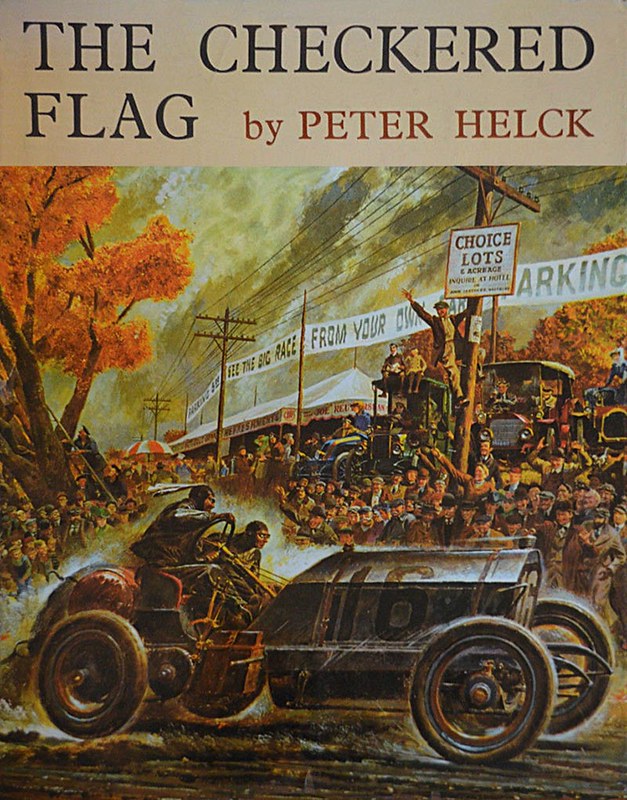
Helck44

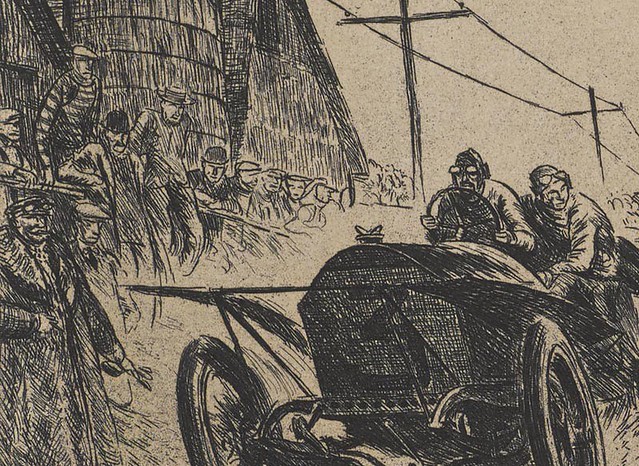
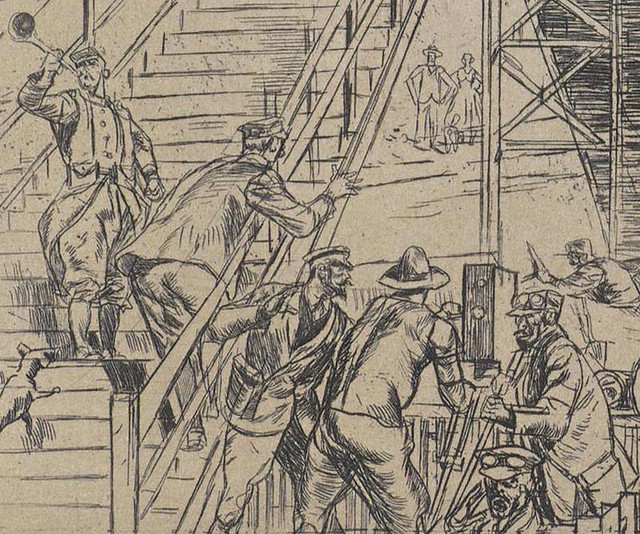
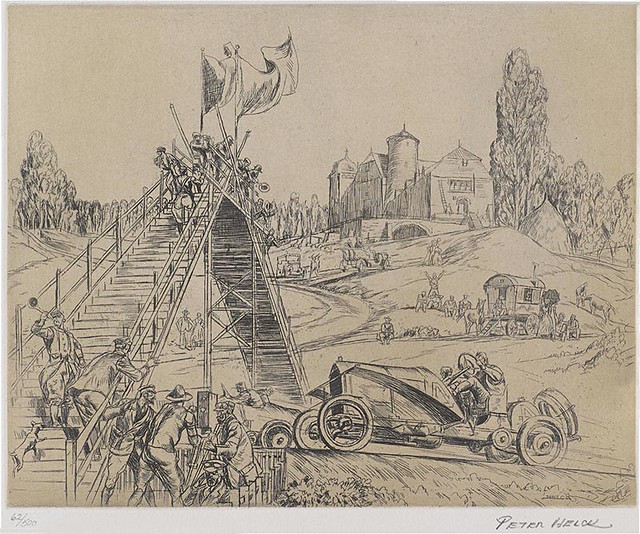
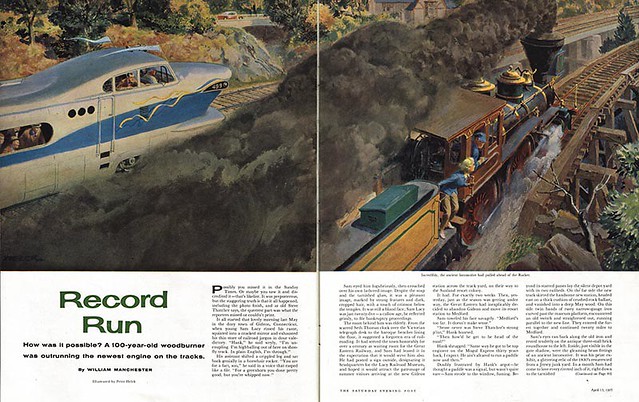
"Like a piece of music, some pictures just give you an enormous thrill."
Helck40

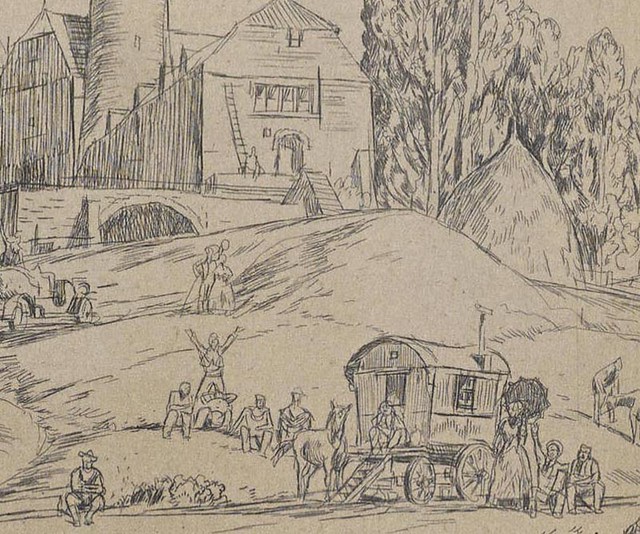
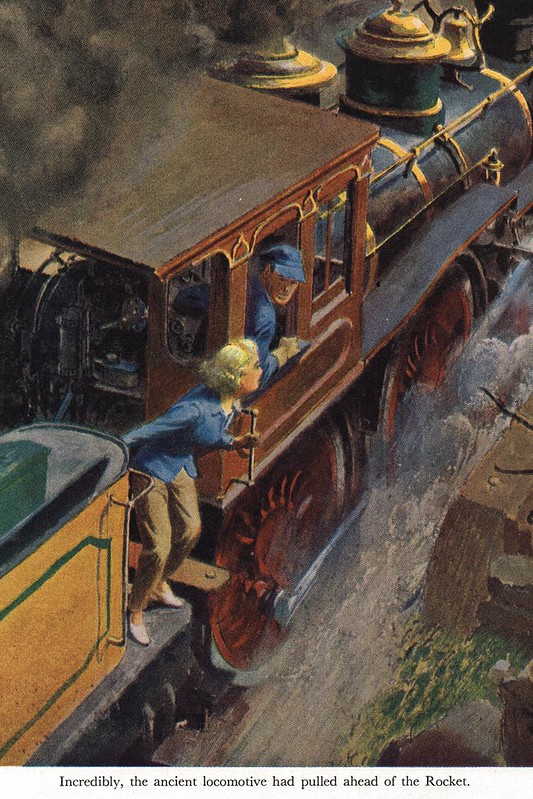
"You wonder what's taking place there."
Helck40.detail

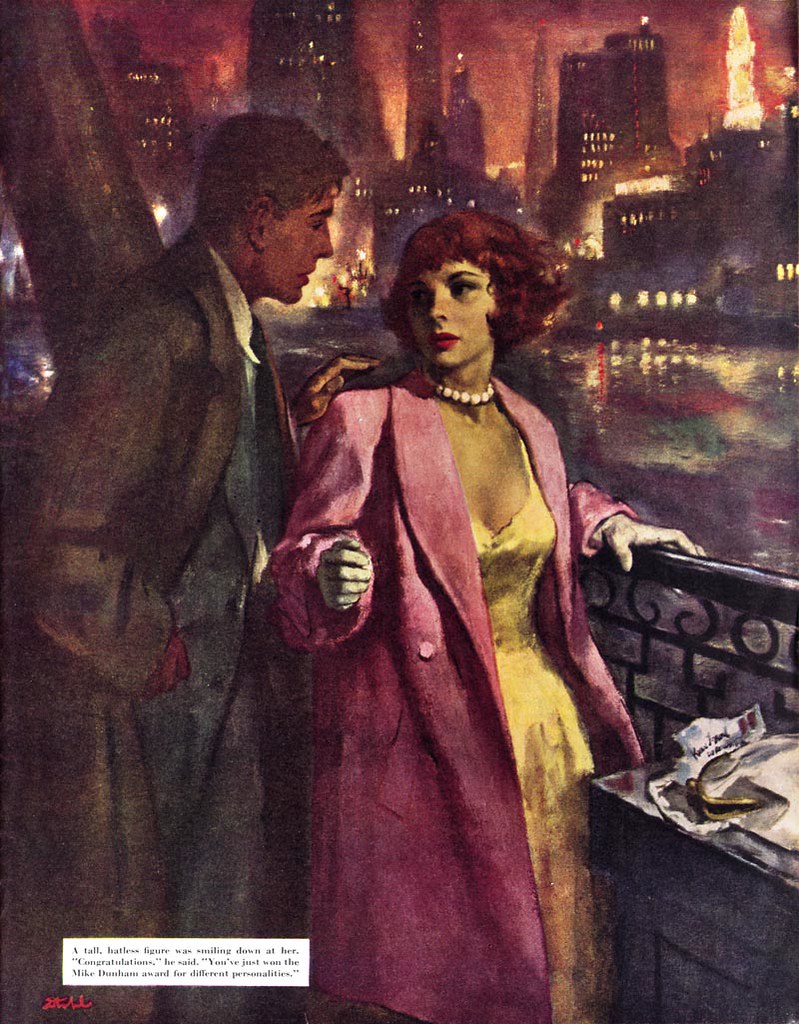
"I always look for composition. I admire [Robert] Fawcett and [Ben] Stahl tremendously. Stahl is a virtuoso in the application of paint. And he is able to generate a deep emotional feeling.
Stahl68

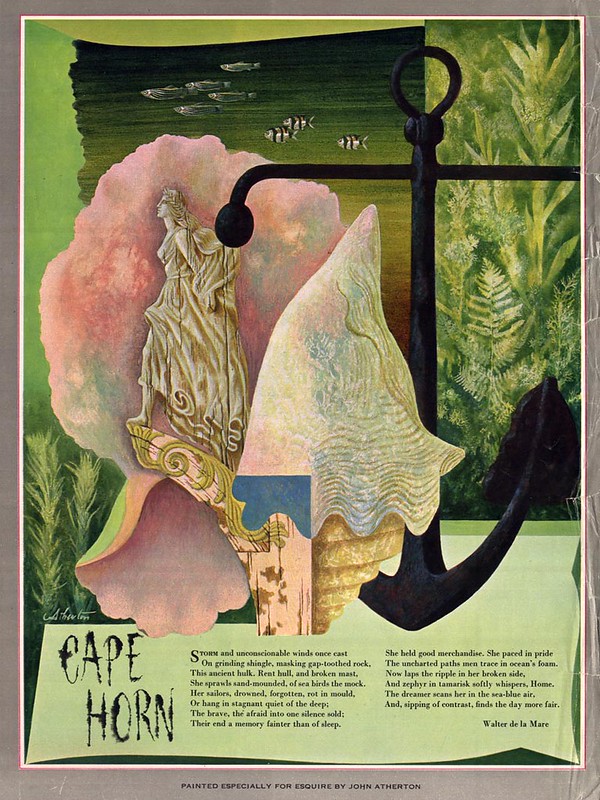
"[John] Atherton, who is dead now, had a great finesse and taste, fine design and excellent colour."
Atherton02

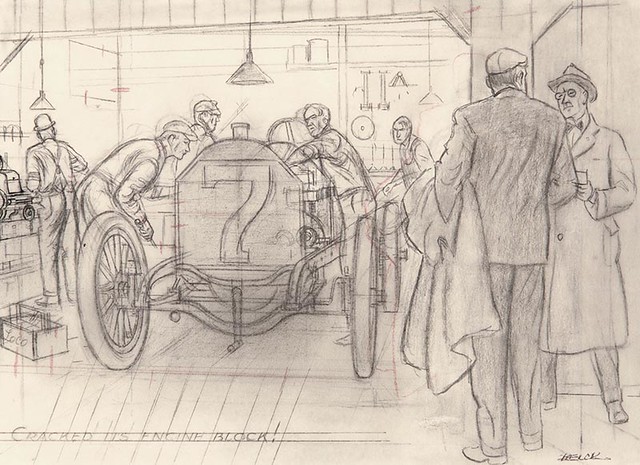
"I'll be candid. There are very few occasions when I feel any great satisfaction [from my own work]. I always feel they have not matched the visualization I had in mind."
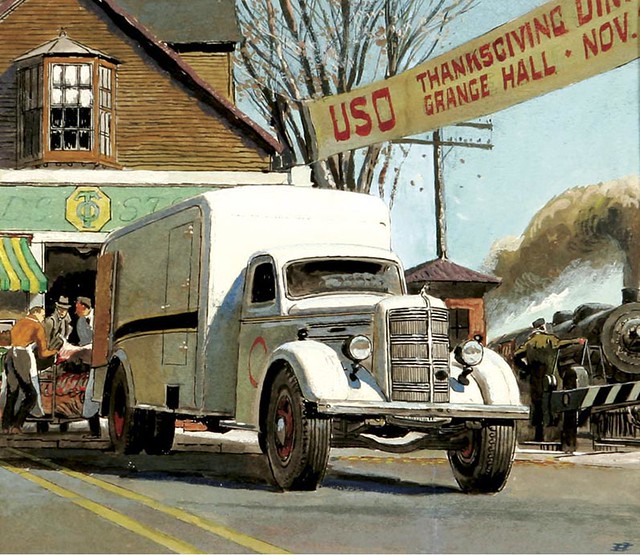
Helck42

"Only rarely do I get something that really pleases me. It is gratifying to get a telegram from a client telling you he likes the picture. But the greatest joy comes from those rare moments when the picture clicks."
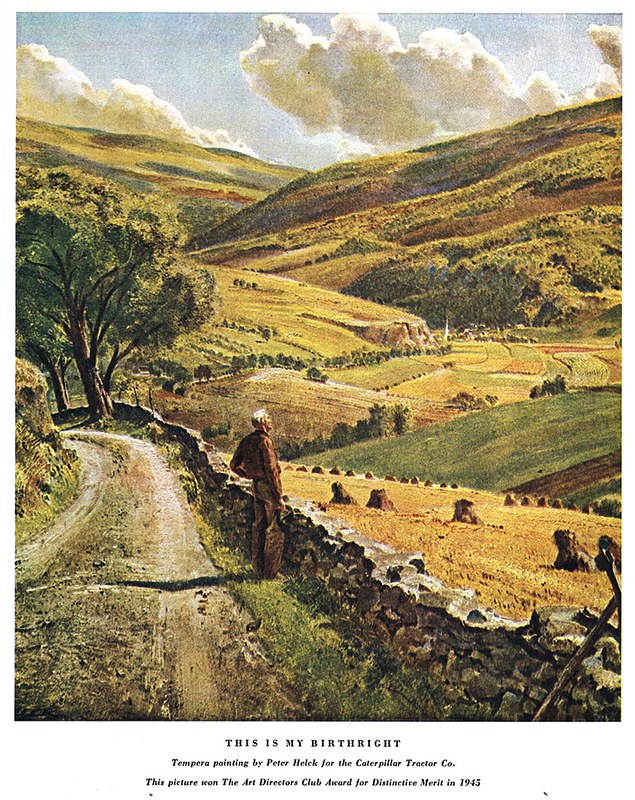
Helck45

"I wish it happened more often."

* For more about Peter Helck, visit the artist's website or his Facebook Fan Page

* There is a long and interesting article about Peter Helck's race car illustrations at the Saturday Evening Post website

* Two notable events related to the Famous Artists School occurred recently:

The Norman Rockwell Museum recently acquired the art and archives from the Famous Artists School in Westport, Connecticut, nearly doubling the Museum's collections. This major gift comprises more than 5,000 un-catalogued artworks, including several original works created by Norman Rockwell! You can learn more here...
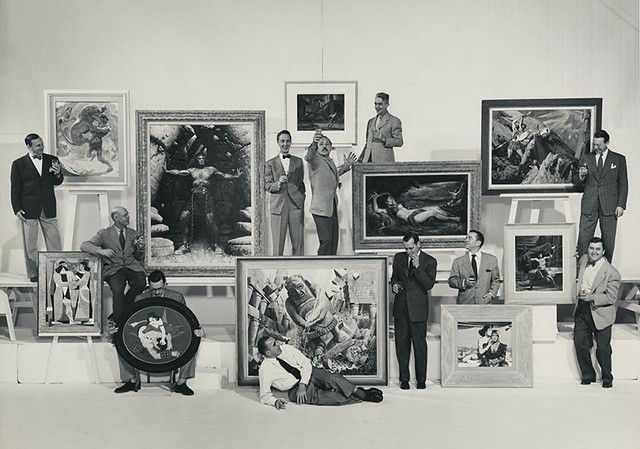
Famous Artists School Group_5_6

Secondly, the current incarnation of the Famous Artists School is re-offering the original Famous Cartoonists Course online! FAS president Magdalen Livesey wrote to tell me, "we have reissued Book 1 of the FAS Cartooning Course. At this point, it’s only available online, not in printed version, but we are offering Assignments and Critiques as well as the book alone." Learn more here...

Wednesday, March 12, 2014

Peter Helck: "I try to make a picture that will generate a feeling of impact"

Over the years I've showcase the work of quite a few members of the Famous Artists School 'Founding Faculty.' Albert Dorne, Al Parker, Robert Fawcett, Austin Briggs, Jon Whitcomb, Fred Ludekens, Ben Stahl and of course Norman Rockwell have all had their turn on Today's Inspiration. I'm happy to at last present one more member of that most distinguished group; Peter Helck, in his own words, excerpted from various early '60s issues of FAS magazine... ~ Leif

Helck30
(L-R: Norman Rockwell, Ben Stahl, Peter Helck. See the full photo of the the entire FAS founding faculty at the end of this post)

"I try to make a picture that will generate a feeling of impact, something that will stop a person and keep him from turning the page."

Helck32

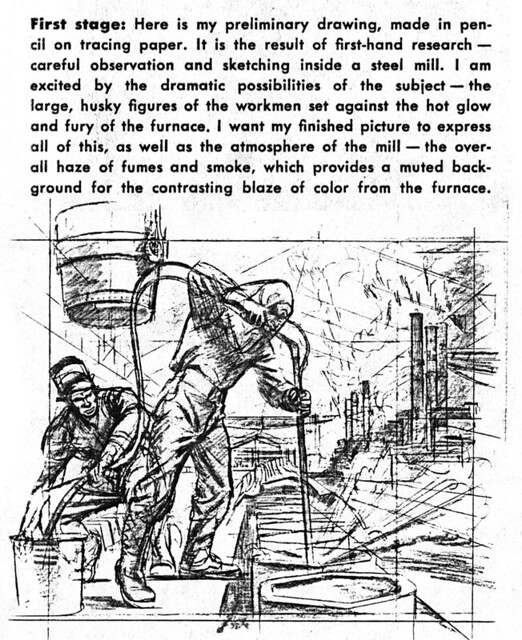
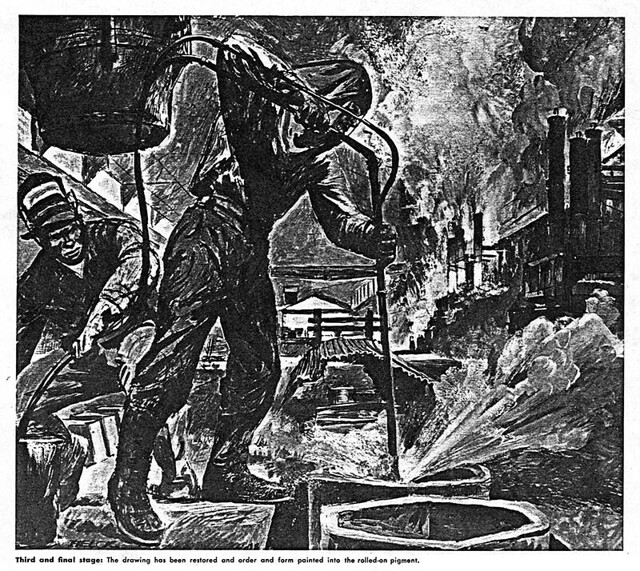
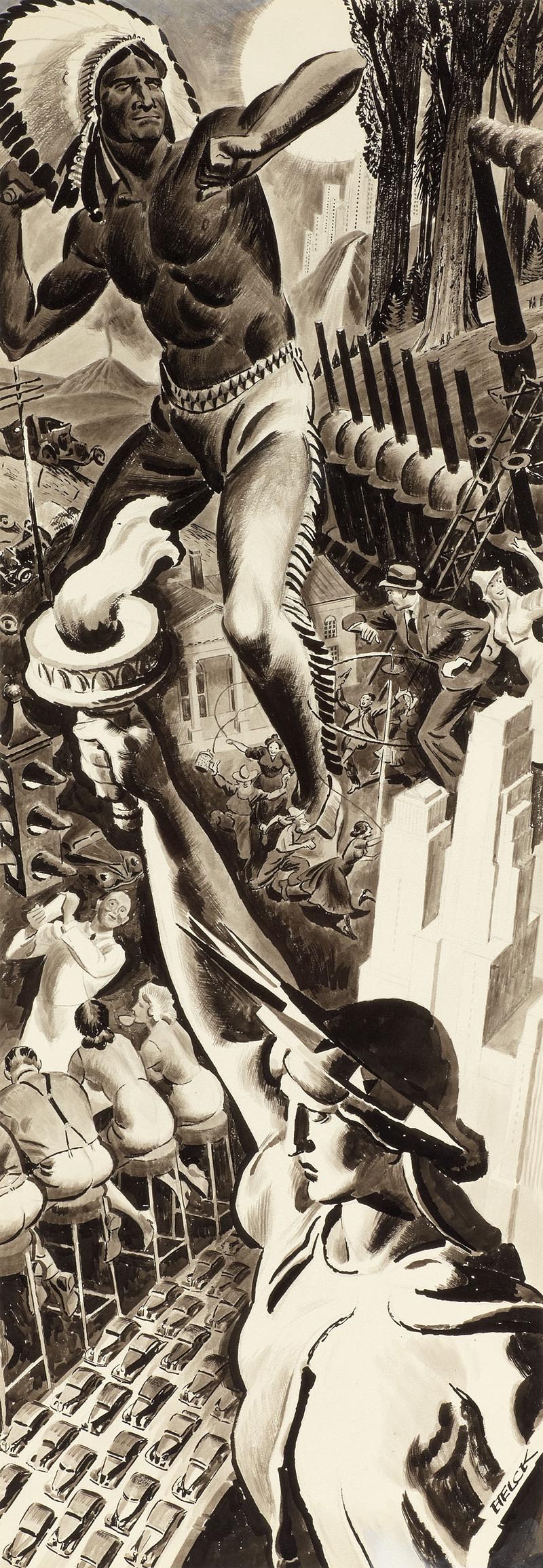
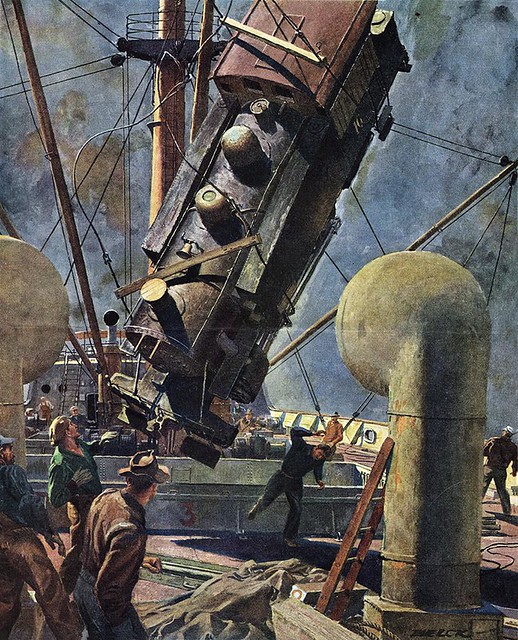
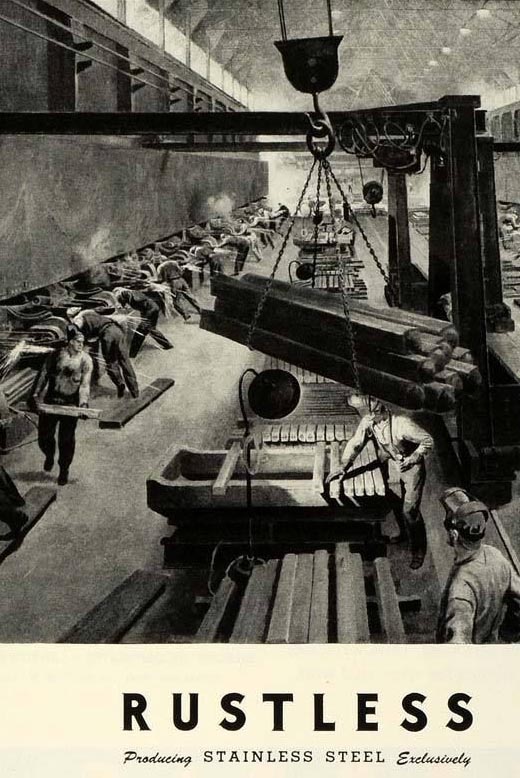
"If [the subject] isn't monumental, I try to find some way of handling it so it becomes monumental. For example, in the making of steel, some operations aren't particularly vital pictorially. So I resort to exaggerated perspective, improvise some dramatic lighting, innovate with color for some hint of the heroic and monumental."

Helck37detail

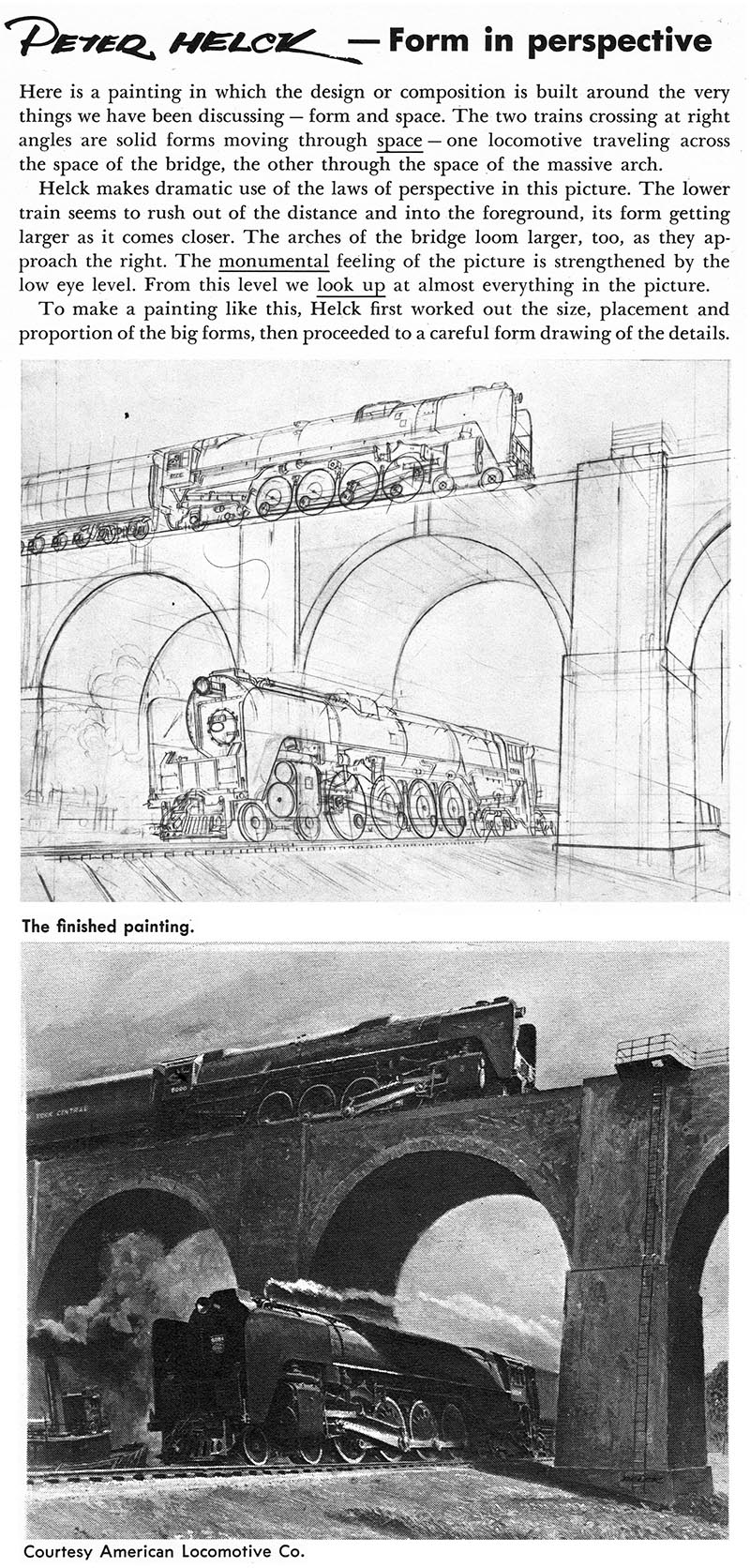
"I distort perspective freely. Sometimes I rearrange the elements of the picture to get more drama. I like anything that is big structurally - a building, a tractor, a locomotive, anything that has the aspect of the monumental."

Helck31

"When I travel abroad I look for a man-made structural aspect of the scene - an old Roman bridge, a windmill. If it's set in a beautiful landscape, so much the better."

Helck34

"Like everyone else engaged in the task of making pictures, I learn all I can about the subject before I begin to paint. If it happens to be a subject I'm familiar with, like automobiles, I have tremendous files right at home to work from. Otherwise I have to go out and learn all I can about it."

Helck35

"The last time I made a steel advertisement I made half a dozen trips down to the mills. For hours I hung around the particular operation I was supposed to paint. I was accompanied by an executive who could explain the operation to me. I think the artist needs to saturate himself in his subject. He should go to the scene whenever possible and see for himself what the possibilities are."

Helck36

"If he is actually there, seeing the place, noting its colors, its compositional opportunities, the flavor of the scene, he can't help but make a better picture."

Helck19

Continued tomorrow

* Two notable events related to the Famous Artists School occurred recently:

The Norman Rockwell Museum recently acquired the art and archives from the Famous Artists School in Westport, Connecticut, nearly doubling the Museum's collections. This major gift comprises more than 5,000 un-catalogued artworks, including several original works created by Norman Rockwell! You can learn more here...

Famous Artists School Group_5_6

Secondly, the current incarnation of the Famous Artists School is re-offering the original Famous Cartoonists Course online! FAS president Magdalen Livesey wrote to tell me, "we have reissued Book 1 of the FAS Cartooning Course. At this point, it’s only available online, not in printed version, but we are offering Assignments and Critiques as well as the book alone." Learn more here...
Tuesday, March 11, 2014

Peter Helck: "... my interest in cars dates from childhood."

Over the years I've showcase the work of quite a few members of the Famous Artists School 'Founding Faculty.' Albert Dorne, Al Parker, Robert Fawcett, Austin Briggs, Jon Whitcomb, Fred Ludekens, Ben Stahl and of course Norman Rockwell have all had their turn on Today's Inspiration. I'm happy to at last present one more member of that most distinguished group; Peter Helck, in his own words, excerpted from various early '60s issues of FAS magazine... ~ Leif

Helck30
(L-R: Norman Rockwell, Ben Stahl, Peter Helck. See the full photo of the the entire FAS founding faculty at the end of this post)

"It's one thing to have a hobby and another to blend it with one's career as an artist. I've been a successful 'pro' for many years, enjoying the tangible rewards measured in dollars, but the deepest satisfaction I know derives from pursuing an interest utterly detached from financial considerations."

Helck21

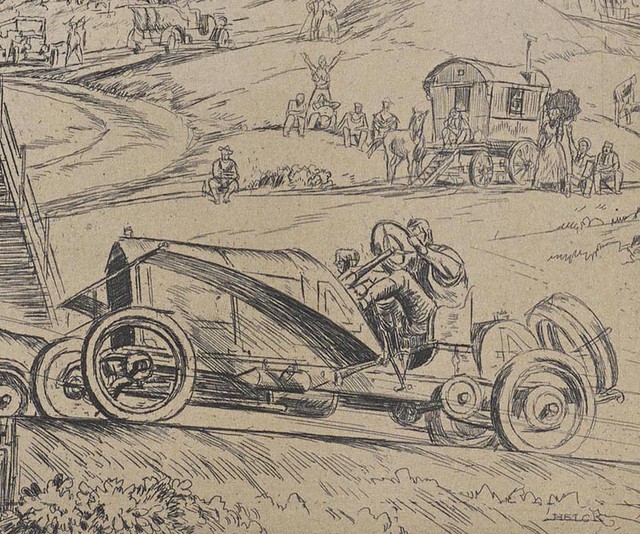
"With me the blend was ever present because my interest in cars dates from childhood. I'm old enough to remember the automobile as a novelty, a rarity of sufficient interest to amaze and attract a swarm of youngsters whenever one came to a smoke-belching standstill on West 96th Street in New York City."

Helck25

"My juvenile sketches soon embraced the smelly, noisy contraptions fouling up the horse-drawn traffic in Manhattan streets. My busy pencils and crayons were quickly devising means of evolving these high-decked, angular benzine buggies into wind-splitting chariots of alleged grace and beauty. "Styling" they call it these days. Such doodles appear even now, fifty years later, on my telephone pad."

Helck24

"My art schooling was of the standard type - drawing from antique casts, the nude figure, etc. - all unrelated to my love of cars. In 1913 this fascination got a substantial lift. I won the poster contest for Brooklyn's annual auto show and a job with a small firm engaged in advertising and press agentry. Its clients in both categories were automotive. I became submerged in the delightful atmosphere of auto race promotions."

Helck26

"Drawing cars was my daily stint, made even more pleasurable by the $20 per week salary and the frequent glimpses of famous figures from New York's "Automobile Row."

Helck26detail02

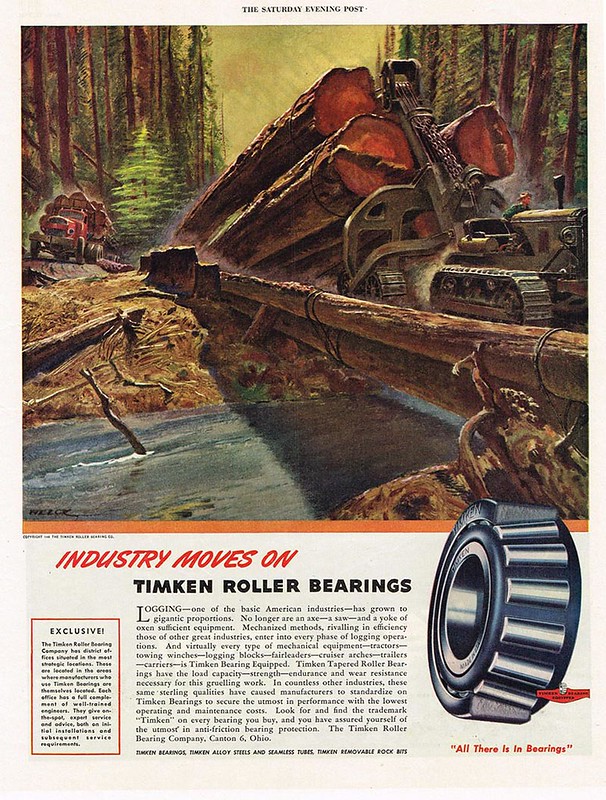
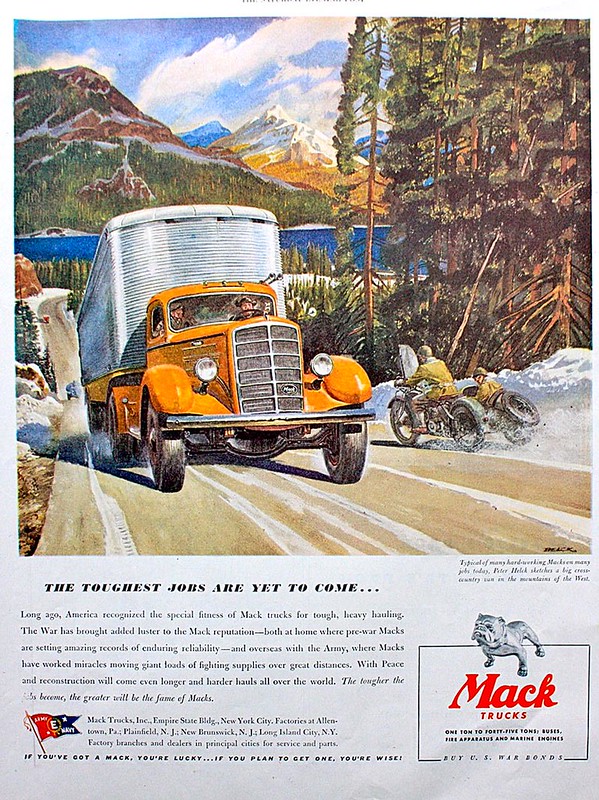
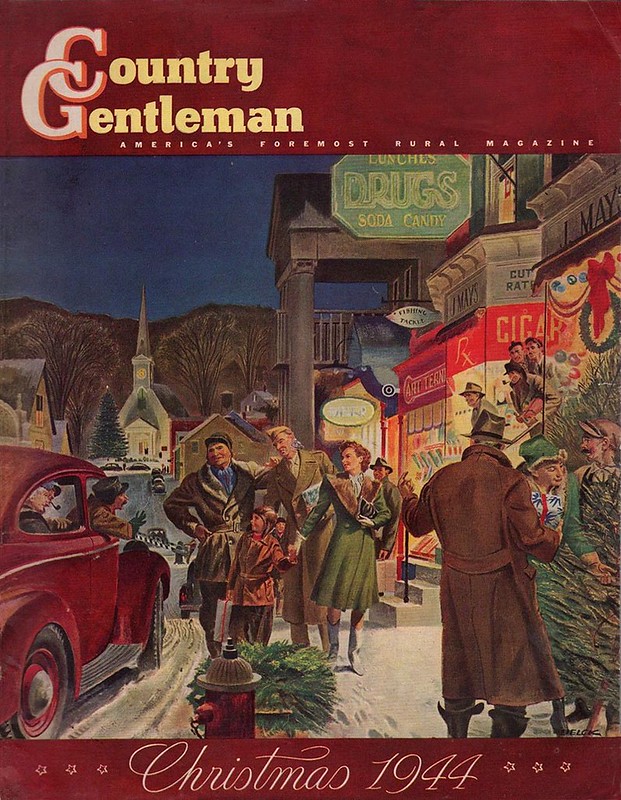
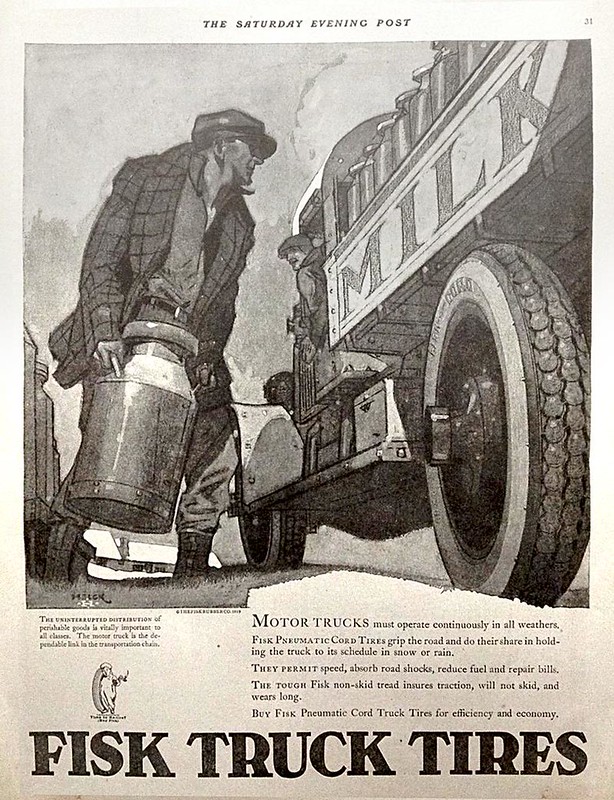
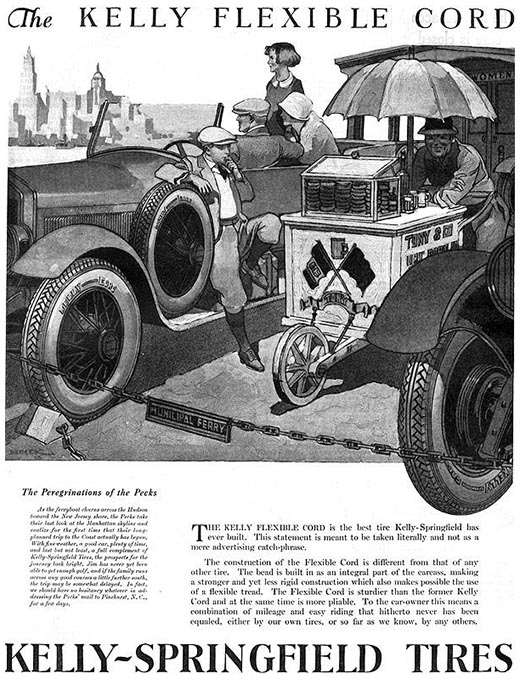
"From then to now I suppose eighty percent of my professional work has involved automotives. I've had years of national campaigns for Packard, Republic, Ford, Mack, Chevrolet, and other highway haulers. I paid my way for study periods abroad with work for British, French, German and Spanish auto firms."

Helck23

"But the occasions for picturing what the enthusiasts love to call "The Heroic age" or "The Golden age" of automobiling diminished with Detroit's policy of change or face-lifting with every fleeting year. This was sad stuff for an artist so irrevocably addicted to the early romantic periods of motoring. By 1926 I had already signified my interest in old cars and my hobby potential by acquiring a few elderly specimens like Mercedes, Renault and Locomobile."

Helck05

"About twenty years ago, some other old-car "fanatics" like me congealed their interests and formed two or three major clubs. Soon each organization had its own magazine. These quarterlies grew from grubby little pamphlets to journals of considerable consequence. Well, if my advertising and publishing clients yielded such infrequent opportunities for self-gratification in my old-car hobby, these club journals were the answer."

Helck18

"From the time these old-car magazines started, I contributed drawings or department features and illustrations for articles by members about the romantic and competitive aspects of early day motoring."

Helck28

"There seemed a delightful justice and equity in accepting flattering fees for highly professional but not too interesting assignments..."

Helck22

"... and then partly consuming such profits by working unregimented and undirected along channels close to my heart - and all "for free." Obviously the "pay work" had to come first and the ever-present deadlines met. But I planned it so my amateur chores could be fitted in too."

Helck29

"What does my experience in combining my art and my hobby prove? To me it shows that the artist or art student who indulges his creative efforts whole-heartedly - give them the feverish application common to the hobbyist - attains happiness."

Helck29detail

Continued tomorrow

* Two notable events related to the Famous Artists School occurred recently:

The Norman Rockwell Museum recently acquired the art and archives from the Famous Artists School in Westport, Connecticut, nearly doubling the Museum's collections. This major gift comprises more than 5,000 un-catalogued artworks, including several original works created by Norman Rockwell! You can learn more here...

Famous Artists School Group_5_6

Secondly, the current incarnation of the Famous Artists School is re-offering the original Famous Cartoonists Course online! FAS president Magdalen Livesey wrote to tell me, "we have reissued Book 1 of the FAS Cartooning Course. At this point, it’s only available online, not in printed version, but we are offering Assignments and Critiques as well as the book alone." Learn more here...

Monday, March 10, 2014

Peter Helck: "I drew constantly, had what was called "talent."

Over the years I've showcase the work of quite a few members of the Famous Artists School 'Founding Faculty.' Albert Dorne, Al Parker, Robert Fawcett, Austin Briggs, Jon Whitcomb, Fred Ludekens, Ben Stahl and of course Norman Rockwell have all had their turn on Today's Inspiration. I'm happy to at last present one more member of that most distinguished group; Peter Helck, in his own words, excerpted from various early '60s issues of FAS magazine... ~ Leif


"When I was a kid we were quite poor. I drew constantly, had what was called "talent."

Helck17detail01

"Some kids do very little with it, and others develop it. I was a miserable student in school because I was always drawing."

Helck17detail02

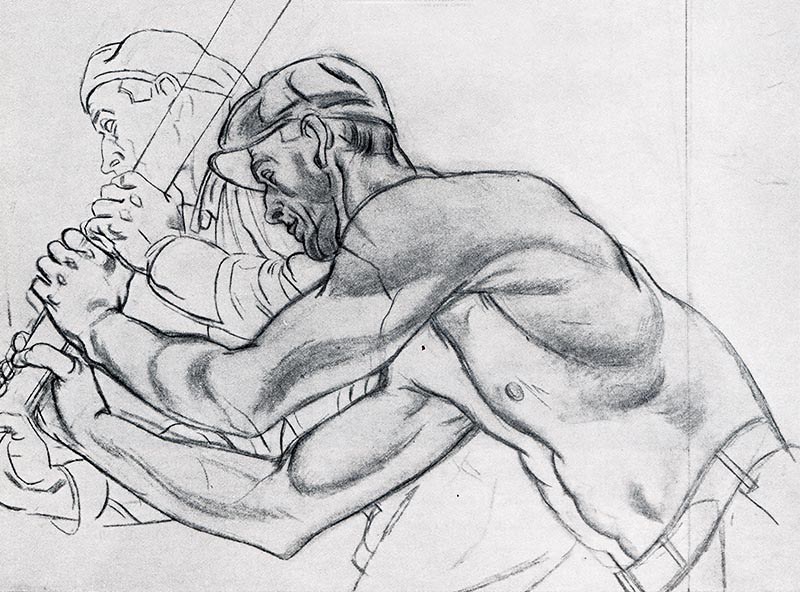
"I can't help drawing just for the sheer pleasure of it. I guess that's why I'm an artist."

Helck17detail03

"[Talent] helps an awful lot [but] practice is what makes the difference."

Helck17

"There wasn't money for long art schooling. Because a job was necessary I sought and found employment in an art department. I was aware of the financial rewards possible in Commercial Art and the dimmer prospects, for a youngster, to make a living in the Fine Arts. So I became an illustrator."

(Below: a print ad by Peter Helck, 1919)
Helck10

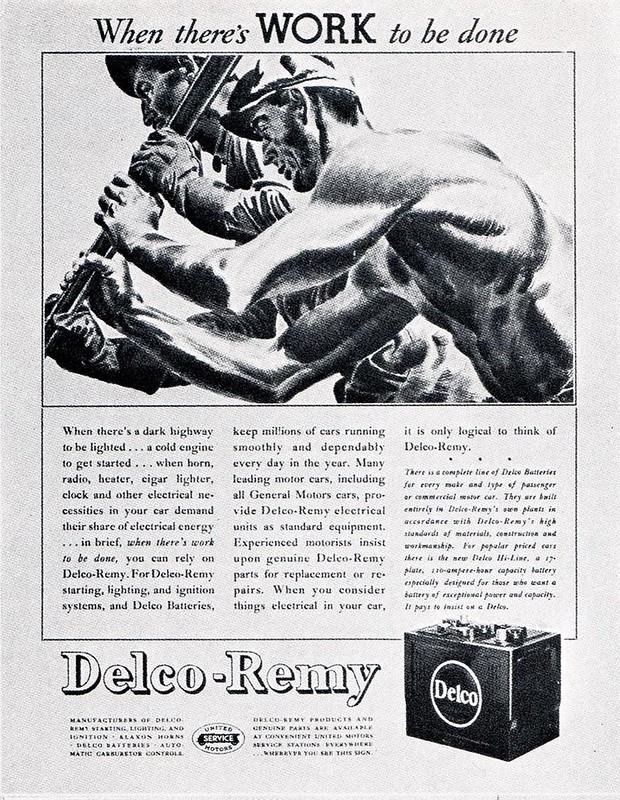
"I've been fortunate, thanks to this profession, in being able to do things that appeal to me."

(Below: a print ad by Peter Helck, 1925)
Helck14

"The most gratifying schooling came in night classes of figure drawing after I began my career. What I learned was most useful at the time."

Helck11

"I had highly orthodox school training, plaster casts and all that. I had practical training in six or seven art departments where I did everything from borders and lettering to 24-sheet posters. As a mural assistant I worked on surfaces 15 feet wide and 50 feet long."

Helck12

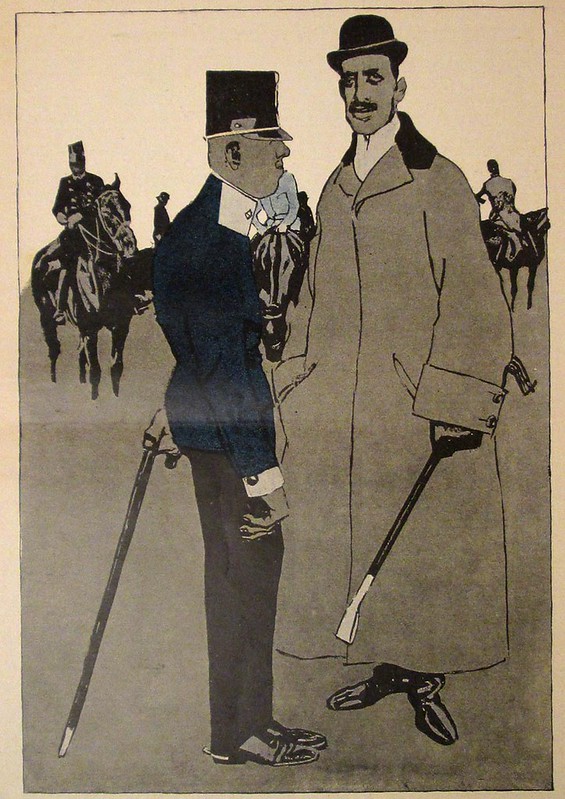
"Frank Brangwyn, the famous English muralist and etcher, was my great influence. All in my age bracket admired Howard Pyle and Harvey Dunn. Dean Cornwell's virtuosity thrilled me, and the periods of study with Harry Wickey and Lewis Daniel had their lasting influence. The work of two artists forgotten today, the American E.G. Teale, and the German Eduard Thöny, still afford considerable inspiration."

(Below: Eduard Thöny, Simplicissimus, 1906)
Thöny01

"As a youngster I was tremendously impressed with German poster art. It had powerful light and shade contrasts, amazing simplification, forceful design. I liked all work that had a sense of strength and vigor. I became a worker in this "flat tint" method of expression because of the dynamic effects which resulted."

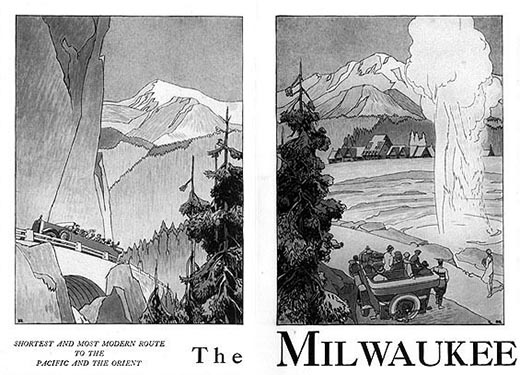
(Below: a print ad by Peter Helck, 1925)
Helck08

"Before World War I the work of half a dozen good American designers derived from this art, but our entry into the war moderated this influence."

(Below: a story illustration by Peter Helck, year unknown)
Helck07

"Today, however, there is a similar drive toward vivid, startling effects via such simplified means."

Continued tomorrow

* Thanks to Heritage Auctions for allowing me to use the final image above from their archives.

* Two notable events related to the Famous Artists School occurred recently:

The Norman Rockwell Museum recently acquired the art and archives from the Famous Artists School in Westport, Connecticut, nearly doubling the Museum's collections. This major gift comprises more than 5,000 un-catalogued artworks, including several original works created by Norman Rockwell! You can learn more here...
Secondly, the current incarnation of the Famous Artists School is re-offering the original Famous Cartoonists Course online! FAS president Magdalen Livesey wrote to tell me, "we have reissued Book 1 of the FAS Cartooning Course. At this point, it’s only available online, not in printed version, but we are offering Assignments and Critiques as well as the book alone." Learn more here...